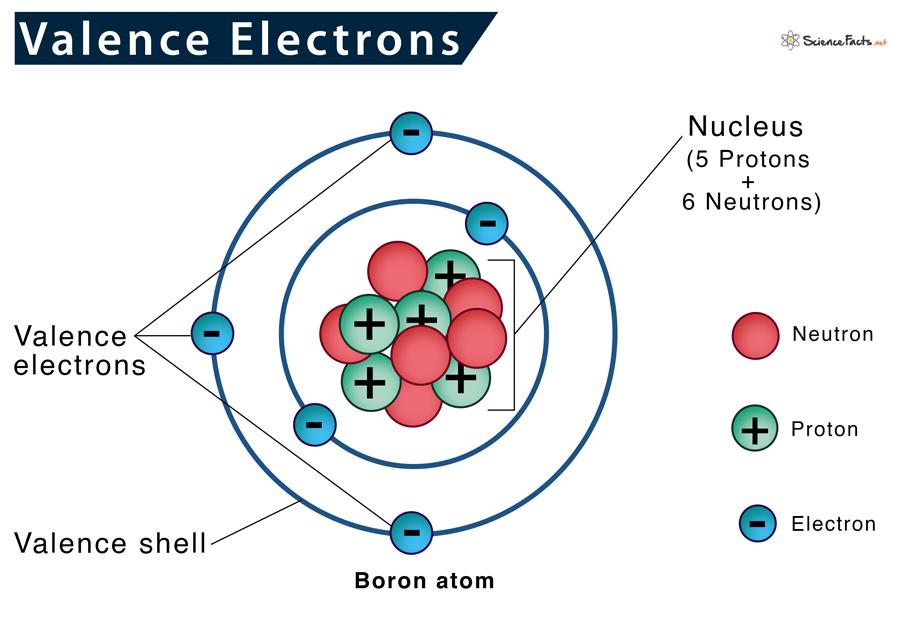
Valence electrons are the electrons in the outermost occupied electron shell of an atom that can participate in chemical bonding and strongly influence how the atom reacts.
For students studying chemistry in the United States, understanding valence electrons is one of the most useful steps toward understanding the periodic table, chemical bonding, ions, and chemical reactions. Valence electrons are located in the highest occupied principal energy level of an atom and are generally more involved in chemical interactions than inner-shell electrons.
The number and arrangement of valence electrons help explain why elements in the same periodic-table group often show similar chemical behavior. For main-group elements, the periodic table provides a practical way to determine the number of valence electrons, while transition metals require a more careful look at their electron configurations.
Source: sciencefacts.net
What Is the Definition of Valence Electrons?
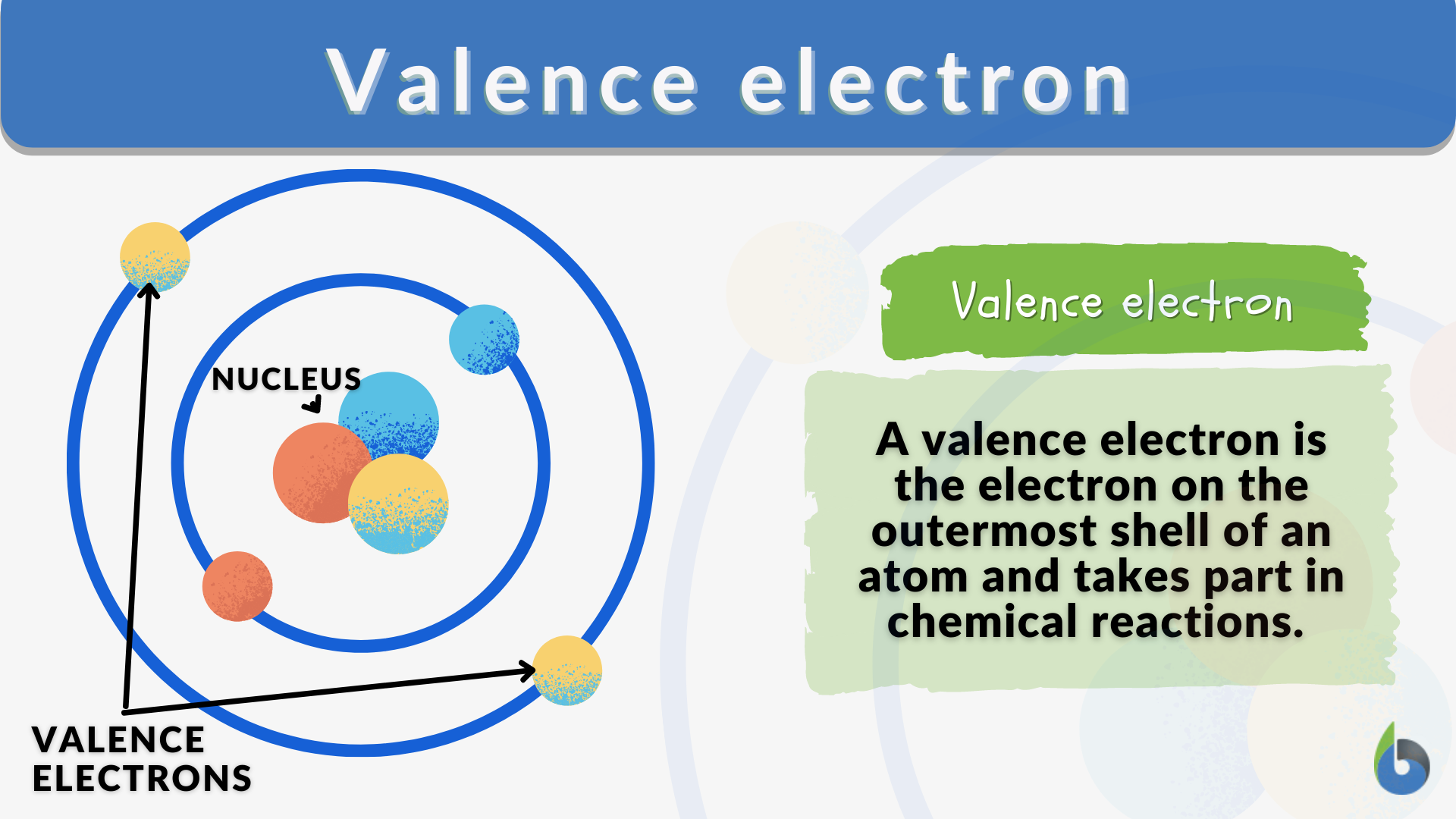
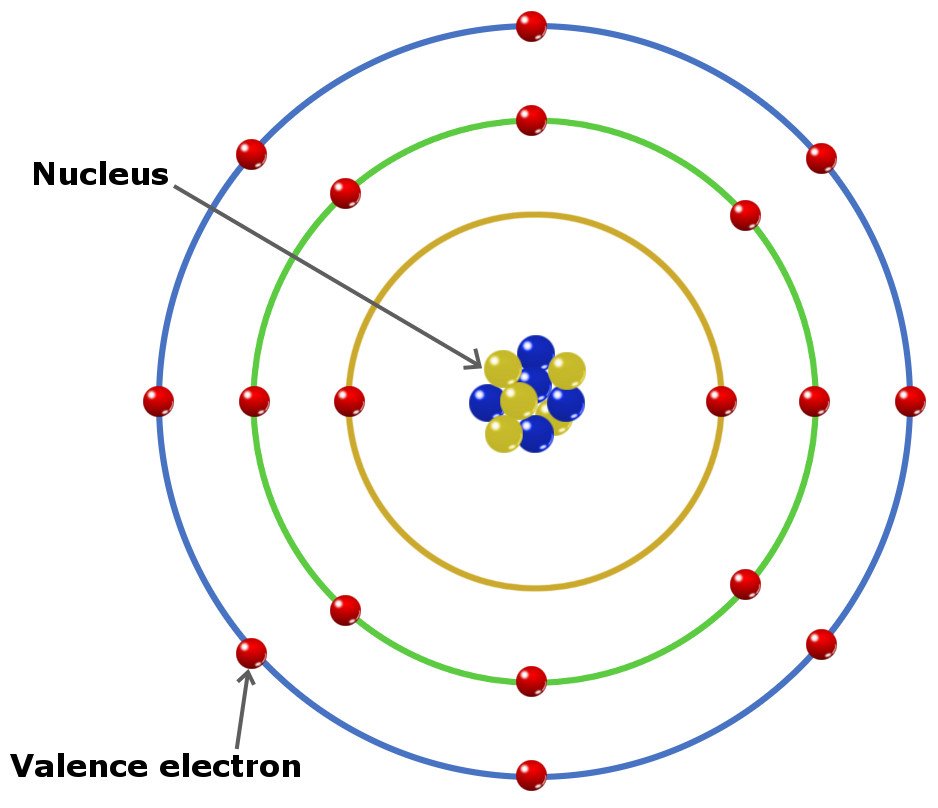
A valence electron is an electron in the outermost occupied principal energy level of an atom that can take part in chemical interactions. In introductory chemistry, valence electrons are commonly described as the outer-shell electrons because these electrons are farther from the nucleus and are generally more accessible for bonding than core electrons.
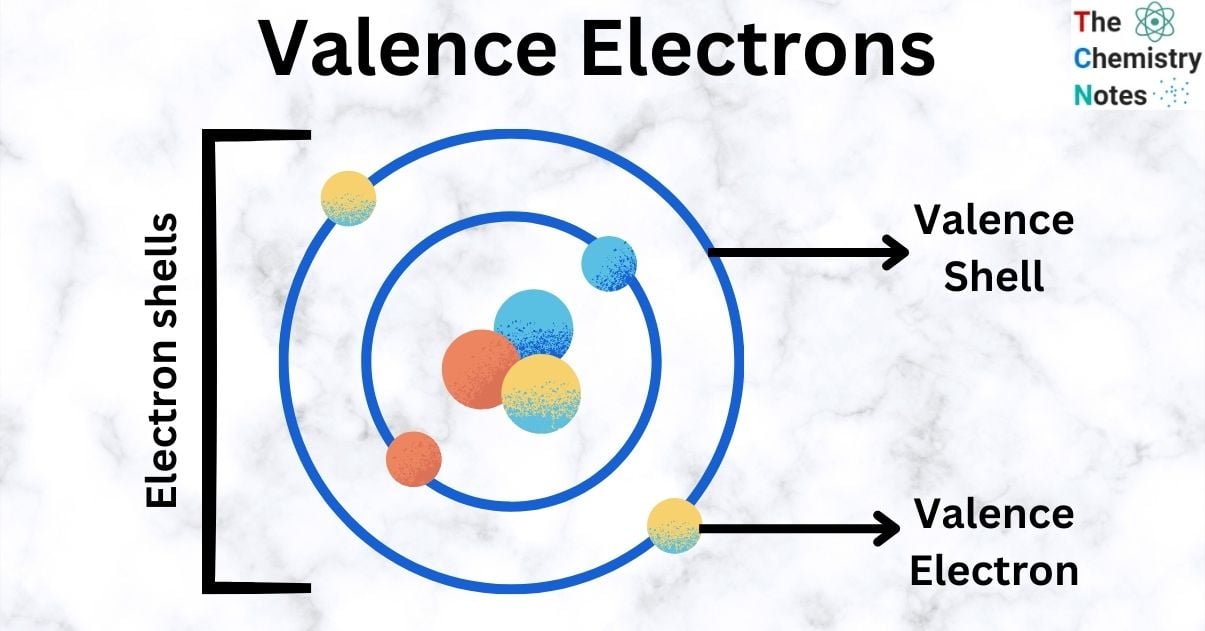
The outermost occupied energy level is called the valence shell. Electrons in inner energy levels are usually called core electrons. When atoms form chemical bonds, the interactions usually involve valence electrons rather than the electrons buried in filled inner shells.
This definition explains why valence electrons are central to chemistry. The number of valence electrons affects whether an atom is likely to lose electrons, gain electrons, or share electrons when interacting with other atoms.
Source: biologyonline.com
Valence electrons
Electrons in the outermost occupied principal energy level that can participate in chemical interactions.
Valence shell
The outermost occupied principal energy level of an atom in its ground state.
Core electrons
Electrons located in inner energy levels that generally do not participate directly in ordinary chemical bonding.
Why Are Valence Electrons Important?
Valence electrons are important because chemical bonds involve changes in electron distribution between atoms. An atom may transfer, accept, or share valence electrons to reach a more stable electron arrangement.
For example, sodium has one valence electron. Sodium can lose that electron to form a positively charged sodium ion, Na+. Chlorine has seven valence electrons and can gain one electron to form a negatively charged chloride ion, Cl−. The resulting ions can attract each other and form ionic sodium chloride.
Chemical bonding
Valence electrons can be transferred or shared when atoms form chemical bonds.
Chemical reactivity
The number and arrangement of valence electrons help determine how an element behaves in chemical reactions.
Ion formation
Atoms can gain or lose valence electrons to form charged particles called ions.
Valence Electrons vs. Core Electrons
Atoms contain electrons in different principal energy levels. The electrons in the outermost occupied level are generally called valence electrons, while electrons in lower occupied levels are called core electrons.
Consider oxygen as an example. A neutral oxygen atom has eight electrons with the electron configuration 1s2 2s2 2p4. The two electrons in the 1s orbital are core electrons. The six electrons in the second principal energy level, 2s2 2p4, are valence electrons.
This distinction is useful because the valence electrons are the electrons most directly involved in ordinary chemical bonding. Core electrons remain more strongly associated with the nucleus and are generally less accessible during chemical reactions.
Source: scienceinfo.com
Outer energy level
Electrons in the highest occupied principal energy level are generally considered valence electrons for main-group atoms.
Inner energy levels
Electrons in lower energy levels are generally classified as core electrons.
Chemical role
Valence electrons are more directly involved in bonding and chemical reactions than core electrons.
Example: Oxygen
Oxygen has eight electrons in its neutral ground-state atom. Its electron configuration is 1s2 2s2 2p4. The highest principal energy level is n = 2, so the electrons in 2s and 2p make up the valence electrons. Oxygen therefore has six valence electrons.
Core electrons
Oxygen has two core electrons in the 1s orbital.
Valence electrons
Oxygen has six valence electrons in the 2s and 2p orbitals.
How Many Valence Electrons Does an Element Have?
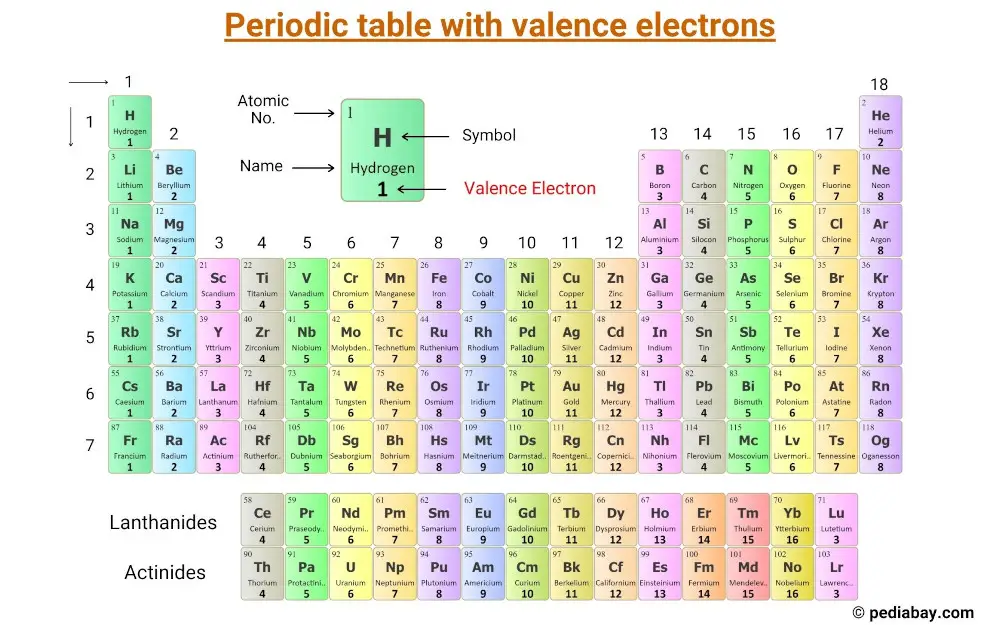
For the main-group elements, the periodic table provides a simple way to determine the number of valence electrons in a neutral atom. Main-group elements occupy Groups 1, 2, and 13 through 18 in the modern 18-group periodic table.
For Groups 1 and 2, the group number corresponds directly to the number of valence electrons. For Groups 13 through 18, the number of valence electrons is usually the group number minus 10.
This pattern works because the outermost s and p subshells are being filled across each main-group period.
Source: pediabay.com
Group 1
Main-group elements in Group 1 have one valence electron. Hydrogen has one, although its chemistry is different from that of the alkali metals.
Group 2
Group 2 elements generally have two valence electrons.
Group 13
Group 13 elements generally have three valence electrons.
Group 14
Group 14 elements generally have four valence electrons.
Group 15
Group 15 elements generally have five valence electrons.
Group 16
Group 16 elements generally have six valence electrons.
Group 17
Group 17 elements generally have seven valence electrons.
Group 18
Most Group 18 elements have eight valence electrons, while helium has two.
Examples of Valence Electrons by Element
The following examples show how the periodic table can be used to identify valence electrons for common main-group elements.
Lithium
Lithium is in Group 1 and has one valence electron. Its electron configuration is 1s2 2s1.
Carbon
Carbon is in Group 14 and has four valence electrons. Its outer configuration is 2s2 2p2.
Nitrogen
Nitrogen is in Group 15 and has five valence electrons. Its outer configuration is 2s2 2p3.
Oxygen
Oxygen is in Group 16 and has six valence electrons. Its outer configuration is 2s2 2p4.
Fluorine
Fluorine is in Group 17 and has seven valence electrons. Its outer configuration is 2s2 2p5.
Neon
Neon is in Group 18 and has eight valence electrons. Its outer configuration is 2s2 2p6.
How to Find Valence Electrons From Electron Configuration
Electron configuration gives a more precise way to identify valence electrons. For a main-group atom, first identify the highest principal quantum number, represented by n. The electrons occupying that highest-numbered shell are the valence electrons.
For example, the electron configuration of magnesium is 1s2 2s2 2p6 3s2. The highest principal energy level is n = 3, and it contains two electrons in the 3s orbital. Magnesium therefore has two valence electrons.
For chlorine, the configuration is 1s2 2s2 2p6 3s2 3p5. The highest principal energy level is n = 3. The 3s and 3p electrons together give chlorine seven valence electrons.
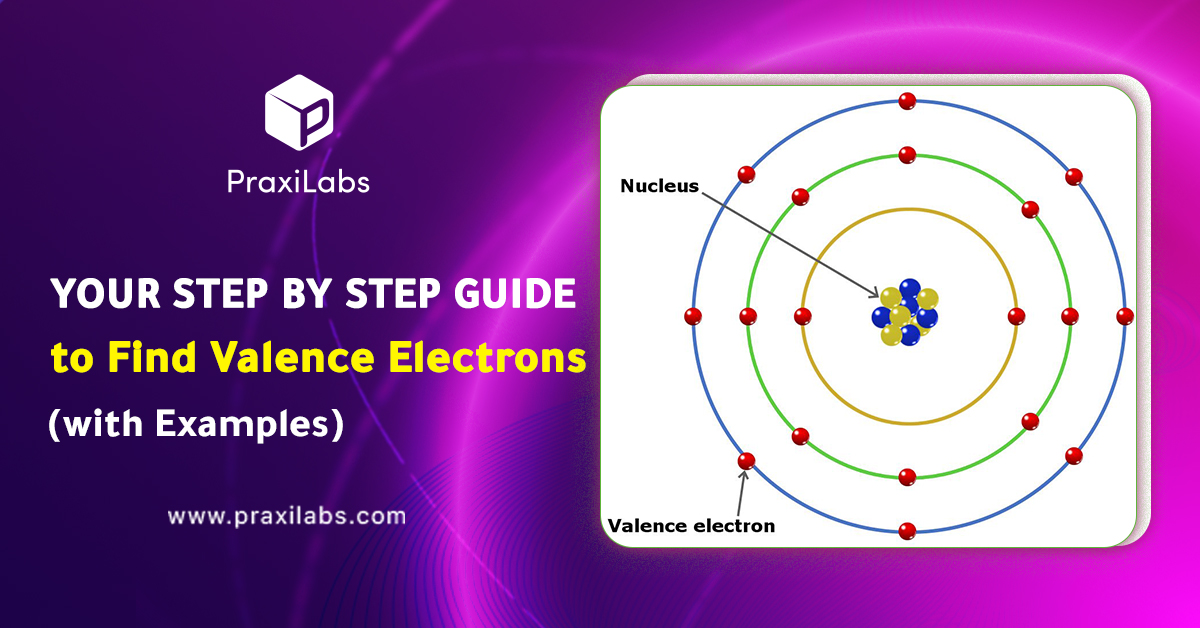
Source: praxilabs.com
Step 1
Write or identify the ground-state electron configuration of the atom.
Step 2
Find the highest principal energy level, n, appearing in the configuration.
Step 3
For a main-group element, count the electrons in that highest occupied shell.
Step 4
Check the result against the element's position in the periodic table.
Example: Magnesium
Magnesium has the electron configuration 1s2 2s2 2p6 3s2. The highest principal energy level is n = 3. There are two electrons in that shell, so magnesium has two valence electrons.
Electron configuration
1s2 2s2 2p6 3s2
Highest shell
n = 3
Valence electrons
2
Example: Chlorine
Chlorine has the electron configuration 1s2 2s2 2p6 3s2 3p5. The highest principal energy level is n = 3. The 3s2 and 3p5 electrons total seven, so chlorine has seven valence electrons.
Electron configuration
1s2 2s2 2p6 3s2 3p5
Highest shell
n = 3
Valence electrons
7
How Valence Electrons Affect Chemical Bonding
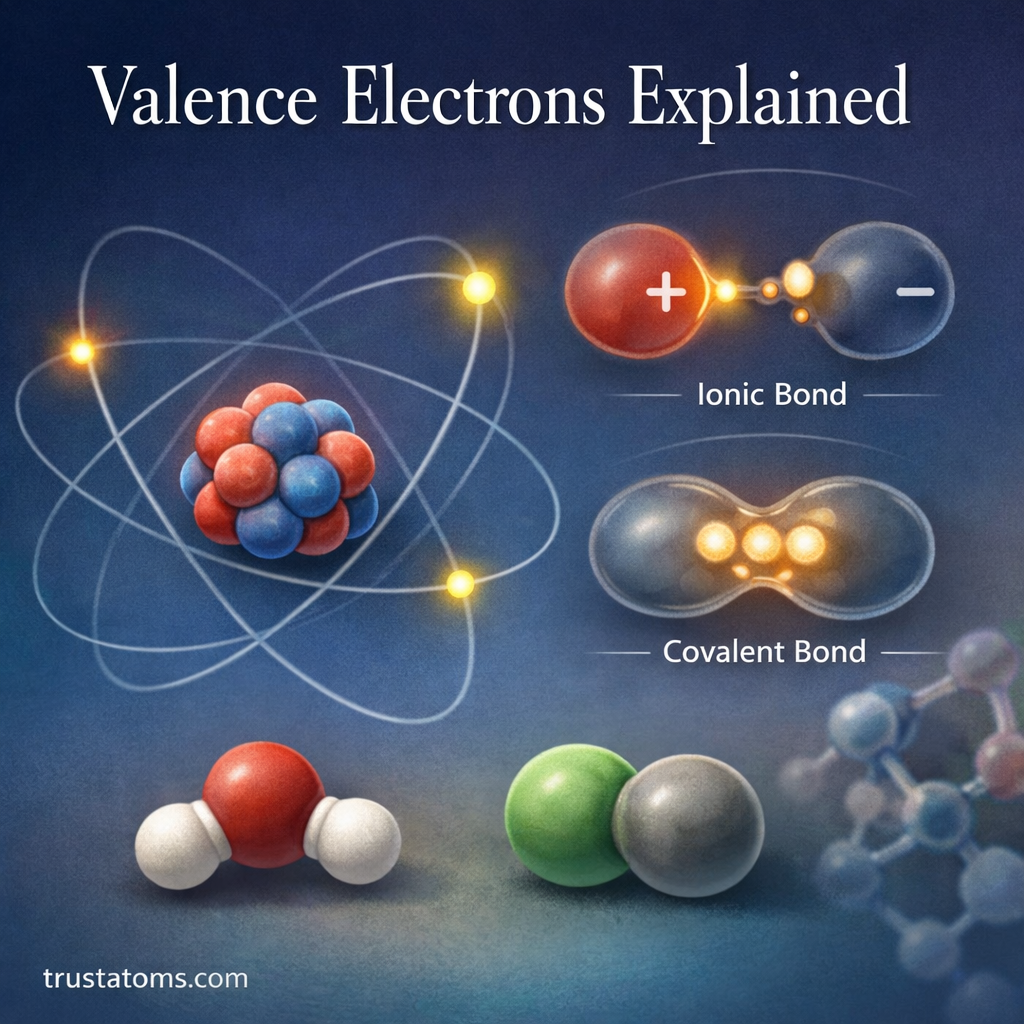
Valence electrons are directly connected to the three common types of chemical bonding: ionic, covalent, and metallic bonding. The exact bonding behavior depends on the elements involved and their electron configurations.
In ionic bonding, atoms transfer electrons. A metal may lose one or more valence electrons and become a positively charged ion, while a nonmetal may gain electrons and become a negatively charged ion.
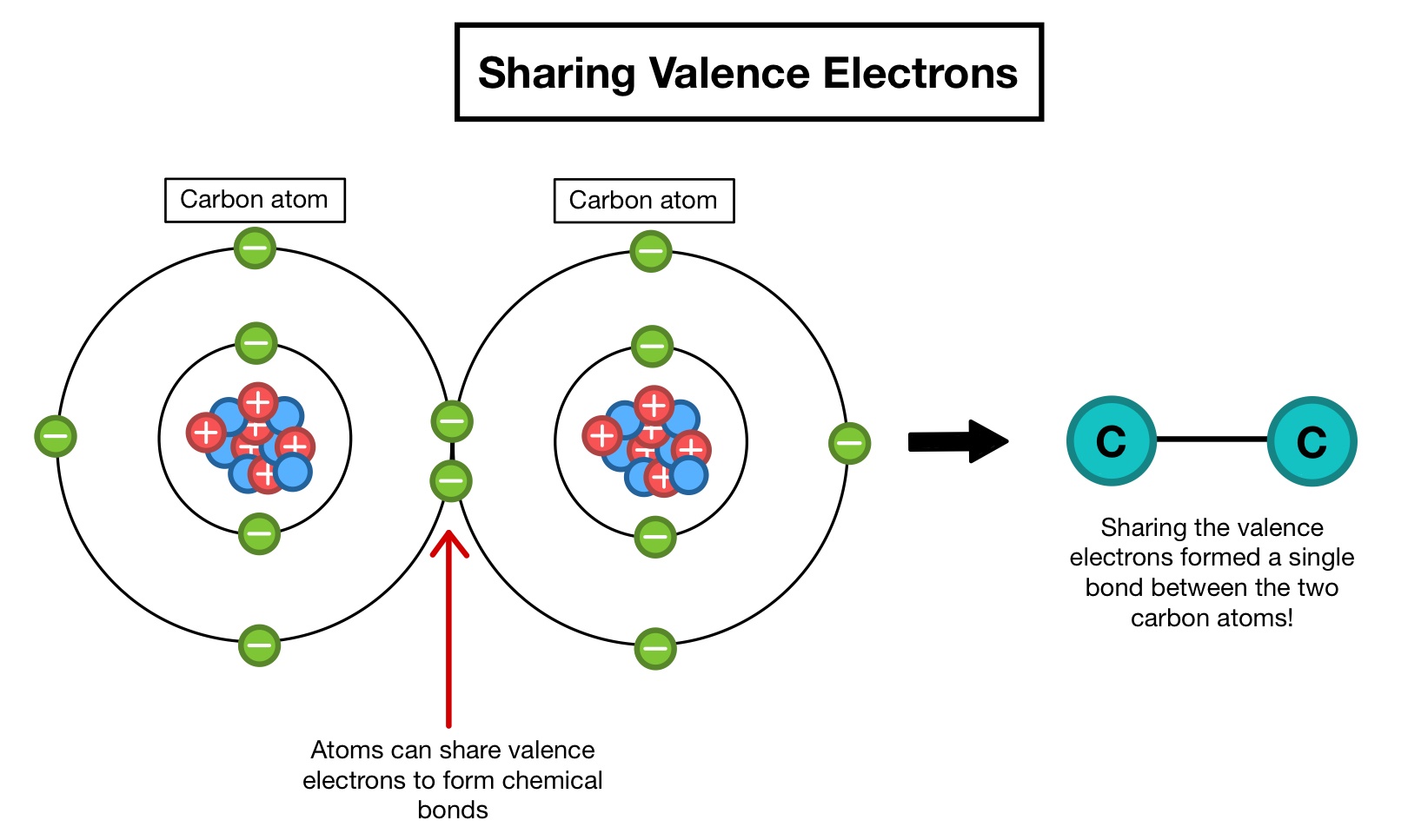
In covalent bonding, atoms share valence electrons. For example, two hydrogen atoms can share one pair of electrons to form H2. In water, oxygen shares electrons with two hydrogen atoms, producing covalent O-H bonds.
In metallic bonding, valence electrons are not confined to one particular atom in the same way as in a simple covalent bond. The delocalized electrons help contribute to the characteristic bonding and electrical behavior of metals.
Source: expii.com
Ionic bonding
Valence electrons are transferred from one atom to another, producing oppositely charged ions.
Covalent bonding
Valence electrons are shared between atoms.
Metallic bonding
Valence electrons in metals can be delocalized across the structure.
Why Atoms Gain, Lose, or Share Electrons
Many main-group atoms become more stable when their valence shells reach a filled arrangement. For many elements, this corresponds to eight electrons in the valence shell, often described by the octet rule. The rule is a useful introductory model, but it is not a universal law and has important exceptions.
Sodium illustrates electron loss. It has one valence electron and can lose that electron to form Na+. Fluorine has seven valence electrons and can gain one to form F−. Carbon has four valence electrons and commonly forms covalent bonds by sharing electrons rather than simply gaining or losing four electrons.
Electron loss
Atoms with relatively few valence electrons can sometimes lose them to form positive ions.
Electron gain
Atoms close to a filled valence shell can sometimes gain electrons to form negative ions.
Electron sharing
Atoms can share valence electrons to form covalent bonds.
Valence Electrons and the Periodic Table
The periodic table is especially useful for understanding valence electrons because elements in the same main-group column generally have the same number of valence electrons. This repeated outer-electron pattern helps explain similarities in chemical behavior.
For example, lithium and sodium are both in Group 1 and each has one valence electron. Fluorine and chlorine are both in Group 17 and each has seven valence electrons. Their atoms are different in size and contain different numbers of core electrons, but their outer-electron patterns help produce related chemical behavior.
Moving from left to right across a main-group period, the number of valence electrons generally increases from one to eight. This recurring pattern is one reason the periodic table is called periodic.
Source: jagranjosh.com
Same group
Main-group elements in the same group generally have the same number of valence electrons.
Across a period
The number of valence electrons generally increases across the main-group portion of a period.
Similar chemistry
Similar outer-electron configurations help explain why elements in the same group often have related chemical properties.
The Eight-Valence-Electron Pattern
Many main-group elements are more stable when their outer s and p subshells are filled. This produces an outer-shell arrangement containing eight electrons, with helium as a special case because its first shell can hold only two electrons.
Noble gases such as neon and argon have filled valence shells and are generally less reactive than elements whose valence shells are incomplete. The stability associated with filled shells helps explain broad patterns in chemical reactivity.
Neon
Neon has eight valence electrons and a filled second shell.
Argon
Argon has eight valence electrons and a filled third shell.
Helium
Helium has two valence electrons because its first energy level is filled with two electrons.
Are Transition-Metal Valence Electrons Different?
Yes. Transition metals require more care than main-group elements when counting valence electrons. Their chemical behavior can involve both the outermost s electrons and electrons in nearby d subshells.
For example, iron has the electron configuration [Ar] 4s2 3d6. In many introductory treatments, the electrons that can participate in transition-metal chemistry include the 4s and 3d electrons. This is why simply using the group number is not a reliable general method for determining transition-metal valence electrons.
The meaning of valence electrons also depends on the chemical context. A simplified definition based only on the highest principal energy level works very well for main-group chemistry but can be incomplete for transition metals and inner-transition elements.
Source: expii.com
Main-group elements
Valence-electron counting is relatively straightforward and is closely related to the highest occupied shell.
Transition metals
Both outer s electrons and nearby d electrons can be involved in bonding and chemical reactions.
Practical implication
Do not automatically apply the simple main-group counting rule to transition metals.
Why Transition Metals Need Special Treatment
The energy levels of transition-metal s and d orbitals are relatively close, so both can contribute to chemical behavior. Transition metals can also form ions with different charges, which is one reason their chemistry is more varied than the simple patterns often introduced for main-group elements.
Multiple oxidation states
Many transition metals can form ions with more than one common oxidation state.
d-electron involvement
Electrons in d subshells can contribute to bonding and chemical properties.
Common Mistakes About Valence Electrons
Several common misconceptions can make valence-electron questions harder than they need to be. The most useful approach is to distinguish the electron shell, electron configuration, valence electrons, and valency rather than treating these terms as interchangeable.
Another common mistake is assuming that every atom must have eight valence electrons. The octet rule describes an important pattern for many main-group compounds, but atoms can be stable with fewer or more than eight electrons in different chemical situations.
Source: trustatoms.com
Mistake: Counting all electrons
The total number of electrons in an atom is not the number of valence electrons. Only the relevant outer electrons are counted.
Mistake: Assuming every atom has eight
Many atoms do not have eight valence electrons. Elements in Groups 1 through 17 can have one through seven valence electrons, and helium has two.
Mistake: Confusing valence with valency
Valence electrons are particles in an atom. Valency refers to combining capacity in a chemical context and is not simply another name for valence electrons.
Mistake: Applying main-group rules to transition metals
Transition-metal electron configurations are more complicated, so their valence-electron behavior cannot always be determined from the simple main-group group-number rule.
Valence Electrons Are Not the Same as Valency
The terms valence electrons and valency are related but different. Valence electrons are electrons associated with an atom's outer electronic structure. Valency describes the combining capacity of an atom in forming chemical compounds. Confusing these concepts can lead to incorrect answers in chemistry problems.
Valence electrons
A count or description of electrons in the outer electronic structure that can participate in chemical interactions.
Valency
A chemical concept describing how an atom combines with other atoms.
Frequently Asked Questions
Q
What is the simplest definition of a valence electron?
A valence electron is an electron in the outermost occupied energy level of an atom that can participate in chemical bonding and influence chemical reactivity.
Q
How do you find valence electrons on the periodic table?
For main-group elements, use the group number. Groups 1 and 2 generally have one and two valence electrons, respectively. Groups 13 through 18 generally have three through eight valence electrons. Remember that helium has two valence electrons.
Q
How many valence electrons does oxygen have?
Oxygen has six valence electrons. Its electron configuration is 1s2 2s2 2p4, so the six electrons in the second principal energy level are its valence electrons.
Q
How many valence electrons does carbon have?
Carbon has four valence electrons. Its electron configuration is 1s2 2s2 2p2, so the four electrons in the second principal energy level are valence electrons.
Q
Why do valence electrons matter in chemical reactions?
Valence electrons matter because they are the electrons most directly involved in ordinary chemical bonding. Atoms can transfer, gain, or share these electrons, which affects ion formation, bond formation, and chemical reactivity.
Q
Do transition metals have valence electrons?
Yes. Transition metals have valence electrons, but determining which electrons should be counted can be more complicated because both s and d electrons can participate in chemical behavior. The simple main-group group-number rule should not be applied automatically.
✦ Wrapping Up
Conclusion
Valence electrons are the outer electrons that play a central role in how atoms interact with one another. For main-group elements, they are found in the highest occupied principal energy level and can participate in chemical bonding, ion formation, and chemical reactions.
The periodic table makes valence-electron patterns easier to recognize. Elements in the same main-group column generally have the same number of valence electrons, which helps explain their related chemical behavior. For more advanced chemistry, especially transition-metal chemistry, electron configurations provide a more complete picture.
Once you understand the difference between valence electrons and core electrons, you can use electron configurations and the periodic table to predict many basic patterns in chemical bonding and reactivity.
💡 Key Takeaway
To identify valence electrons, first determine whether the element is a main-group element. If it is, find the highest occupied principal energy level and count the electrons in that shell. Then use the periodic table as a cross-check, remembering that transition metals require a more detailed analysis.


No comments