To find the electrons of a neutral element, use its atomic number. The atomic number equals the number of protons, and a neutral atom has the same number of protons and electrons. For an ion, adjust the electron count according to its charge.
For students studying chemistry in U.S. middle and high school classrooms, finding the number of electrons in an atom is one of the basic skills used to understand atomic structure, ions, bonding, and electron configuration. The fastest method is to locate the element on the periodic table and identify its atomic number.
If the element is a neutral atom, its number of electrons is exactly equal to its atomic number. If the symbol shows a positive or negative charge, the calculation changes because the atom has lost or gained electrons. Once you recognize this distinction, most electron-counting problems can be solved in a few seconds.
Source: valenceelectrons.com
What Is an Electron?
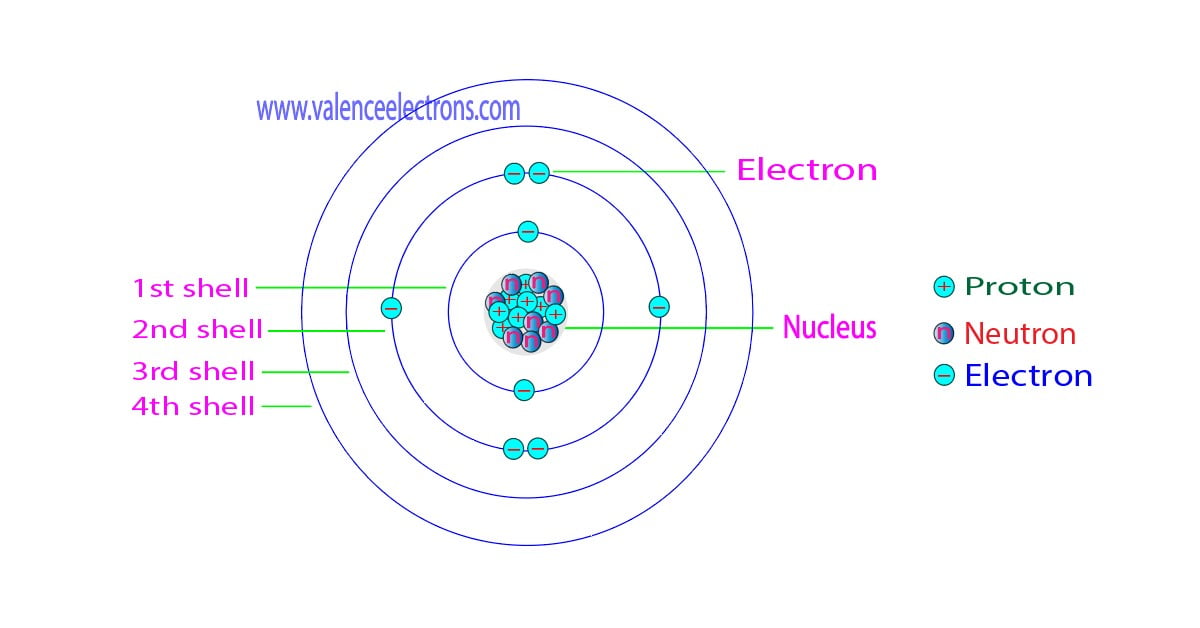
An electron is a negatively charged subatomic particle found outside the nucleus of an atom. The nucleus contains protons and neutrons, while electrons occupy regions around the nucleus.
The number of electrons matters because electrons are involved in chemical bonding and many of the chemical properties of an element. In a neutral atom, the negative charge from the electrons balances the positive charge from the protons.
Source: cloudfront.net
Electron
A negatively charged subatomic particle located outside the atomic nucleus.
Proton
A positively charged subatomic particle located in the nucleus. The number of protons determines the element's atomic number.
Neutron
A subatomic particle with no electrical charge that is located in the nucleus.
Why Does the Number of Electrons Matter?
Electrons determine how atoms interact with other atoms. The electrons in the outermost occupied energy level, commonly called valence electrons, play an especially important role in chemical bonding and reactions.
Chemical bonding
Atoms can gain, lose, or share electrons when forming chemical bonds.
Ion formation
An atom becomes a charged ion when it gains or loses one or more electrons.
How Do You Find the Electrons of a Neutral Element?
For a neutral atom, finding the number of electrons is straightforward: find the element's atomic number on the periodic table. The atomic number is equal to the number of protons, and a neutral atom has an equal number of protons and electrons.
Therefore, the simplest formula is: Number of electrons = atomic number.
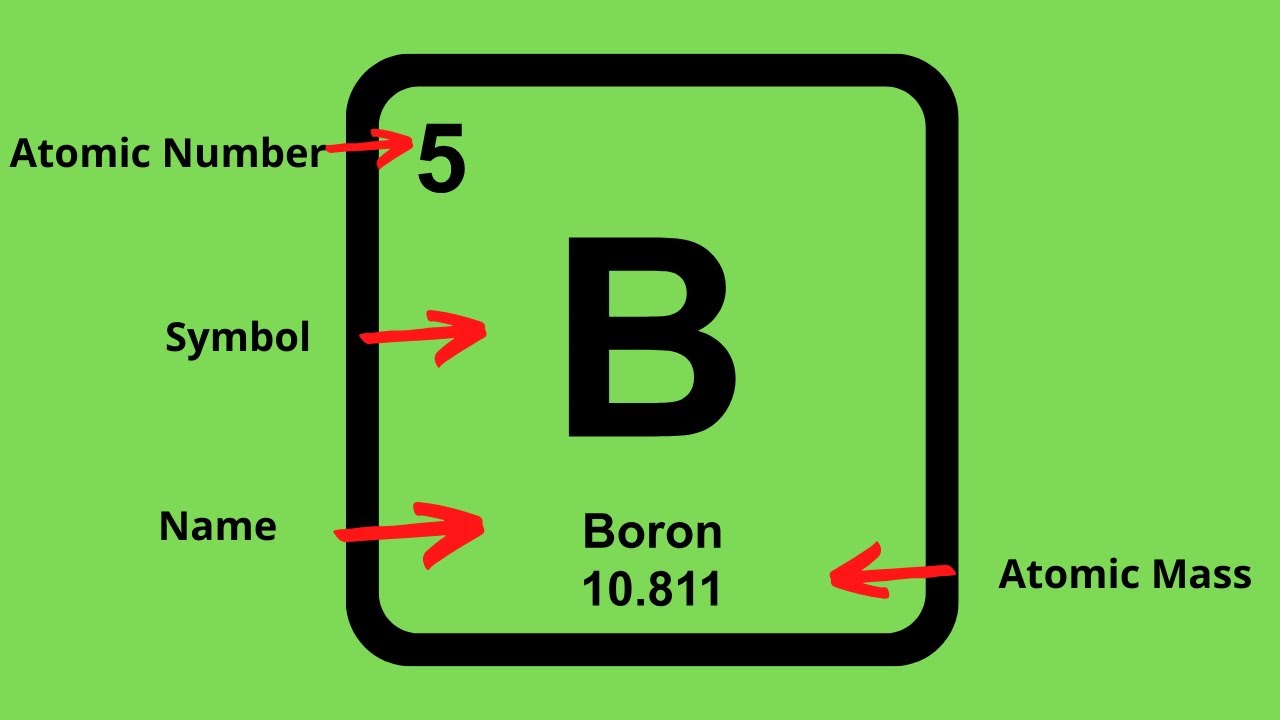
For example, boron has an atomic number of 5. A neutral boron atom therefore contains 5 protons and 5 electrons. Oxygen has an atomic number of 8, so a neutral oxygen atom contains 8 electrons.
Source: youtube.com
Step 1
Find the element on the periodic table.
Step 2
Identify its atomic number.
Step 3
If the atom is neutral, use the atomic number as the number of electrons.
Examples of Neutral Atoms
Hydrogen has atomic number 1, so a neutral hydrogen atom has 1 electron. Carbon has atomic number 6, so a neutral carbon atom has 6 electrons. Chlorine has atomic number 17, so a neutral chlorine atom has 17 electrons.
Hydrogen
Atomic number 1, therefore 1 electron in a neutral atom.
Carbon
Atomic number 6, therefore 6 electrons in a neutral atom.
Chlorine
Atomic number 17, therefore 17 electrons in a neutral atom.
How Do You Find Electrons in an Ion?
An ion is an atom or group of atoms with a net electrical charge. The charge appears as a superscript next to the chemical symbol. Because ions form when atoms gain or lose electrons, the electron count is different from the atomic number.
The general formula is: Number of electrons = atomic number − charge.
When the charge is positive, subtract the charge from the atomic number because the atom has lost electrons. When the charge is negative, subtracting a negative number adds electrons.
Source: study.com
Positive ion
A positive ion, or cation, has fewer electrons than protons because it has lost one or more electrons.
Negative ion
A negative ion, or anion, has more electrons than protons because it has gained one or more electrons.
Examples of Positive Ions
Consider Na+. Sodium has an atomic number of 11. The 1+ charge means the sodium atom has lost one electron. Therefore, Na+ has 11 − 1 = 10 electrons.
For Ca2+, calcium has an atomic number of 20. The 2+ charge means it has lost two electrons. Therefore, Ca2+ has 20 − 2 = 18 electrons.
Na+
11 − 1 = 10 electrons.
Ca2+
20 − 2 = 18 electrons.
Al3+
13 − 3 = 10 electrons.
Examples of Negative Ions
For Cl−, chlorine has an atomic number of 17. The 1− charge means chlorine has gained one electron, so Cl− has 18 electrons.
For O2−, oxygen has an atomic number of 8. The 2− charge means oxygen has gained two electrons, giving O2− a total of 10 electrons.
Cl−
17 − (−1) = 18 electrons.
O2−
8 − (−2) = 10 electrons.
How to Use the Periodic Table to Find Electrons
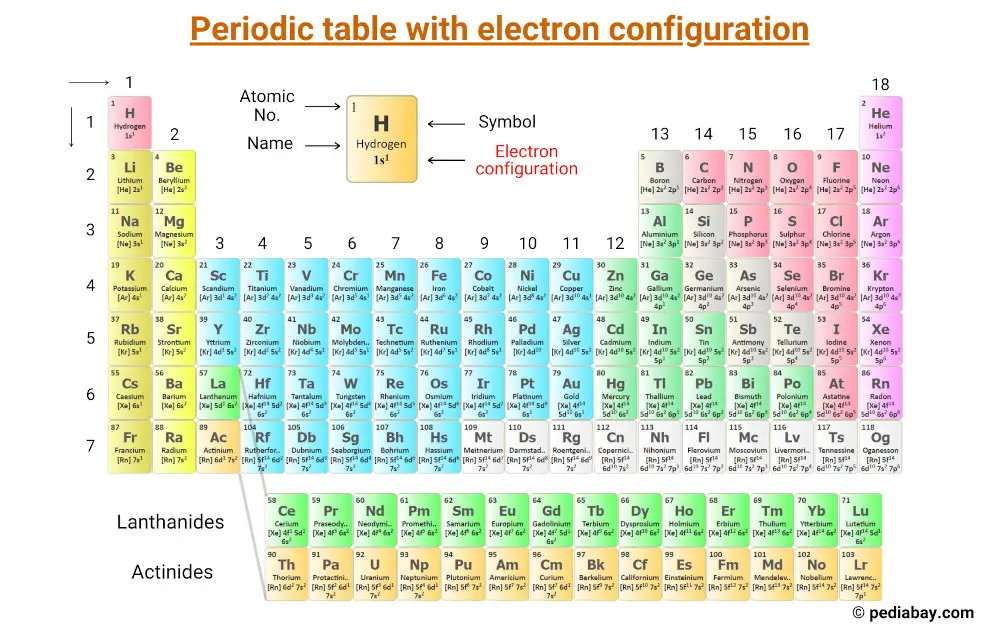
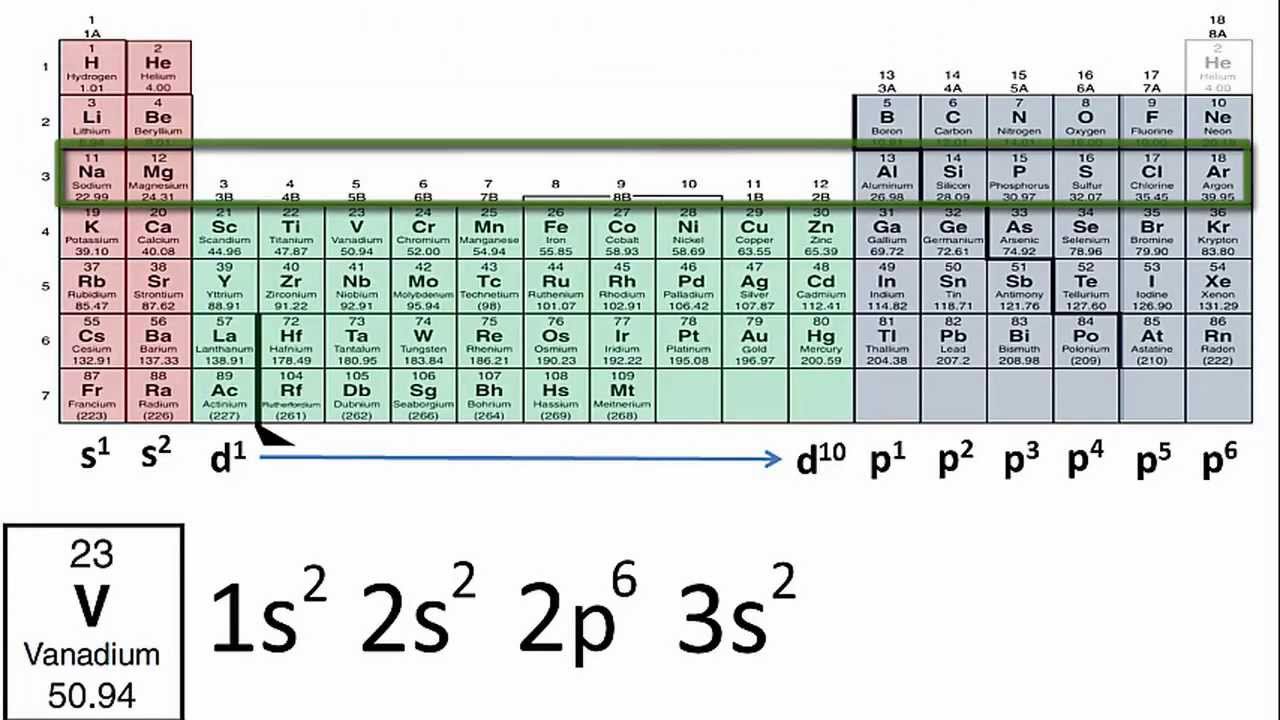
The periodic table is the quickest reference for finding the number of electrons in a neutral atom because each element has a unique atomic number. The atomic number is usually displayed near the top of an element's square.
Do not confuse the atomic number with the atomic mass. The atomic number identifies the element and gives the number of protons. For a neutral atom, it also gives the number of electrons.
Source: pediabay.com
Atomic number
The number of protons in the nucleus. For a neutral atom, it is also the number of electrons.
Atomic mass
The weighted average mass of an element's naturally occurring isotopes. It is not normally used to determine the electron count.
Mass number
The total number of protons and neutrons in a particular isotope. It does not determine the number of electrons in a neutral atom.
Example: Finding Electrons in Iron
Iron has atomic number 26. Therefore, a neutral iron atom contains 26 electrons. If the species is Fe2+, it has lost two electrons and contains 24 electrons. If the species is Fe3+, it contains 23 electrons.
Fe
26 electrons in a neutral iron atom.
Fe2+
24 electrons.
Fe3+
23 electrons.
What Is the Difference Between Electron Count and Electron Configuration?
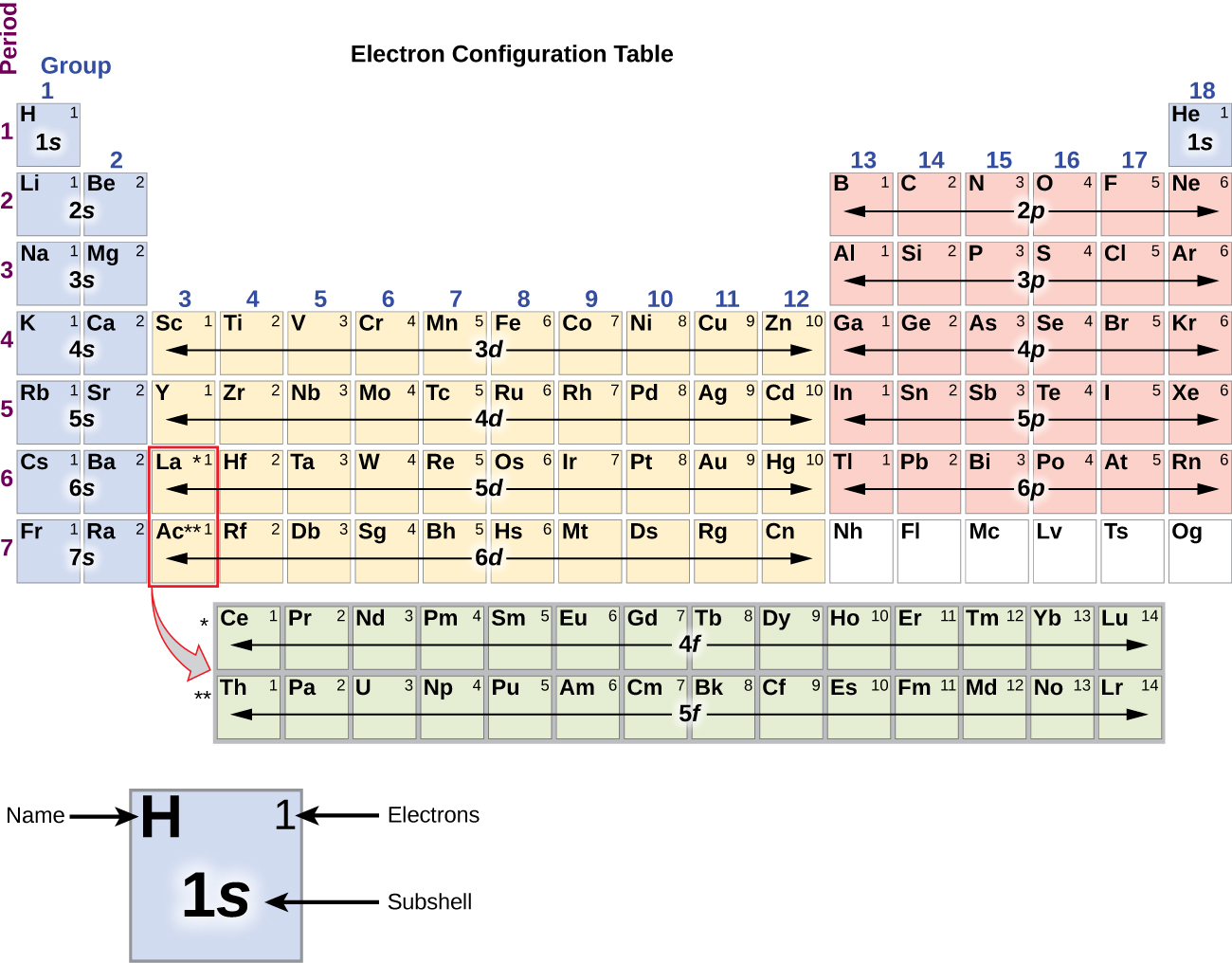
The number of electrons tells you how many electrons an atom or ion has. Electron configuration tells you how those electrons are arranged among atomic orbitals and energy levels.
For example, a neutral fluorine atom has 9 electrons. Its electron configuration is 1s² 2s² 2p⁵. The first statement gives the total number of electrons, while the second describes their arrangement.
You should first determine the total electron count before writing an electron configuration. For ions, adjust the number of electrons according to the charge and then determine the appropriate configuration.
Source: pressbooks.bccampus.ca
Electron count
The total number of electrons present in an atom or ion.
Electron configuration
The arrangement of electrons in orbitals and energy levels.
Valence electrons
Electrons in the outermost occupied energy level that commonly participate in chemical bonding.
Example: Fluorine
Fluorine has atomic number 9, so a neutral fluorine atom has 9 electrons. Its electron configuration is 1s² 2s² 2p⁵. The configuration accounts for all 9 electrons.
Total electrons
9 electrons.
Electron configuration
1s² 2s² 2p⁵.
Common Mistakes When Finding Electrons
Most electron-counting mistakes happen because students confuse atomic number, atomic mass, mass number, and ion charge. Checking these values in the correct order makes the calculation much easier.
A reliable approach is to identify the atomic number first, determine whether the species is neutral or charged, and then apply the charge adjustment if necessary.
Source: sciencenotes.org
Using atomic mass as the electron count
This is incorrect. A neutral atom's electron count is determined by its atomic number, not its average atomic mass.
Ignoring the ion charge
For ions, the atomic number alone gives the number of protons. You must account for the positive or negative charge to find the electrons.
Adding electrons to a positive ion
A positive charge means electrons were lost, so the electron count is lower than the atomic number.
Subtracting electrons from a negative ion
A negative charge means electrons were gained, so the electron count is higher than the atomic number.
A Quick Check for Your Answer
You can check your result by comparing the number of protons and electrons. If the species is neutral, the numbers must be equal. If it has a positive charge, there must be fewer electrons than protons. If it has a negative charge, there must be more electrons than protons.
Neutral
Protons = electrons.
Positive ion
Protons > electrons.
Negative ion
Electrons > protons.
A Simple Formula to Remember
The key relationship can be summarized in one formula: number of electrons = atomic number − ion charge.
For a neutral atom, the ion charge is zero, so the formula becomes number of electrons = atomic number. For a positive ion, subtract the positive charge. For a negative ion, subtracting the negative charge increases the number of electrons.
Source: youtube.com
Neutral atom
Electrons = atomic number.
Positive ion
Electrons = atomic number − positive charge.
Negative ion
Electrons = atomic number − negative charge, which increases the electron count.
Practice Examples
Try the following calculations using the formula. A neutral sulfur atom has atomic number 16, so it has 16 electrons. Mg2+ has atomic number 12 and a 2+ charge, so it has 10 electrons. F− has atomic number 9 and a 1− charge, so it has 10 electrons. N3− has atomic number 7 and a 3− charge, so it has 10 electrons.
Sulfur, S
16 − 0 = 16 electrons.
Magnesium, Mg2+
12 − 2 = 10 electrons.
Fluoride, F−
9 − (−1) = 10 electrons.
Nitride, N3−
7 − (−3) = 10 electrons.
Frequently Asked Questions
Q
How do you find the number of electrons in an element?
Find the element's atomic number on the periodic table. If the atom is neutral, the atomic number is equal to the number of electrons. For example, oxygen has atomic number 8, so a neutral oxygen atom has 8 electrons.
Q
Does the atomic number tell you the number of electrons?
Yes, for a neutral atom. The atomic number equals the number of protons, and a neutral atom has the same number of protons and electrons. For an ion, the electron count must be adjusted using the ion's charge.
Q
How do you find electrons in an ion?
Use the formula electrons = atomic number − charge. For example, Ca2+ has an atomic number of 20, so it has 20 − 2 = 18 electrons. Cl− has an atomic number of 17, so it has 17 − (−1) = 18 electrons.
Q
Do you use atomic mass to find electrons?
No. For a neutral atom, use the atomic number. Atomic mass is related to the masses of the element's naturally occurring isotopes and is not the value used to determine the number of electrons.
Q
How do you find the electron configuration after finding the electrons?
First determine the total number of electrons. Then place those electrons into orbitals according to the standard electron-filling order. For example, a neutral fluorine atom has 9 electrons, giving it the electron configuration 1s² 2s² 2p⁵.
✦ Wrapping Up
Conclusion
Finding the electrons of an element is usually a simple periodic table calculation. For a neutral atom, locate the atomic number and use that number as the electron count. The reason is that a neutral atom contains equal numbers of positively charged protons and negatively charged electrons.
When the element is an ion, the charge must be included. Positive ions have lost electrons, while negative ions have gained electrons. Using the formula electrons = atomic number − charge provides a reliable way to calculate the total electron count.
💡 Key Takeaway
When solving an electron-counting problem, identify the atomic number first, check for an ion charge, and then calculate the electron count. Remember: neutral atom means electrons equal atomic number; positive ion means subtract electrons; negative ion means add electrons.





No comments