Projectile Motion Simple Explanation
Have you ever wondered why a ball thrown in the air doesn’t just go straight up and down, but instead follows a curved path? That fascinating path is called projectile motion, and understanding it can help you make sense of everything from sports to space travel.
You’ll get a simple explanation of projectile motion—no complicated jargon, just clear ideas you can easily grasp. By the end, you’ll see how the two directions of movement work together to create the arc you see in everyday life. Ready to uncover the secret behind that graceful curve?
Let’s dive in!
Credit: courses.lumenlearning.com
Basic Concepts
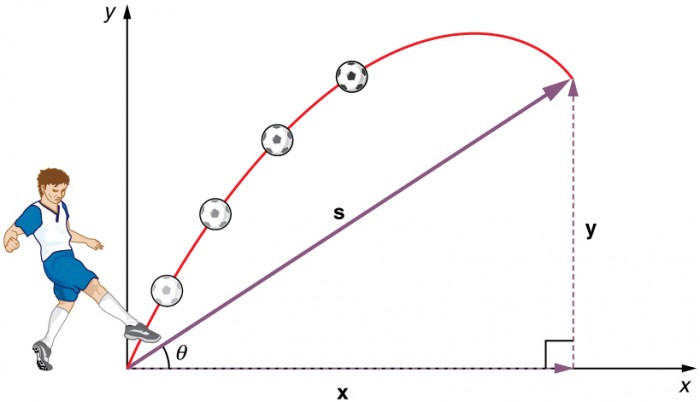
Understanding the basic concepts of projectile motion helps explain many everyday phenomena. Projectile motion describes how objects move when thrown or launched into the air. The path they follow is a curve shaped like a parabola. Gravity pulls the object down, while it moves forward horizontally at the same time. This combination creates a smooth, arcing motion.
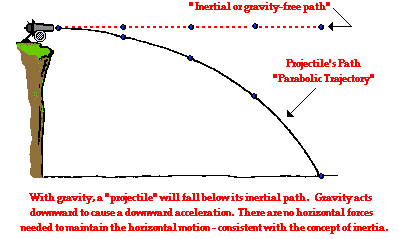
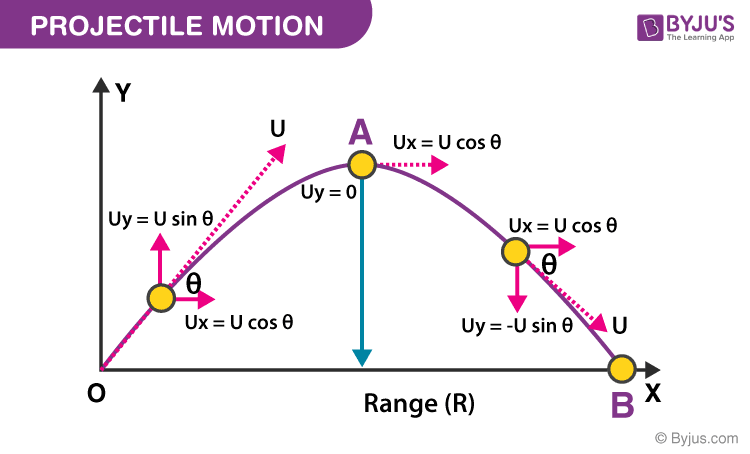
Breaking down projectile motion into simple parts makes it easier to grasp. The object moves in two directions: vertical and horizontal. The vertical motion changes because of gravity, while the horizontal motion usually stays steady if air resistance is ignored. This dual movement defines the unique path of a projectile.
What Is A Projectile
A projectile is any object thrown or launched into the air. It moves under the influence of gravity alone after being released. No other forces, like propulsion or lift, act on it during flight. Common examples include a ball thrown by hand or a stone skipped on water. The key point is the object follows a curved path called its trajectory.
Types Of Projectile Motion
Projectile motion can take different forms based on the initial launch angle and speed. The main types include horizontal, angled, and vertical projectiles. A horizontal projectile is launched straight forward without any initial vertical velocity. An angled projectile is launched at an angle, creating a higher arc. A vertical projectile moves straight up and then falls back down. Each type shows how the forces of motion and gravity work together.
Credit: www.physicsclassroom.com
Motion Components
The launch angle plays a key role in projectile motion. It controls how far and how high the object will travel. Changing the angle changes the path of the projectile. Understanding these effects helps explain why projectiles behave differently.
The right angle can make the projectile go farther. A small change can affect the height and distance a lot. Let’s explore how the launch angle impacts these factors.
Maximum Range Angle
The angle that gives the maximum range is 45 degrees. At this angle, the projectile travels the farthest distance on flat ground. Angles less than or more than 45 degrees reduce the horizontal distance.
This happens because the projectile balances vertical and horizontal motion best at 45 degrees. Too steep means more height but less distance. Too flat means less height and shorter flight time.
Impact Of Angle On Height And Distance
Higher angles increase the maximum height of the projectile. For example, 60 degrees sends the projectile higher than 30 degrees.
However, higher angles reduce the horizontal distance traveled. The projectile spends more time going up and down than moving forward.
Lower angles give longer horizontal distance but lower height. The projectile stays close to the ground but moves fast forward.
Choosing the right launch angle depends on whether height or distance matters more. This simple fact explains many real-life throws and shots.
Credit: byjus.com
Frequently Asked Questions
What Is Projectile Motion In Simple Words?
Projectile motion is the curved path an object follows when thrown, influenced only by gravity and initial force. It moves both horizontally and vertically. Gravity pulls it down while it travels forward, creating a parabolic trajectory until it lands.
What Is The Easy Way To Understand Projectile Motion?
Projectile motion involves an object moving in a curved path due to gravity and initial force. It combines horizontal and vertical motions.
What Is The Simple Definition Of A Projectile?
A projectile is an object launched into the air that moves freely under gravity's influence without propulsion.
What Does Projectile Mean For Kids?
A projectile is an object thrown into the air that moves in a curved path. Gravity pulls it down. Examples include balls, arrows, and water balloons.
Conclusion
Projectile motion shows how objects move when thrown into the air. It combines upward and forward movements. Gravity pulls the object down, creating a curved path. This motion happens in many real-life situations, like sports or launching rockets. Understanding it helps explain everyday activities clearly.
Remember, the path always forms a smooth arc. Keep this simple idea in mind when you see objects flying through the air. Projectile motion is a basic, yet important, part of physics.


No comments