Parts of a Plant And Their Functions
Have you ever wondered how plants grow tall, stay healthy, and produce beautiful flowers or delicious fruits? The secret lies in their different parts, each playing a special role.
Understanding the parts of a plant and their functions can give you a new appreciation for nature and even help you care for your own garden better. From the strong roots that anchor the plant to the colorful petals that attract pollinators, every part works together to keep the plant alive and thriving.
Keep reading, and you’ll discover how each part contributes to a plant’s life in simple, easy-to-understand terms—making it clear why plants are truly amazing living things.
Credit: geniebook.com
Vegetative Parts
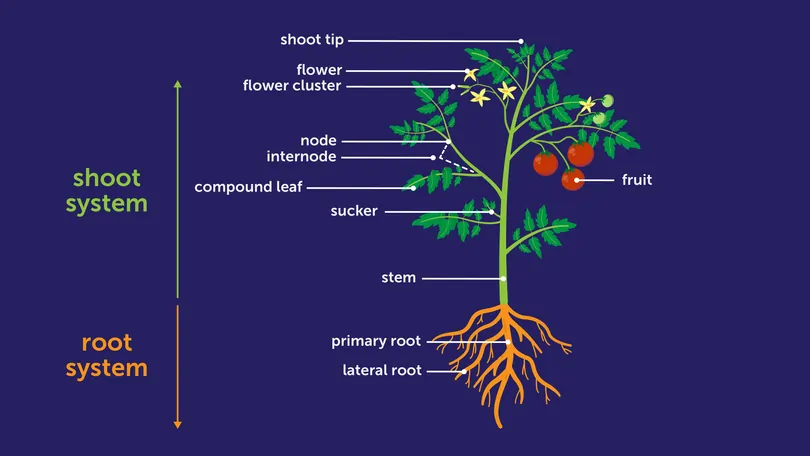
Vegetative parts form the basic structure of a plant. They help the plant grow, take in nutrients, and create food. These parts are not involved in reproduction but are vital for the plant’s survival. Understanding these parts helps us see how plants live and thrive.
Roots
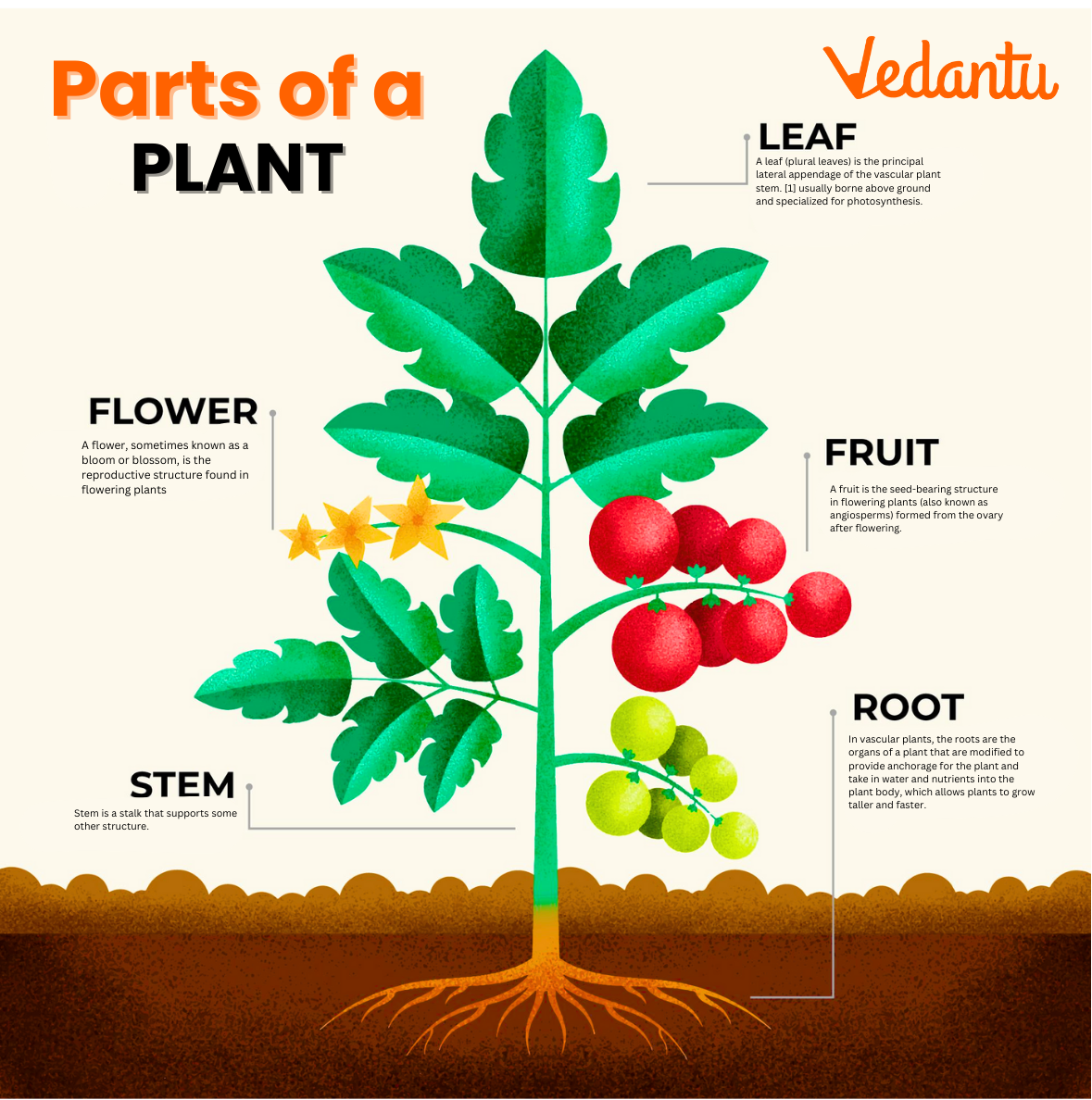
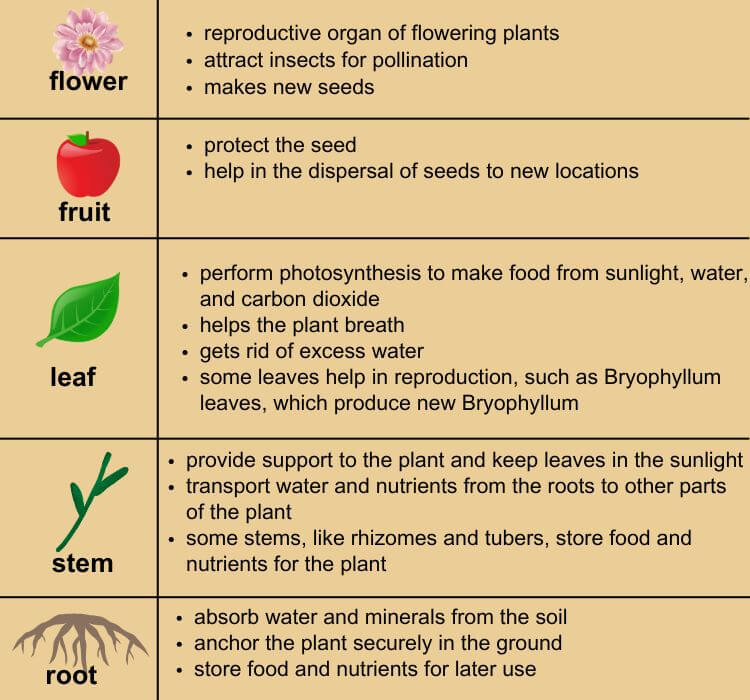
Roots anchor the plant firmly in the soil. They absorb water and minerals needed for growth. Roots also store food for the plant during tough times. Without roots, plants cannot stand or get nutrients.
Stems
Stems support the plant above ground. They carry water and nutrients from the roots to other parts. Stems also transport food made in the leaves to the rest of the plant. They help the plant stand tall and reach sunlight.
Leaves
Leaves are the main food factories of the plant. They use sunlight to make food through photosynthesis. Leaves also release oxygen into the air. Their shape and size help the plant catch enough sunlight.
Nodes And Internodes
Nodes are points on the stem where leaves or branches grow. They play a key role in growth and branching. Internodes are the spaces between nodes. They help the plant stretch and spread its leaves to catch sunlight.
Reproductive Parts
The reproductive parts of a plant play a vital role in creating new plants. They ensure the survival and spread of plant species. These parts work together to produce seeds that grow into new plants. Understanding each part helps us see how plants reproduce and thrive.
Flowers
Flowers are the main reproductive organs of a plant. They attract pollinators like bees and butterflies. Flowers contain male and female parts needed for reproduction. Their colors and scents help in attracting pollinators to transfer pollen.
Sepals
Sepals are green, leaf-like parts that protect the flower bud. They cover the flower before it blooms. Sepals keep the flower safe from damage and harsh weather. After blooming, they may support the flower's base.
Petals
Petals are often bright and colorful. They attract pollinators to the flower. Petals also guide pollinators to the nectar and pollen. Their shape and color help in the pollination process.
Fruits
Fruits develop from the flower's ovary after fertilization. They protect the seeds inside. Fruits also help in seed dispersal by attracting animals. Different fruits use various methods to spread seeds far and wide.
Seeds
Seeds contain the plant embryo and stored food. They are the next generation of plants. Seeds can remain dormant until conditions are right for growth. Once planted, they sprout into new plants, continuing the life cycle.
Plant Cell Components
Plant cells have many parts that work together to keep the plant alive and growing. Each part has a special role. Understanding these parts helps us learn how plants function. These components make plants strong and able to produce food.
Cell Wall
The cell wall gives the plant cell its shape and strength. It is made of cellulose, a tough material. This wall protects the cell and supports the plant.
Cell Membrane
The cell membrane controls what enters and leaves the cell. It acts like a gatekeeper. It lets in nutrients and removes waste.
Nucleus
The nucleus holds the plant’s genetic material. It controls all cell activities. Think of it as the cell’s command center.
Chloroplasts
Chloroplasts are where photosynthesis happens. They capture sunlight to make food for the plant. Chloroplasts contain the green pigment chlorophyll.
Mitochondria
Mitochondria produce energy for the cell. They convert food into usable power. This energy helps the plant grow and repair.
Vacuole
The vacuole stores water, nutrients, and waste. It keeps the cell firm by holding water. This helps the plant stay upright.
Cytoplasm
Cytoplasm is a jelly-like fluid inside the cell. It holds all the cell parts in place. It also helps move materials around.
Endoplasmic Reticulum
The endoplasmic reticulum makes and moves proteins and lipids. It works like a factory inside the cell. There are two types: rough and smooth.
Ribosomes
Ribosomes build proteins needed by the cell. They can be found floating or attached to the ER. Proteins are essential for cell functions.
Golgi Apparatus
The Golgi apparatus packages and ships proteins. It modifies proteins for use inside or outside the cell. It acts like the cell’s post office.
Peroxisomes
Peroxisomes break down harmful substances in the cell. They also help with metabolism. This keeps the cell clean and safe.
Cytoskeleton
The cytoskeleton gives the cell shape and support. It also helps move materials inside the cell. It is made of tiny protein fibers.
Credit: www.vedantu.com
Credit: smartclass4kids.com
Frequently Asked Questions
What Are The 10 Main Parts Of A Plant?
The 10 main parts of a plant are roots, stems, leaves, nodes, internodes, flowers, sepals, petals, fruits, and seeds. Roots absorb water, stems support, leaves make food, flowers reproduce, and fruits protect seeds.
What Are The 12 Parts Of A Plant Cell And Their Functions?
A plant cell has 12 parts: cell wall (support), cell membrane (controls entry), nucleus (stores DNA), chloroplasts (photosynthesis), mitochondria (energy), vacuole (stores water), cytoplasm (fills cell), ER (makes proteins/lipids), ribosomes (build proteins), Golgi apparatus (packages), peroxisomes (metabolism), cytoskeleton (structure).
What Are The 10 Parts Of A Flower And Their Functions?
The 10 parts of a flower are roots, stems, leaves, nodes, internodes, sepals, petals, flowers, fruits, and seeds. Roots absorb water; stems support and transport; leaves make food; nodes hold leaves; internodes connect nodes; sepals protect buds; petals attract pollinators; flowers reproduce; fruits protect seeds; seeds grow new plants.
What Are The 17 Essential Plant Nutrients And Their Functions?
The 17 essential plant nutrients include nitrogen, phosphorus, potassium, calcium, magnesium, sulfur, iron, manganese, zinc, copper, molybdenum, boron, chlorine, nickel, cobalt, silicon, and sodium. They support growth, photosynthesis, enzyme function, cell structure, and stress resistance.
Conclusion
Plants have many important parts that work together. Roots hold the plant firmly in the soil. Stems carry water and food to different parts. Leaves make food through sunlight and air. Flowers help plants make seeds for new life. Fruits protect seeds and help spread them.
Each part plays a special role in a plant’s life. Knowing these parts helps us understand nature better. Plants are amazing living things with many useful functions. Keep exploring to learn even more about plants!


No comments