Food Chain And Food Web
Have you ever wondered how energy moves through nature and keeps life thriving all around you? Understanding the food chain and food web is key to unlocking this mystery.
These natural systems show you who eats whom and how every living thing is connected. Whether it’s a tiny insect munching on leaves or a mighty lion hunting its prey, each step plays a vital role in your ecosystem’s balance.
Dive in with me to discover how these fascinating networks work, why they matter to your world, and how they affect the food you eat every day. Keep reading, and you’ll see nature’s hidden connections like never before.

Credit: bitwiseacademy.com
Food Chain Basics
Understanding the basics of food chains helps us see how energy moves in nature. A food chain shows a simple path of who eats whom in an ecosystem. It starts with plants and ends with animals at the top. This flow of energy connects all living things and keeps life balanced.
Each part of the food chain plays a role in moving energy from the sun to different organisms. Learning these basics gives a clear picture of how life depends on energy transfer. It also explains how different species relate to one another in nature.
Linear Energy Flow
Energy flows in one direction in a food chain. It starts with sunlight captured by plants. Plants use sunlight to make food through photosynthesis. Animals eat the plants to get energy. Then, other animals eat those animals. This flow moves energy step by step.
At each step, energy is used or lost as heat. Less energy is available at higher steps. This limits the number of animals at the top of the chain. The linear flow shows a clear path of energy transfer.
Trophic Levels
Trophic levels are the steps in a food chain. Each level has a group of organisms that share the same energy source. The first level is producers, usually plants. The next levels are consumers that eat plants or other animals.
Primary consumers eat producers. Secondary consumers eat primary consumers. Tertiary consumers eat secondary consumers. Each level depends on the one below for energy. This system helps organize the food chain clearly.
Producers To Consumers
Producers make their own food using sunlight. They are the base of the food chain. Consumers cannot make food. They eat producers or other consumers for energy. Herbivores eat plants. Carnivores eat other animals. Omnivores eat both plants and animals.
This movement from producers to consumers shows how energy travels in nature. It supports all living things by passing energy through different diets. Without producers, consumers would have no energy source.

Credit: www.youtube.com
Food Web Complexity
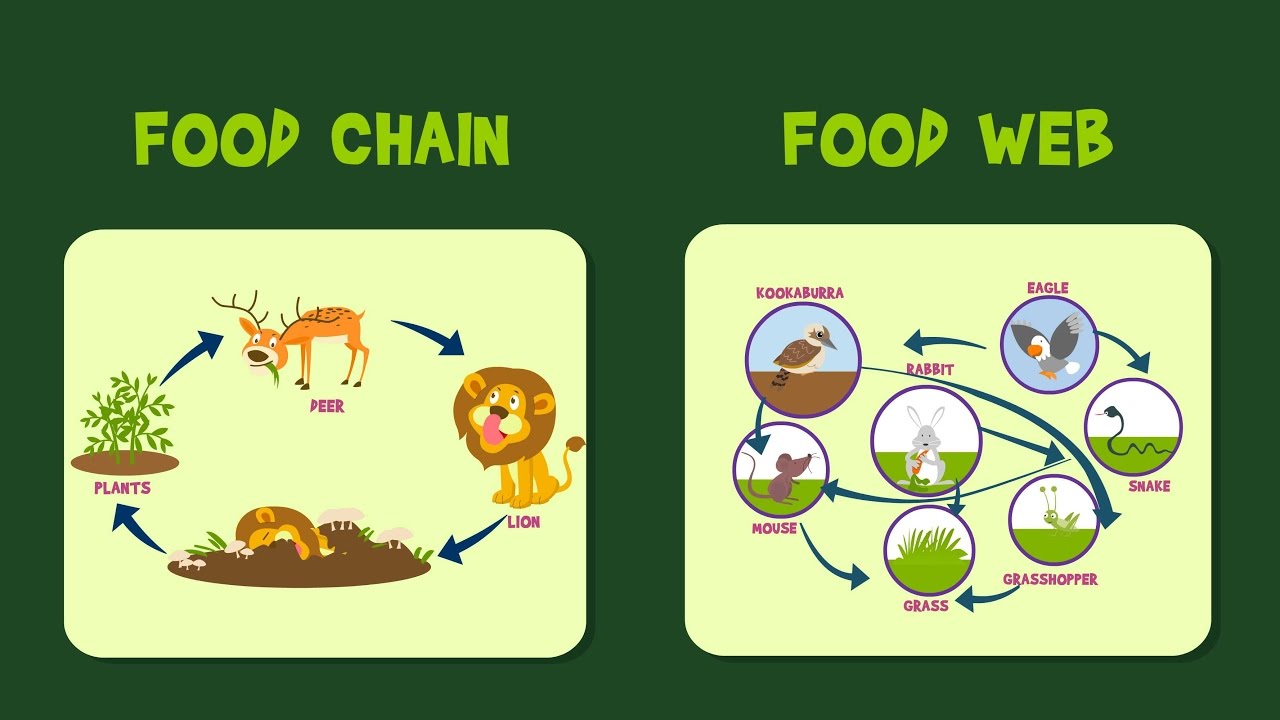
Food webs show the complex feeding relationships in nature. Unlike a simple food chain, a food web connects many chains. This complexity helps explain how energy moves through ecosystems. It also reveals how species depend on each other for survival.
Interconnected Chains
Food webs are made of many linked food chains. One animal may eat several types of food. It may also be eaten by many predators. These connections form a network. This network shows how energy flows from plants to top predators.
Ecosystem Stability
Complex food webs help keep ecosystems stable. If one species disappears, others can fill its role. This flexibility protects the ecosystem from collapse. Many feeding links reduce the risk of food shortages. A strong food web supports a balanced environment.
Multiple Feeding Relationships
Animals often have several food sources. Herbivores eat many types of plants. Carnivores hunt different prey animals. Omnivores consume both plants and animals. These multiple feeding relationships create a rich and diverse food web. They help species survive changes in food availability.
Types Of Organisms
Every food chain and food web includes different types of organisms. Each type plays a special role in the ecosystem. These roles help energy move from one organism to another. Understanding these types helps us see how nature works together.
Producers
Producers are plants and algae. They make their own food using sunlight. This process is called photosynthesis. Producers provide energy for all other organisms in the food chain. Without producers, no other life could survive.
Primary Consumers
Primary consumers eat producers. They are usually herbivores. Examples include rabbits, deer, and caterpillars. These animals get energy by eating plants or algae. They are the first step in passing energy up the food chain.
Secondary Consumers
Secondary consumers eat primary consumers. They are carnivores or omnivores. Examples include foxes, birds, and small fish. They get energy by eating herbivores. Secondary consumers help keep animal populations balanced.
Apex Predators
Apex predators are at the top of the food chain. They have no natural enemies. Examples include wolves, bears, and sharks. They control the population of other animals. Apex predators keep ecosystems healthy and stable.
Decomposers
Decomposers break down dead plants and animals. Examples are fungi, bacteria, and earthworms. They recycle nutrients back into the soil. This process supports new plant growth. Decomposers close the loop in the food web.
Ecosystem Examples
Food chains and food webs show how energy flows through ecosystems. Different ecosystems have unique food webs. These webs reveal who eats whom and how species depend on each other. Understanding these examples helps us see nature’s balance and the role of each organism.
Forest Food Web
Forests have many plants like trees, ferns, and grasses. Deer and rabbits eat these plants. Foxes and birds feed on smaller animals. Wolves and bears are top predators. This web shows many connections among animals and plants.
Marine Food Web
Oceans start with algae and plankton. Small fish and krill eat plankton. Larger fish, seals, and whales eat small fish. Sharks often sit at the top. This web supports many life forms in water.
Desert Food Web
Deserts have cacti and tough grasses. Insects and rodents eat plants. Lizards and hawks hunt these small animals. This web is simple but strong, helping life survive harsh conditions.
Freshwater Pond Web
Ponds have algae and water plants. Insects and small fish eat the plants. Herons and bigger fish eat the smaller animals. This web shows how water life depends on plants and animals.
Grassland Food Web
Grasslands grow mostly grasses and herbs. Grasshoppers feed on plants. Toads eat grasshoppers. Snakes hunt toads. Hawks hunt snakes. This web is a chain of energy passing through many levels.
Energy Transfer
Energy transfer is the movement of energy through the food chain and food web. It shows how living things get energy to grow and survive. Energy starts with producers and moves to consumers at different levels. Understanding this process helps us see how nature works and stays balanced.
Efficiency Of Energy Flow
Energy flow is not 100% efficient. Only a small part of energy passes from one level to the next. Most energy is used by organisms for life processes like movement and heat. About 10% of energy moves to the next level in the food chain. This low efficiency limits the number of levels in a food chain.
Role Of Sunlight
Sunlight is the primary source of energy for almost all ecosystems. Plants and algae use sunlight to make food through photosynthesis. This energy stored in plants starts the food chain. Without sunlight, producers cannot create energy, and the whole food web would collapse.
Energy Loss At Each Level
Energy is lost at every step in the food chain. Animals use energy to move, breathe, and stay warm. Some energy leaves as heat. Not all parts of plants or animals are eaten, so energy remains unused. This loss reduces the energy available to higher consumers in the chain.
Human Impact
Human activities have a strong effect on food chains and food webs. Changes caused by humans can break natural connections between species. This disruption alters how energy flows through ecosystems. It affects many living things, from tiny plants to large animals.
Understanding human impact helps us protect nature. It shows why some species disappear and others grow too much. Careful actions can reduce harm and support healthy ecosystems.
Disruption Of Food Chains
Humans change habitats by cutting forests and polluting water. This removes plants and animals that many species rely on. Overfishing takes too many fish, leaving predators with less food. Introducing new species can cause native ones to die out. These actions break links in the food chain. When one link breaks, the whole chain weakens.
Effects On Biodiversity
Biodiversity means the variety of life in an area. When food chains break, some species vanish. This lowers biodiversity and weakens ecosystems. Fewer species mean less balance and fewer chances for nature to recover. Loss of pollinators, like bees, harms plants and crops. Reduced biodiversity makes ecosystems less stable and less able to provide clean air and water.
Conservation Efforts
People work to protect food chains and biodiversity. Protected areas like parks keep habitats safe from damage. Laws limit hunting and fishing to keep animal numbers balanced. Restoration projects plant trees and clean rivers to help ecosystems heal. Education raises awareness about how humans affect nature. Together, these efforts help nature stay strong and support all life.
Credit: www.youtube.com
Frequently Asked Questions
What Is The Food Web And Food Chain?
A food chain shows who eats whom in a straight line. A food web connects multiple food chains in an ecosystem, showing complex feeding relationships.
What Are 5 Examples Of The Food Web?
Five food web examples include forest (trees → deer → wolves), marine (plankton → fish → sharks), desert (cactus → insects → hawks), pond (algae → insects → herons), and grassland (grass → grasshoppers → snakes → hawks). Each shows interconnected feeding relationships in ecosystems.
What Is A Simple Definition Of A Food Chain?
A food chain shows how energy flows as one organism eats another. It starts with plants and ends with predators.
What Is The Difference Between A Food Chain And A Food Web Chart?
A food chain shows a single feeding path, while a food web displays multiple interconnected food chains in an ecosystem.
Conclusion
Food chains and food webs show how energy moves in nature. Each living thing depends on others to survive. Food chains follow one path of eating. Food webs connect many food chains together. This helps keep ecosystems balanced and healthy.
Understanding these systems helps us protect wildlife and plants. Nature’s network is strong but needs care. Every species plays a role in this cycle. Together, they keep life on Earth moving forward.


No comments