Dna Structure And Function
Have you ever wondered what makes you, you? The answer lies deep inside your cells—in a tiny but powerful molecule called DNA.
Understanding DNA’s structure and function is like unlocking the secret code that shapes every part of your body and every trait you inherit. Imagine a twisted ladder, perfectly designed to store all the instructions needed to build and run a living organism.
This article will guide you through the fascinating details of DNA’s double helix shape, the four building blocks that make up its code, and how this incredible molecule controls everything from cell growth to passing your unique traits to the next generation. By the end, you’ll see DNA not just as a scientific concept, but as the very blueprint of life that’s inside you. Ready to dive in? Let’s explore the amazing world of DNA structure and function together.
Dna Double Helix
The DNA double helix is a twisted ladder-like structure essential to life. It holds the genetic code that guides all living organisms. This shape allows DNA to store information, copy itself, and pass traits from parents to children.
The structure is made of two long strands wound around each other. These strands consist of smaller parts that fit together like puzzle pieces. Understanding these parts explains how DNA works.
Nucleotide Components
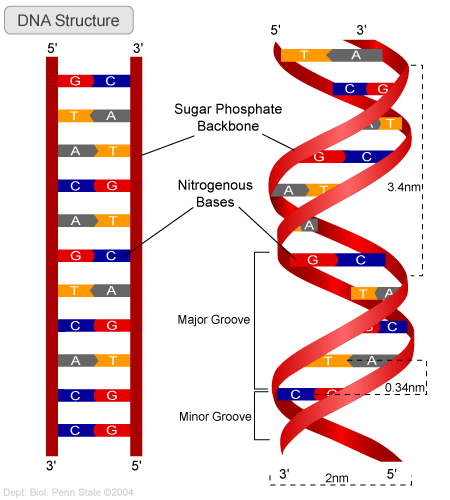
Nucleotides are the basic units of DNA. Each nucleotide has three parts: a phosphate group, a sugar called deoxyribose, and a nitrogenous base. The four bases are adenine (A), thymine (T), cytosine (C), and guanine (G). These bases carry the genetic information.
Sugar-phosphate Backbone
The sugar and phosphate groups link together to form the backbone of each DNA strand. This backbone is strong and stable. It supports the structure while holding the bases in place like rungs on a ladder.
Base Pairing Rules
The bases pair specifically: adenine pairs with thymine, and cytosine pairs with guanine. These pairs connect the two DNA strands. Hydrogen bonds hold them together, two bonds for A-T and three for C-G. This pairing ensures accurate copying of DNA.
Helical Structure
The two strands twist around each other, forming the double helix. This spiral shape makes DNA compact and protects the genetic code inside. The helical form allows DNA to fit inside cells and work efficiently during replication and protein production.
Credit: www.earthslab.com
Genetic Code
The genetic code is the language of life. It stores instructions needed to build and maintain living organisms. DNA carries this code in a form that cells can read and use. This code determines traits, functions, and development in every living thing.
Four Nitrogenous Bases
The genetic code uses four nitrogenous bases: adenine, thymine, cytosine, and guanine. These bases pair specifically: adenine pairs with thymine, and cytosine pairs with guanine. The order of these bases creates the unique instructions for each organism.
Base Sequence Significance
The sequence of bases forms the genetic instructions. A change in the order can alter traits or functions. This sequence acts like letters in a sentence, directing cells how to make proteins. Proteins then perform most tasks in the body.
Information Storage
DNA stores vast amounts of information in a small space. Its double helix structure protects the code from damage. This storage allows cells to copy and pass genetic information to new cells. It ensures life continues from one generation to the next.
Dna Replication
DNA replication is a vital process that allows cells to copy their genetic material. It ensures that each new cell has the exact same DNA as the original. This process happens before a cell divides, making it essential for growth and repair.
The replication of DNA follows a precise sequence of steps. Each step involves specific enzymes and mechanisms. The goal is to produce two identical DNA molecules from one original molecule.
Unwinding The Helix
The first step in DNA replication is unwinding the double helix. Special enzymes called helicases break the hydrogen bonds between base pairs. This action separates the two strands and opens the DNA like a zipper. The unwound strands serve as templates for the next phase.
Template Strands
Each separated DNA strand acts as a template. Free nucleotides in the cell match up with the exposed bases on the template strands. Adenine pairs with thymine, and cytosine pairs with guanine. This complementary base pairing ensures the new strands are exact copies of the originals.
Enzymatic Process
Enzymes play a critical role in building new DNA strands. DNA polymerase adds nucleotides one by one to the growing strand. It moves along the template strand, linking the nucleotides together. Other enzymes help with joining fragments and fixing the DNA structure.
Ensuring Accuracy
Accuracy in DNA replication is crucial to prevent mutations. DNA polymerase has proofreading abilities to check each added nucleotide. Mistakes are corrected immediately. This proofreading reduces errors and maintains the integrity of genetic information.

Credit: www.youtube.com
Protein Synthesis
Protein synthesis is the process cells use to build proteins. Proteins perform many vital roles. They act as enzymes, structural components, and signaling molecules. This process translates genetic information from DNA into functional proteins. It happens in two main steps: transcription and translation. Both steps are essential for gene expression and cell function.
Gene Expression Basics
Gene expression is how cells read genetic instructions. It starts with a gene, a DNA segment that codes for a protein. The gene's information is copied into messenger RNA (mRNA). This RNA serves as a temporary copy of the gene. The cell uses mRNA to make proteins in the cytoplasm. Gene expression controls which proteins the cell makes and when.
Transcription Process
Transcription is the first step of protein synthesis. It happens in the cell nucleus. An enzyme called RNA polymerase binds to the DNA at a gene's start. It reads the DNA strand and builds a matching mRNA strand. The mRNA carries the gene's code out of the nucleus. This mRNA will guide protein assembly in the next step.
Translation Mechanism
Translation occurs in the cytoplasm at the ribosome. The ribosome reads the mRNA sequence in groups of three bases, called codons. Each codon codes for a specific amino acid. Transfer RNA (tRNA) brings the correct amino acids to the ribosome. The ribosome links amino acids together to form a protein chain. This chain folds into a functional protein that the cell uses.
Heredity And Traits
Heredity is the passing of traits from parents to children. Traits include eye color, hair type, and even certain health risks. DNA plays a key role in this process. It carries the instructions that shape these traits.
Understanding heredity helps us learn how traits are inherited and why family members look alike. DNA is like a recipe book, guiding the development of living things. It ensures traits are passed down through generations.
Dna Transmission
DNA transmits genetic information from one generation to the next. During reproduction, cells copy DNA and pass it to offspring. This process guarantees that children inherit traits from their parents.
Each parent contributes half of the DNA to their child. This mix creates a unique combination of traits. DNA transmission is precise but allows small changes or mutations.
Genetic Variation
Genetic variation means differences in DNA among individuals. These differences cause variations in traits like height or skin color. Variation helps populations adapt to changing environments.
Mutations, gene shuffling, and recombination increase genetic diversity. Without variation, species may struggle to survive diseases or environmental changes. It is a natural part of heredity.
Inheritance Patterns
Inheritance patterns explain how traits pass from parents to children. Some traits follow simple rules, like dominant and recessive genes. Others depend on multiple genes or environmental factors.
Dominant traits show up if one parent passes the gene. Recessive traits appear only if both parents pass the gene. These patterns help predict the chance of a child inheriting certain traits.
Structure-function Relationship
The relationship between DNA's structure and its function is key to understanding biology. DNA's unique shape allows it to perform vital roles in living cells. The double helix design supports stability, information storage, and accurate copying. Each part of DNA's structure helps it work efficiently in different ways.
Molecular Stability
DNA's double helix provides strong molecular stability. The sugar-phosphate backbone forms sturdy sides of the ladder. Base pairs in the middle connect strands with hydrogen bonds. These bonds hold the strands together but allow them to separate when needed. This balance keeps DNA safe from damage while letting it open for copying and reading.
Information Encoding Capacity
DNA stores information using four nitrogen bases: adenine, thymine, cytosine, and guanine. The order of these bases creates genetic codes. These codes tell cells how to build proteins and carry out functions. The sequence can hold vast amounts of data in a small space. This makes DNA an efficient and powerful information carrier.
Replication Fidelity
DNA must copy itself accurately during cell division. The base pairing rules ensure correct matching: adenine pairs with thymine, cytosine with guanine. This pairing guides the creation of a new strand from an original template. Enzymes check and fix errors during replication. High replication fidelity preserves genetic information across generations.

Credit: www.researchgate.net
Frequently Asked Questions
What Are The Four Main Functions Of Dna?
DNA stores genetic information, directs protein synthesis, replicates for cell division, and transmits hereditary traits to offspring.
What Are The 4 Structures Of Dna?
The four structures of DNA include the sugar-phosphate backbone, nitrogenous bases, base pairs, and the double helix shape.
What Is The Basic Structural And Functional Unit Of Dna?
The basic structural and functional unit of DNA is the nucleotide. Each nucleotide contains a phosphate group, deoxyribose sugar, and one nitrogenous base. Nucleotides link to form DNA’s double helix, storing genetic information and guiding protein synthesis in living organisms.
What Is 5 To 3 And 3 To 5 Dna?
5' to 3' DNA refers to the strand running from the fifth carbon to the third carbon of sugar. 3' to 5' DNA runs oppositely. This antiparallel orientation is essential for DNA replication and function.
Conclusion
DNA’s structure and function work closely to support life’s basics. Its twisted ladder shape holds the genetic code clearly. This code guides cells to make proteins needed for growth. DNA copies itself carefully to pass traits to new cells. Understanding DNA helps us learn how living things grow and change.
The simple pairing of bases makes this process reliable and strong. DNA truly acts as life’s instruction manual, written in every cell.


No comments