Chromosome Structure
Have you ever wondered what makes you, well, you at the most basic level? The answer lies deep within your cells—in tiny structures called chromosomes.
Understanding chromosome structure is key to unlocking the mysteries of genetics, inheritance, and even certain health conditions. If you want to grasp how your DNA is organized and why chromosomes look the way they do, this article is made just for you.
By the end, you’ll see chromosomes not as complicated scientific jargon, but as fascinating blueprints that shape every aspect of your being. Ready to dive into the world inside your cells? Let’s explore the structure of chromosomes together.

Credit: www.geeksforgeeks.org
Chromosome Components
Chromosomes are complex structures inside cells. They carry genetic information essential for life. Understanding chromosome components helps explain how DNA is organized and protected. These components work together to ensure proper cell function and division.
Dna And Histones
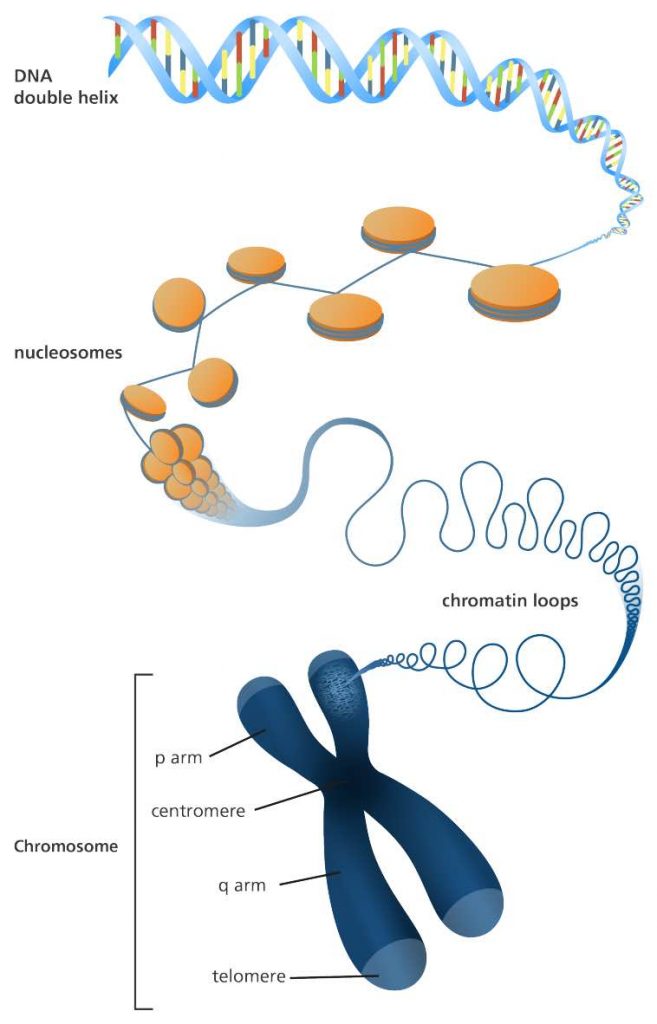
DNA is a long, thread-like molecule carrying genetic codes. It wraps tightly around proteins called histones. This wrapping helps organize DNA into compact shapes. Histones act like spools, keeping DNA neat and manageable inside the nucleus.
Nucleosomes
Nucleosomes are bead-like units formed by DNA wrapped around histones. They are the basic building blocks of chromatin. Each nucleosome contains eight histone proteins wrapped by DNA. This structure reduces DNA length and prepares it for further folding.
Chromatin Structure
Chromatin is a combination of DNA and proteins. It exists in two forms: euchromatin and heterochromatin. Euchromatin is loosely packed and active in gene expression. Heterochromatin is tightly packed and mostly inactive. Chromatin condenses further to form chromosomes during cell division.
Centromere Role
The centromere is a narrow region joining two sister chromatids. It acts as a key attachment point for spindle fibers during cell division. This ensures chromosomes separate correctly into daughter cells. The centromere also divides the chromosome into two distinct arms.
P And Q Arms
Chromosomes have two arms separated by the centromere. The short arm is called the p arm. The long arm is called the q arm. These arms carry different genes and help identify chromosomes. Their lengths vary depending on chromosome type.
Telomere Function
Telomeres are protective caps at the ends of chromosome arms. They prevent DNA loss during cell division. Telomeres also stop chromosomes from sticking to each other. Over time, telomeres shorten, which affects cell aging and health.
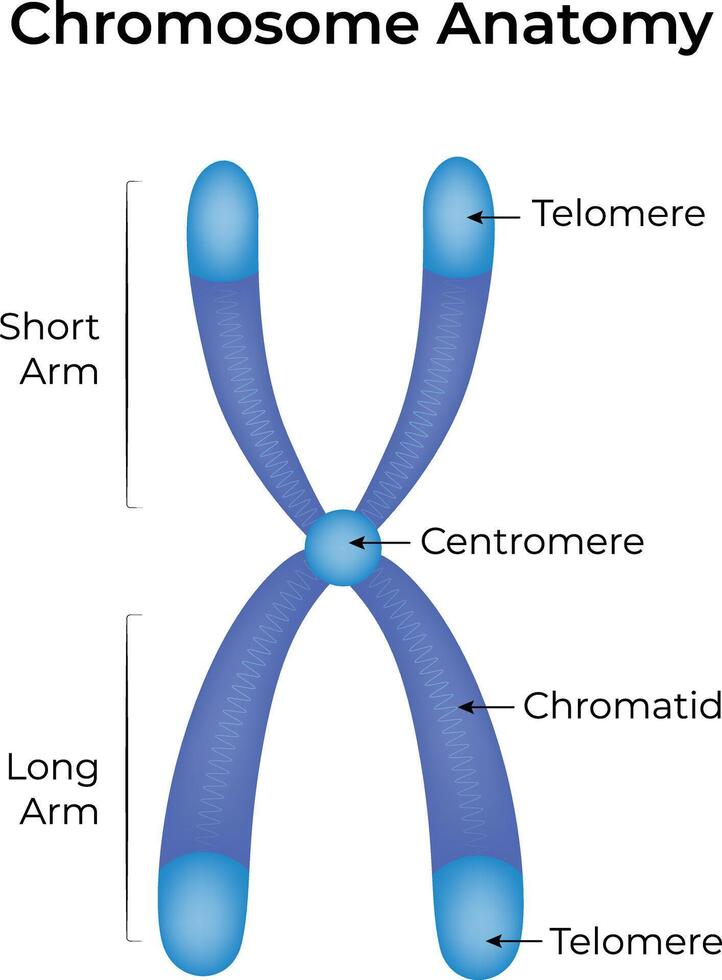
Credit: www.vecteezy.com
Chromosome Forms
Chromosomes exist in different forms depending on the cell’s stage and function. These forms help the chromosome carry out its role in storing and passing genetic information. The two main forms are replicated and unreplicated chromosomes. Each form plays a key role in the life cycle of a cell.
Replicated Chromosomes
Replicated chromosomes appear just before a cell divides. The DNA duplicates, creating two identical copies called sister chromatids. These chromatids stay connected at a central point called the centromere. This connection gives the chromosome its classic “X” shape. This form ensures each new cell receives an exact copy of DNA.
During cell division, the replicated chromosome condenses and becomes visible under a microscope. This tight packing protects the DNA and helps the cell organize its genetic material. The replicated form is essential for accurate distribution of chromosomes to daughter cells.
Unreplicated Chromosomes
Unreplicated chromosomes are found when a cell is not dividing. They consist of a single DNA strand wrapped around proteins called histones. This form looks like a thin, thread-like structure inside the cell nucleus. It is less condensed than the replicated form.
In this state, the chromosome allows access to the DNA for processes like gene expression and DNA repair. The unreplicated chromosome is more flexible and not tightly packed. It helps the cell maintain normal functions between divisions.
Centromere-based Classification
The centromere plays a crucial role in chromosome structure. It is the point where two chromatids attach. Scientists classify chromosomes based on the position of the centromere. This classification helps in understanding chromosome behavior during cell division. It also aids in identifying chromosomal abnormalities.
There are three main types of chromosomes based on centromere position. Each type has unique arm lengths. These types are metacentric, submetacentric, and acrocentric chromosomes. Understanding these types provides insight into chromosome function and structure.
Metacentric Chromosomes
Metacentric chromosomes have the centromere located in the middle. This position creates two arms of almost equal length. Both the short arm (p arm) and the long arm (q arm) appear similar. These chromosomes look like a classic "X" shape during cell division. They are easy to identify under a microscope due to their symmetry.
Submetacentric Chromosomes
Submetacentric chromosomes have the centromere slightly off-center. This causes one arm to be longer than the other. The p arm is shorter than the q arm but not extremely short. These chromosomes have a distinct asymmetrical look. The difference in arm length helps in their classification.
Acrocentric Chromosomes
Acrocentric chromosomes have the centromere very close to one end. This results in a very short p arm and a much longer q arm. The short arm often contains repetitive DNA and ribosomal RNA genes. These chromosomes may have satellite structures attached to the short arm. Their unique structure distinguishes them from other types.
Credit: rsscience.com
Frequently Asked Questions
What Is The Structure Of A Chromosome?
A chromosome consists of DNA wrapped around histone proteins forming chromatin. It coils into an X-shape during cell division. A centromere divides it into short (p) and long (q) arms, with telomeres protecting the ends.
Can A Woman With Xy Chromosomes Have A Baby?
Some XY females, like those with Swyer syndrome, can have babies using donated eggs and assisted reproductive technology. They often have a uterus but lack functional ovaries. Hormone therapy and IVF enable pregnancy, usually requiring a C-section for delivery. Natural conception is not possible.
Are Chromosomes V Or J Shaped?
Chromosomes are neither V nor J shaped. They typically appear X-shaped during cell division and rod-like otherwise.
What Are The 4 Types Of Chromosomes?
The four types of chromosomes are metacentric, submetacentric, acrocentric, and telocentric. They differ by centromere position.
Conclusion
Understanding chromosome structure helps us grasp how genetic information is stored. Chromosomes carry DNA tightly packed to fit inside the cell nucleus. Their parts, like centromeres and telomeres, play key roles in cell division and DNA protection. This knowledge aids studies in genetics, medicine, and biology.
Clear chromosome organization ensures proper cell function and inheritance. Exploring chromosomes reveals the complexity behind life’s blueprint.


No comments