Valence electrons are used to predict how an atom will bond, react, form ions, and interact with other atoms.
For students learning chemistry in the United States, valence electrons provide one of the simplest ways to understand why elements behave differently. Valence electrons are the electrons in an atom's outermost occupied energy level that are most involved in chemical behavior. Because these electrons can be gained, lost, or shared during chemical interactions, they help explain why sodium reacts readily with chlorine, why oxygen commonly forms two bonds, and why noble gases are comparatively unreactive.
Knowing the number of valence electrons also helps you read the periodic table, predict common ion charges, understand ionic and covalent bonding, and draw Lewis electron-dot structures. For main-group elements, the periodic table provides a useful shortcut because elements in the same group generally have the same number of valence electrons.
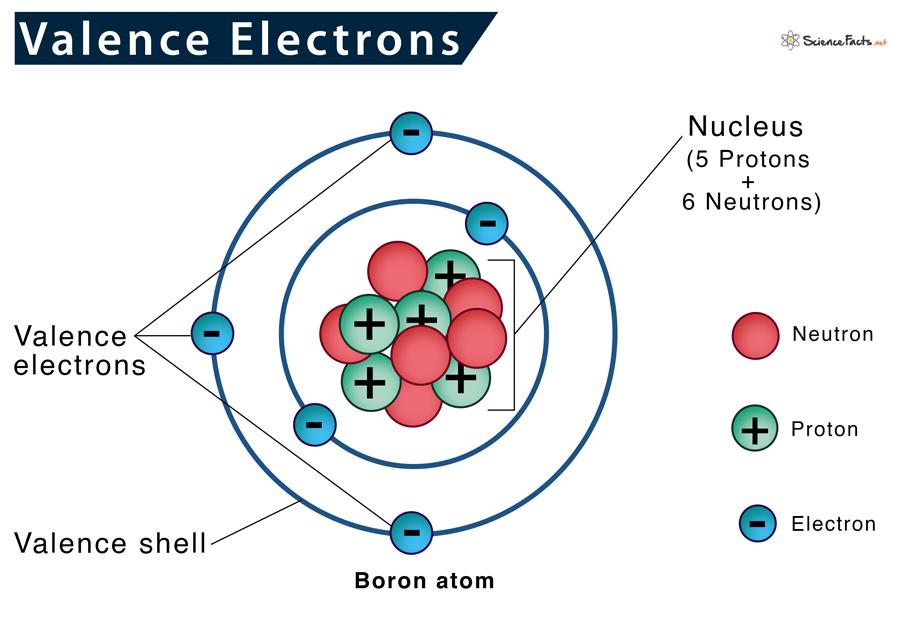
Source: sciencefacts.net
What Are Valence Electrons?
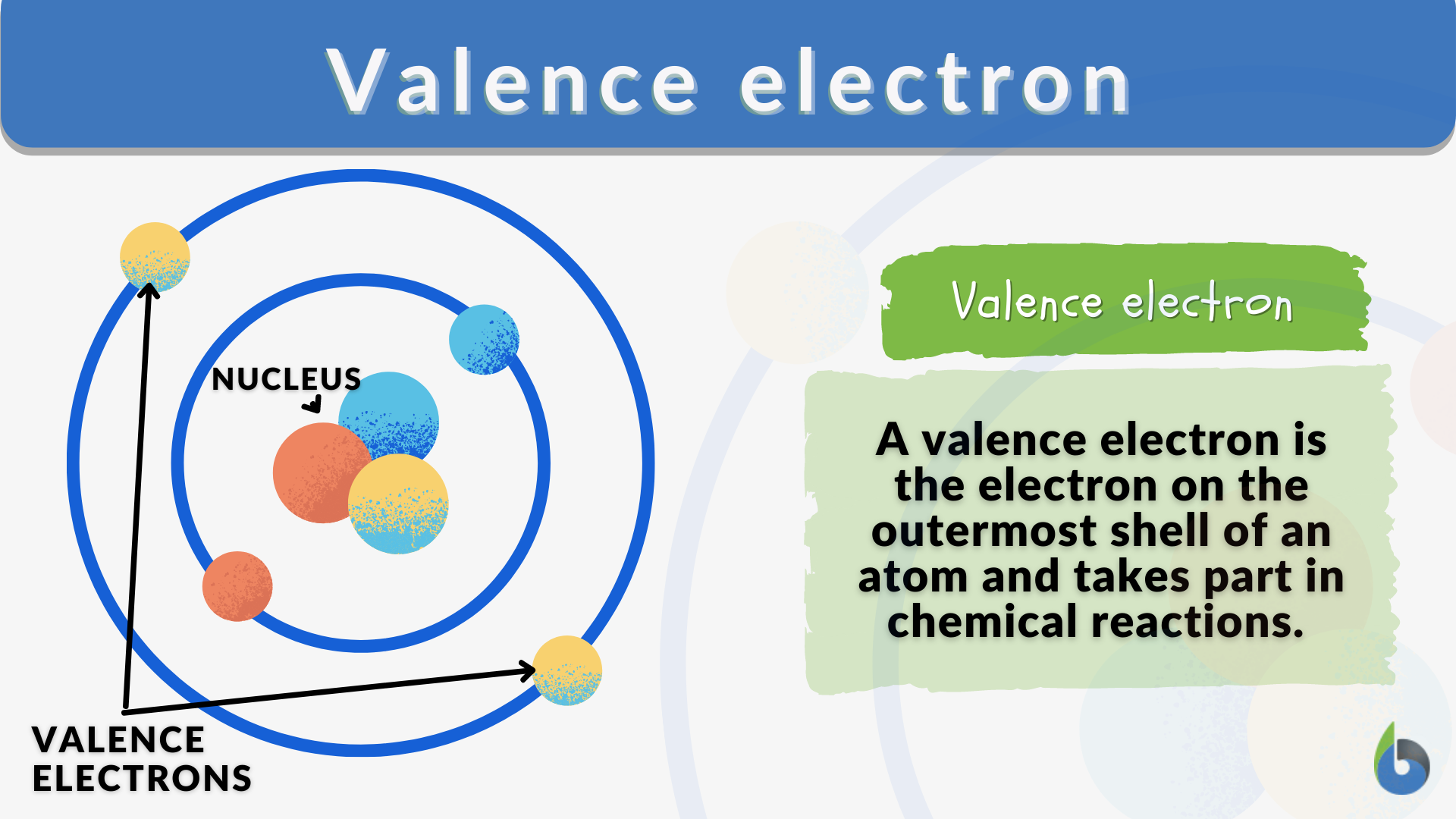
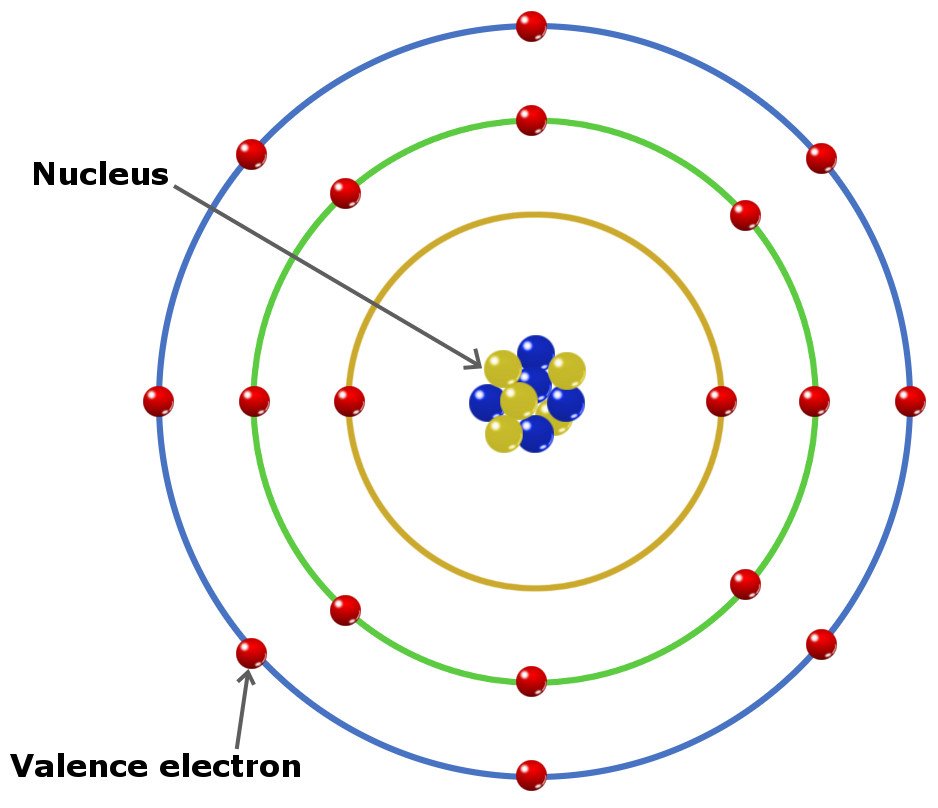
Valence electrons are electrons associated with an atom's outermost occupied energy level and are the electrons most directly involved in many chemical interactions. They are different from core electrons, which are closer to the nucleus and generally do not participate directly in ordinary chemical bonding.
The number of valence electrons matters because chemical bonds involve changes in the distribution of electrons between atoms. An atom may lose electrons, gain electrons, or share electrons with another atom. These processes are strongly connected to the atom's valence-electron arrangement.
For example, a neutral sodium atom has one valence electron. Chlorine has seven valence electrons. Sodium can lose its outer electron while chlorine can gain one, producing Na+ and Cl− ions. The electrostatic attraction between these oppositely charged ions forms sodium chloride, NaCl.
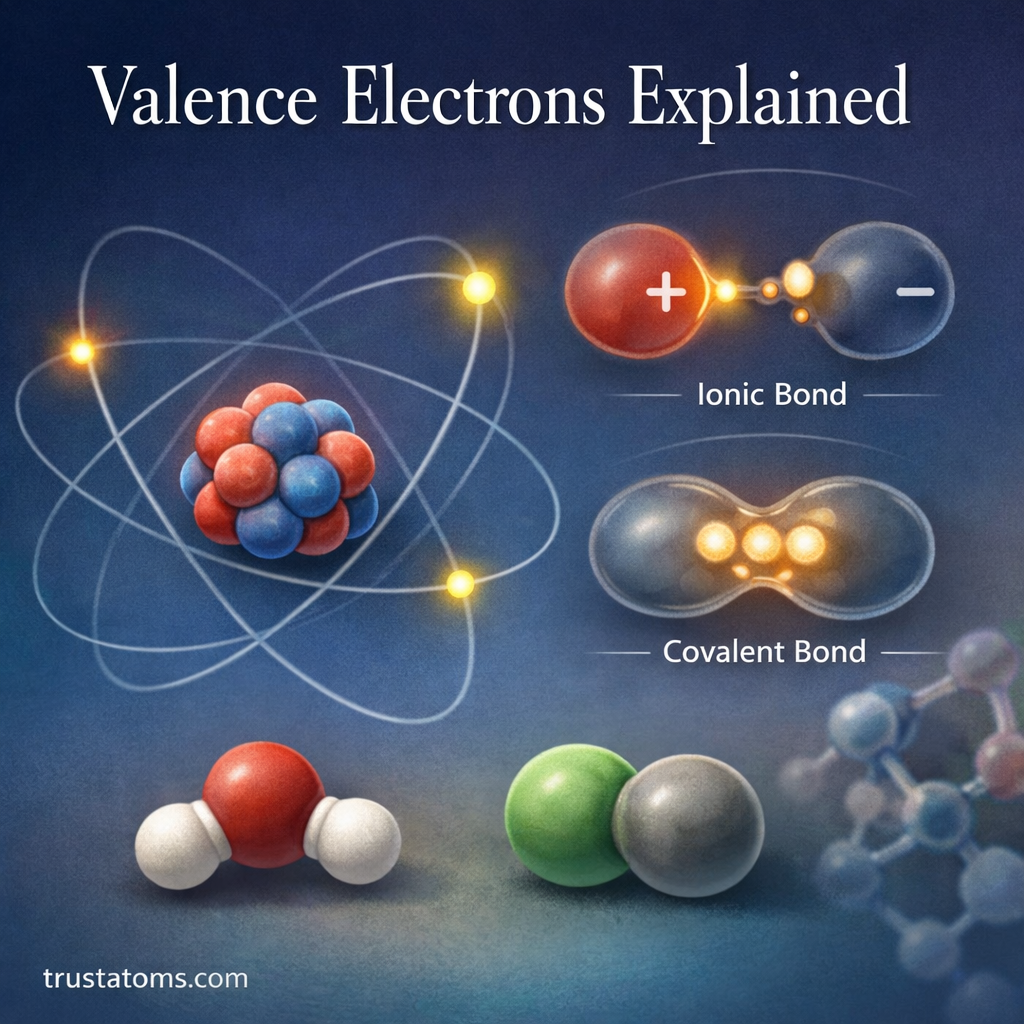
Source: trustatoms.com
Valence electrons
Outer electrons that are most important to an atom's chemical behavior.
Core electrons
Inner electrons that generally remain unchanged during ordinary chemical reactions.
Valence shell
The outer occupied energy level associated with the atom's valence electrons.
What Are Valence Electrons Used For?
The main use of valence electrons is to help explain and predict chemical behavior. Their number and arrangement provide information about how an atom is likely to interact with other atoms.
Valence electrons are especially useful for understanding chemical bonding. When atoms form compounds, their valence electrons may be transferred or shared. This produces ionic or covalent bonds, while metallic bonding also depends on the behavior of electrons associated with metal atoms.
Valence electrons also help explain chemical reactivity. Atoms with nearly complete outer shells may gain or share electrons, while many metals with relatively few outer electrons tend to lose them. Noble gases generally have filled outer shells and are therefore much less reactive under ordinary conditions.
Source: expii.com
Predict chemical bonding
Valence electrons help determine whether atoms are likely to transfer or share electrons.
Predict ion formation
The number of valence electrons helps explain why atoms form positive or negative ions.
Understand reactivity
Valence-electron arrangements help explain why some elements react readily while others are relatively unreactive.
Draw Lewis structures
Lewis electron-dot structures represent valence electrons and help visualize chemical bonds.
Valence Electrons and Chemical Bonds
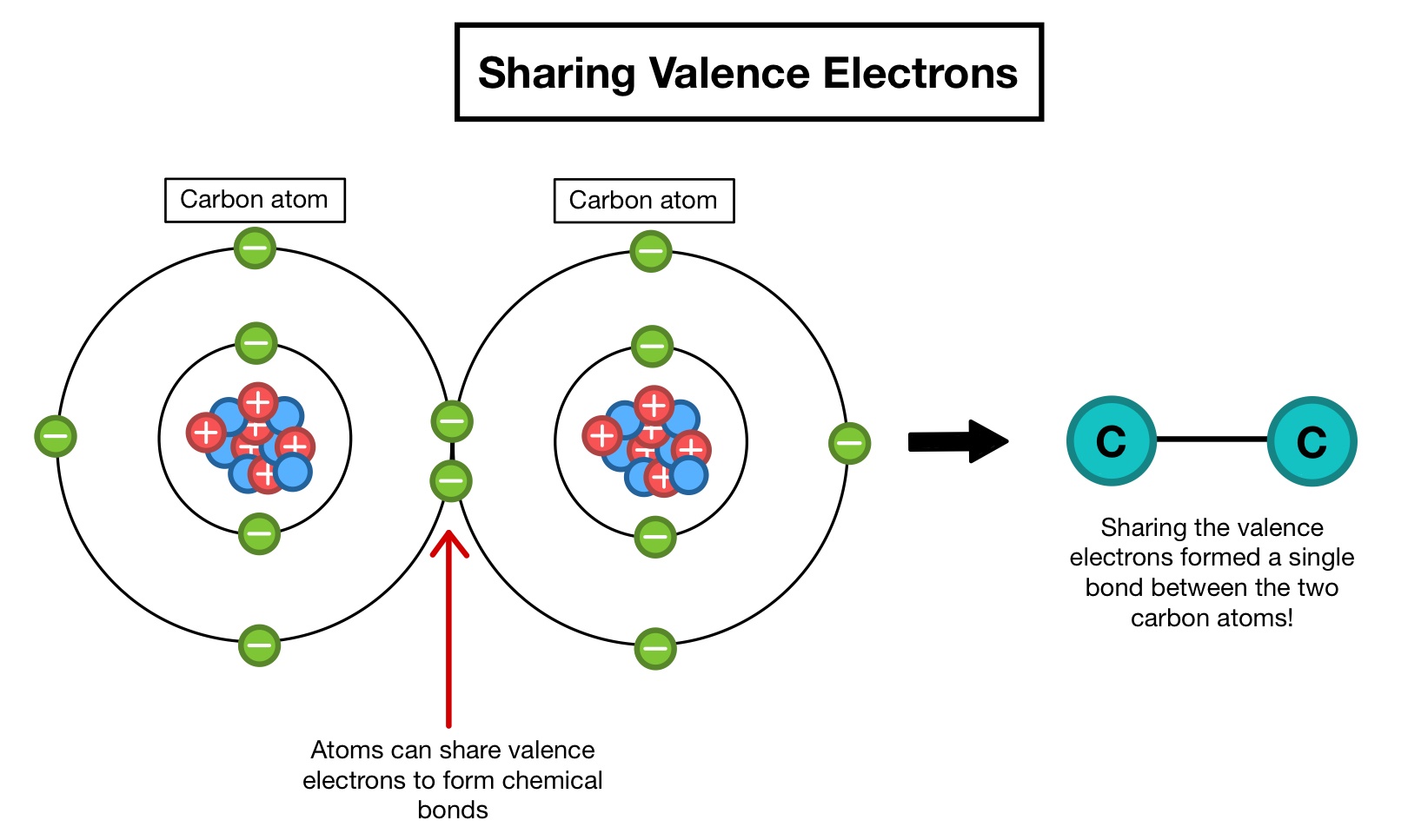
Chemical bonds form through interactions involving electrons. In an ionic bond, electrons are transferred between atoms. In a covalent bond, atoms share electron pairs. In both cases, valence electrons provide the electrons that are directly involved in the bonding process.
Consider hydrogen chloride, HCl. Hydrogen has one valence electron, while chlorine has seven. The atoms share a pair of electrons, giving hydrogen access to two electrons in its first shell and chlorine access to a filled outer shell in the simplified Lewis model.
Ionic bonding
Valence electrons are transferred, commonly from a metal to a nonmetal, producing oppositely charged ions.
Covalent bonding
Valence electrons are shared between atoms to form shared electron pairs.
How Do Valence Electrons Affect Chemical Reactivity?
Valence electrons strongly influence how readily an element reacts because chemical reactions often involve changes in the outer electron arrangement. Atoms with outer electron configurations that are relatively close to a filled shell may gain, lose, or share electrons to reach a more stable arrangement.
For many main-group elements, the number of valence electrons gives a useful first approximation of common chemical behavior. Group 1 elements have one valence electron and commonly form +1 ions. Group 2 elements generally have two valence electrons and commonly form +2 ions. Group 17 elements have seven valence electrons and commonly form −1 ions.
Noble gases provide an important comparison. Helium has two electrons in its first and only occupied shell, while other common noble gases have filled outer shells. Their relatively complete outer electron arrangements help explain their low tendency to form ordinary chemical compounds.
Source: eureka.patsnap.com
Few valence electrons
Many main-group metals with one or two valence electrons tend to lose those electrons and form positive ions.
Nearly full valence shell
Many nonmetals with five, six, or seven valence electrons tend to gain or share electrons.
Filled valence shell
Elements with filled outer shells generally show relatively low chemical reactivity.
Why Does Sodium React So Easily With Chlorine?
Sodium has one valence electron, while chlorine has seven. Sodium can lose one electron to form Na+, and chlorine can gain one electron to form Cl−. The resulting ions have stable outer-shell arrangements in the basic model, and their opposite charges attract to form sodium chloride.
This example shows why valence electrons are useful for predicting chemical behavior. The electron arrangements do not tell the entire story of a reaction, but they provide a fundamental explanation for the formation of the ions and the resulting ionic compound.
How Many Valence Electrons Do Elements Have?
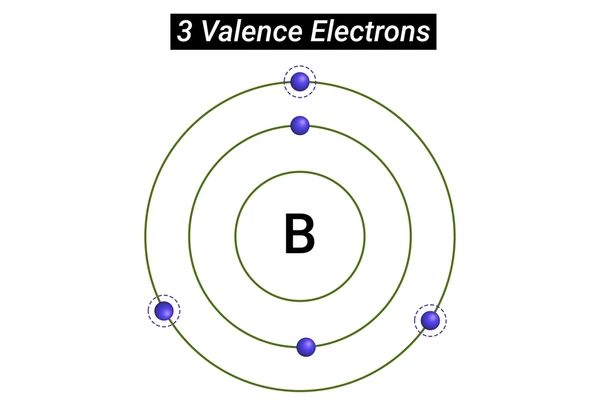
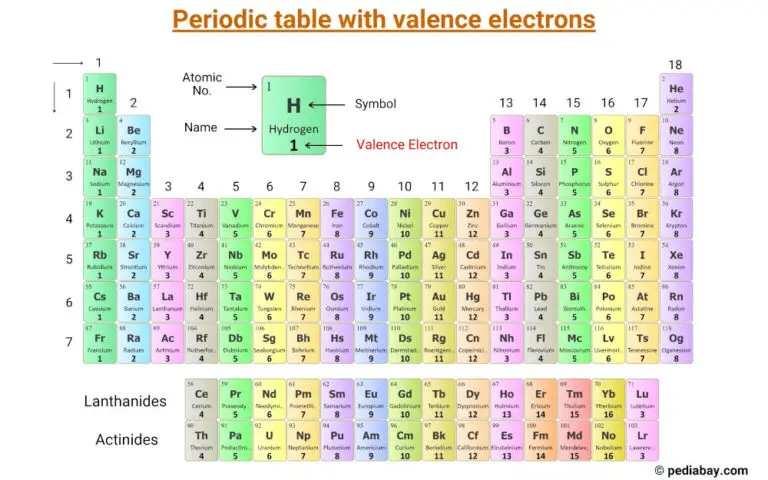
For the main-group elements, the periodic table provides a convenient way to identify the number of valence electrons. In the modern 1 through 18 group numbering system, Groups 1 and 2 have one and two valence electrons, respectively. For Groups 13 through 18, the usual main-group pattern is three through eight valence electrons, with helium as an important exception because it has two electrons.
The pattern is useful because elements in the same group generally have similar outer-electron configurations and therefore often show related chemical behavior.
Source: pediabay.com
Group 1
Generally 1 valence electron.
Group 2
Generally 2 valence electrons.
Group 13
Generally 3 valence electrons.
Group 14
Generally 4 valence electrons.
Group 15
Generally 5 valence electrons.
Group 16
Generally 6 valence electrons.
Group 17
Generally 7 valence electrons.
Group 18
Generally 8 valence electrons, except helium, which has 2.
Examples From the Periodic Table
Carbon is in Group 14 and has four valence electrons. Oxygen is in Group 16 and has six. Fluorine is in Group 17 and has seven. These numbers help explain common bonding patterns such as carbon forming four bonds in many simple compounds, oxygen forming two, and fluorine commonly forming one.
These are useful introductory patterns rather than universal rules for every compound. Some elements can form multiple oxidation states or bonding arrangements, so the number of valence electrons should be used together with electron configuration and other chemical information.
Valence Electrons and Lewis Structures
Valence electrons are used to create Lewis electron-dot structures, which provide a simple visual representation of an atom's valence electrons. The chemical symbol represents the nucleus and inner electrons, while dots around the symbol represent the valence electrons.
Lewis structures become especially useful when studying covalent compounds. By counting the available valence electrons and arranging them into bonding and nonbonding electron pairs, students can develop a model of how atoms are connected within a molecule.
For example, oxygen has six valence electrons. In a simple Lewis symbol, six dots are placed around O. When oxygen forms water, its valence electrons participate in bonds with two hydrogen atoms, while two lone pairs remain associated with the oxygen atom.
Source: chemistutor.org
Step 1
Determine the number of valence electrons available from each atom.
Step 2
Add the valence electrons to determine the total for the species being represented.
Step 3
Arrange the atoms and distribute electrons to represent bonds and lone pairs.
What Is the Octet Rule?
The octet rule is a useful introductory model stating that many atoms tend to achieve eight electrons in their valence shell when they form compounds. Atoms can approach this arrangement by losing, gaining, or sharing electrons.
The octet rule is not a universal law. Hydrogen and helium follow a two-electron pattern because their first energy level can hold only two electrons. Some molecules involving elements in the third period and beyond also do not fit a simple octet description. Lewis structures therefore provide a model that works well for many common compounds but has recognized exceptions.
Useful model
The octet rule helps explain many common bonding patterns in introductory chemistry.
Important limitation
Not every atom or molecule follows a simple eight-electron arrangement.
Valence Electrons and Ion Formation
Valence electrons help explain how atoms become ions. An ion forms when an atom or group of atoms has a net electrical charge because the number of electrons differs from the number of protons.
When a neutral atom loses one or more electrons, it becomes a positively charged ion called a cation. When an atom gains electrons, it becomes a negatively charged ion called an anion. Because valence electrons are the electrons most involved in ordinary chemical changes, their loss or gain is central to many common ion-formation processes.
For example, magnesium has two valence electrons and commonly loses both to form Mg2+. Oxygen has six valence electrons and commonly gains two to form O2−. The resulting ions can combine in a 1:1 ratio to form magnesium oxide, MgO.
Source: biologyonline.com
Cation
A positively charged ion formed when an atom loses electrons.
Anion
A negatively charged ion formed when an atom gains electrons.
Charge prediction
For many main-group elements, valence-electron patterns help predict common ion charges.
What Valence Electrons Can and Cannot Tell You
Valence electrons are powerful for introductory chemical reasoning, but they do not provide a complete description of chemical behavior. The number of valence electrons can suggest likely bonding and ion-formation patterns, but other factors also affect what actually happens in a chemical system.
Electronegativity, atomic size, ionization energy, electron affinity, molecular structure, and the surrounding chemical environment can influence bonding and reactivity. For transition metals, determining which electrons should be treated as valence electrons is more complicated because d electrons can participate in chemical behavior.
For this reason, statements such as an element with four valence electrons always forms exactly four bonds are too broad. Carbon often forms four bonds in common compounds, but bonding depends on the particular molecule and its electronic structure.
Source: expii.com
Do not treat the octet rule as universal
Many compounds fit the rule, but important exceptions exist.
Be careful with transition metals
Their d electrons can participate in chemical behavior, so simple main-group shortcuts may not apply.
Consider the whole electronic structure
Valence-electron count is a starting point, not a complete prediction of chemical behavior.
Common Mistakes Students Make
A common mistake is confusing valence electrons with the total number of electrons in an atom. For example, a neutral sodium atom has 11 total electrons but only one electron in its outermost occupied shell.
Another mistake is assuming that every element follows the simple group-number rule. The shortcut works especially well for main-group elements but becomes less straightforward for transition metals and inner transition elements.
Students may also assume that the octet rule means every atom must literally contain eight electrons in every situation. It is better understood as a useful model for many common bonding patterns, with known exceptions.
Frequently Asked Questions
Q
What are valence electrons of an atom used for?
Valence electrons are used to understand and predict many aspects of chemical behavior. They help explain chemical bonding, ion formation, reactivity, Lewis structures, and common oxidation or charge patterns.
Q
Why are valence electrons important in chemistry?
Valence electrons are important because they are the electrons most directly involved in many chemical interactions. Their number and arrangement help determine how atoms gain, lose, or share electrons.
Q
How do I find the number of valence electrons?
For many main-group elements, use the element's group on the periodic table. Groups 1 and 2 generally have one and two valence electrons, while Groups 13 through 18 generally have three through eight. Helium is an exception because it has two electrons.
Q
Do valence electrons determine chemical reactivity?
They are a major factor, but they do not determine reactivity by themselves. The complete electronic structure, atomic size, ionization energy, electronegativity, electron affinity, and chemical environment can also affect reactivity.
Q
Are valence electrons involved in ionic and covalent bonds?
Yes. Ionic bonding commonly involves transfer of valence electrons from one atom to another, while covalent bonding involves sharing valence electrons between atoms.
✦ Wrapping Up
Conclusion
Valence electrons are the outer electrons that play a central role in the chemical behavior of atoms. They help explain why atoms form bonds, why some elements readily form ions, and why elements in the same periodic-table group often show similar chemical properties.
For students learning chemistry, counting valence electrons is a practical starting point for understanding ionic bonding, covalent bonding, Lewis structures, and chemical reactivity. The concept is especially reliable for main-group elements, while transition metals and unusual compounds require a more detailed look at electron configuration and bonding.
💡 Key Takeaway
When analyzing an element, first identify its electron configuration or periodic-table group, determine its valence electrons, and then use that information to consider whether the atom is likely to gain, lose, or share electrons.



No comments