Best STEM Kits for Kids: Top Picks For Young Minds
The best STEM kits mix fun, hands-on play with real science, math, building, and problem-solving skills.
A busy school week can make it hard to keep kids excited about learning. A child may finish homework, watch videos, and still ask what to do next. This is where a good STEM kit can help. In a US home, a STEM kit can turn a rainy afternoon, weekend, or school break into a fun learning session. Kids can build, test, measure, and solve problems with their own hands. I like these kits because they make learning feel like play. The right kit can also help a child explore a new interest before a parent spends money on a larger class or course.
🏆 Top 3 Products

SNAP CIRCUITS Jr. SC-100 STEM Electronics Kit, 100+ Projects, Ages 8+
It offers many hands-on electronics projects and gives kids a clear way to explore basic circuits.

National Geographic Junior Chemistry Set with 50 Experiments for Kids
It is a strong choice for children who enjoy simple chemistry experiments and science discovery.
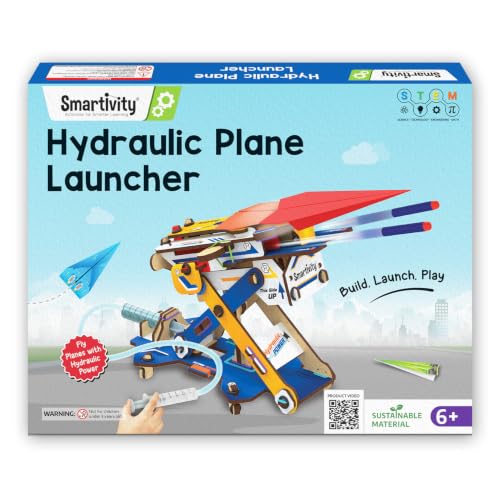
Smartivity 2in1 Hydraulic Aeroplane & Dart Launcher STEM Kit Ages 6-14
It combines building, simple mechanics, and play in one project that can suit a wide age range.
Snap Circuits Jr. SC-100 Electronics Kit
The Snap Circuits Jr. SC-100 is one of the easiest ways for kids to start exploring electronics. The kit uses simple snap-together parts, so children can build circuits without dealing with loose wires and complex tools. It lists more than 100 project ideas, which gives kids many ways to keep learning after the first build. I like this format because a child can see a circuit work soon after putting the parts together.
This kit can help explain ideas such as switches, lights, sound, and basic electrical flow through hands-on play. Kids can follow a project guide and then try small changes to see what happens. That trial-and-error process can build patience and problem-solving skills. For parents looking for the Best STEM Kits for Kids, this is a strong pick when electronics sounds more exciting than a standard science worksheet.
✅ Pros
- ✔ Offers more than 100 project ideas.
- ✔ Uses snap-together parts that are simple to handle.
- ✔ Introduces basic electronics through hands-on play.
- ✔ Helps kids learn cause and effect.
- ✔ Encourages problem-solving and trial and error.
- ✔ Works well for independent or guided learning.
- ✔ Can grow a child's interest in electronics.
⚠️ Cons
- ✖ Younger children may still need adult help.
- ✖ The focus stays mainly on basic electronics.
- ✖ Kids who prefer physical building may want a different type of kit.
My Recommendation
I recommend the Snap Circuits Jr. SC-100 for kids who enjoy gadgets, lights, sound, and simple machines. It is especially useful for families that want a STEM activity with many repeat sessions. The project-based design also makes it easier to build a habit of learning through experiments. If I were choosing one kit for a child who keeps asking how electronic toys work, this would be near the top of my list.
| Best For | Why |
|---|---|
| Young electronics learners | The snap-together design makes basic circuits easier to explore. |
| Hands-on learners | Kids learn by building and seeing results. |
| Longer-term play | More than 100 project ideas can provide many sessions. |
Smartivity Hydraulic Aeroplane STEM Kit
The Smartivity 2-in-1 Hydraulic Aeroplane and Dart Launcher gives kids a different kind of STEM experience. Instead of focusing on circuits or chemical reactions, it centers on building and simple mechanical ideas. The hydraulic design can help children see how force and movement work together. The two-in-one format also gives the finished project more play value.
I like this type of STEM kit for children who learn best when they can build something and then use it. The project can turn a basic science lesson into active play. Kids can also learn to follow steps, fit parts together, and notice why each part matters. Among the Best STEM Kits for Kids, this is a good option for families that want engineering ideas without making the activity feel like a formal lesson.
✅ Pros
- ✔ Combines building with active play.
- ✔ Uses a simple hydraulic concept.
- ✔ Offers two project ideas in one kit.
- ✔ Can introduce basic mechanical thinking.
- ✔ Encourages children to follow building steps.
- ✔ Helps develop patience and hand skills.
- ✔ Works for a broad stated age range.
⚠️ Cons
- ✖ Some assembly steps may need adult guidance.
- ✖ The learning depth is lighter than a full science lab kit.
- ✖ Children may need space to use the finished launcher.
My Recommendation
I recommend this kit for kids who love making things and then playing with what they build. It can be a smart choice for a birthday gift because it combines a project with an activity. Parents can also use the build as a simple starting point for talks about force, pressure, motion, and design. If your child gets bored with science kits that only ask them to read and observe, this one offers a more active approach.
| Best For | Why |
|---|---|
| Young builders | The project asks kids to assemble a working model. |
| Engineering play | The hydraulic design gives a simple view of force and motion. |
| Gift buyers | The build and play format can make it an engaging STEM gift. |
STEM Science Kit For Kids Ages 8-12

This STEM science kit targets children around the elementary and early middle school years. It is designed as a gift-style science set, so it can work well for birthdays, holidays, or a weekend activity. The broad STEM theme gives children a chance to explore ideas through practical tasks instead of only reading about them. I see this type of kit as a useful starting point for a child who is curious but has not yet chosen one STEM area.
A general STEM kit can also help parents learn what their child enjoys most. One child may like building, while another may prefer experiments or problem-solving. That variety matters when choosing the Best STEM Kits for Kids because there is no single STEM activity that suits every child. This option can make sense when you want a fun introduction to STEM rather than a kit focused on one subject.
✅ Pros
- ✔ Targets a common elementary school age range.
- ✔ Covers a broad STEM learning theme.
- ✔ Can work well as a birthday gift.
- ✔ Encourages hands-on learning.
- ✔ Can help reveal a child's STEM interests.
- ✔ Offers an activity away from screens.
- ✔ Can be used for parent-child learning time.
⚠️ Cons
- ✖ A broad kit may not go deep into one STEM topic.
- ✖ Some projects may need adult support.
- ✖ Children with a strong subject interest may prefer a specialized kit.
My Recommendation
I recommend this kit for parents who want a general STEM gift for an elementary school child. It can be a good first step before buying a more focused electronics, chemistry, or engineering set. I also like broad kits for families with more than one child because different children may enjoy different activities. Choose this type of kit when variety matters more than deep study in one subject.
| Best For | Why |
|---|---|
| STEM beginners | The broad theme can introduce several areas of STEM. |
| Birthday gifts | The activity-based format can feel more exciting than a basic toy. |
| Curious kids | Different activities can help children find a favorite STEM area. |
National Geographic Junior Chemistry Set
The National Geographic Junior Chemistry Set is a strong choice for children who ask why substances change. It includes 50 experiments, giving kids many chances to observe simple chemistry ideas. A structured experiment can help a child learn how to follow steps, watch for changes, and think about what caused the result. I especially like chemistry kits because they can make an abstract school topic much easier to see.
This kit can also create a nice bridge between play and school science. Children can learn that chemistry is not only about memorizing symbols and formulas. It is also about asking questions, making observations, and testing ideas. For families searching for the Best STEM Kits for Kids, this is one of the better choices when science experiments are the main goal.
✅ Pros
- ✔ Includes 50 experiment ideas.
- ✔ Focuses on beginner-friendly chemistry concepts.
- ✔ Encourages observation and careful testing.
- ✔ Can make chemistry more engaging for children.
- ✔ Provides many opportunities for repeat learning.
- ✔ Supports science vocabulary and basic reasoning.
- ✔ Works well for kids who enjoy experiments.
⚠️ Cons
- ✖ Adult supervision may be needed for some activities.
- ✖ Chemistry-focused play may not appeal to every child.
- ✖ Parents should review the instructions and safety guidance before use.
My Recommendation
I recommend this chemistry set for children who enjoy mixing, observing, and asking science questions. It is also a nice option for parents who want to make chemistry less intimidating before middle school and beyond. The 50-experiment format gives the child more than one short activity, which can help maintain interest. If your child already loves science experiments, this would be one of my first kits to consider.
| Best For | Why |
|---|---|
| Young chemistry fans | The kit centers on hands-on chemistry experiments. |
| Science practice | Repeated experiments can build observation and reasoning skills. |
| Future science students | It can make early chemistry concepts feel more familiar. |
5 STEM Wood Science And Craft Kits

This set combines STEM ideas with wood arts and crafts. That mix can be useful for children who enjoy building with their hands but may not enjoy a traditional science experiment. Working with project parts can help children practice planning, order, focus, and basic construction skills. The five-kit format also gives kids several projects instead of one activity that ends quickly.
I think craft-based STEM has real value because engineering does not start with advanced math. It often starts with making something, seeing what works, and changing the design. This kit can support that mindset in a simple way. For parents comparing the Best STEM Kits for Kids, it is worth considering when creativity and building matter as much as science facts.
✅ Pros
- ✔ Combines STEM learning with crafts.
- ✔ Includes five individual project kits.
- ✔ Encourages hands-on building.
- ✔ Supports creativity and design thinking.
- ✔ Can improve focus and patience.
- ✔ Offers an alternative to screen-based activities.
- ✔ May appeal to children who enjoy art and making.
⚠️ Cons
- ✖ Craft-focused play may teach less formal science than a lab kit.
- ✖ Some building steps may require adult help.
- ✖ Wood projects can take more time and care than simple toys.
My Recommendation
I recommend this set for creative kids who like to build, decorate, and make physical projects. It can be a good middle ground between an arts-and-crafts set and a traditional STEM kit. Parents can also use each project to ask simple questions about design, balance, structure, and motion. If your child loves making things but loses interest in textbook-style science, this may be a better match.
| Best For | Why |
|---|---|
| Creative builders | The wood projects mix making with simple STEM ideas. |
| Art and STEM fans | The format brings craft skills and STEM play together. |
| Project-based learning | Five projects provide several hands-on learning sessions. |
Final Verdict: Which Should You Buy?
After comparing these options, I would choose the Snap Circuits Jr. SC-100 as the best overall STEM kit for many children. It offers a large number of projects and gives kids a clear way to learn basic electronics through play. The National Geographic Junior Chemistry Set is my pick for young science fans who want experiments, while the Smartivity kit is a strong choice for children who prefer building and active play. The right option still depends on your child's age, interests, and need for adult help.
The Best STEM Kits for Kids can make learning fun at home. Pick a kit that matches your child's curiosity, not just the age label. A good STEM gift should make kids want to build, test, ask questions, and try again.
FAQs Of Best STEM Kits for Kids
Q What are the Best STEM Kits for Kids?
Q What age is best for STEM kits?
Q Are STEM kits useful for learning?
Q Should parents help kids with STEM kits?
Q How do I choose a STEM kit for my child?


No comments