Best Microscopes For Students: Top Picks For Learning
The best student microscope should offer clear views, easy controls, useful magnification, and strong learning value.
Imagine your child has a biology project due on Monday, but the tiny details in a leaf, onion skin, or pond sample look like a blur. A good microscope can change that fast. For many families in the US, a student microscope can turn a kitchen table or home study desk into a small science lab. I look for simple controls, useful magnification, good lighting, and a stable stage when I compare microscopes. In this guide, I review five options and explain which type may fit school work, homeschool lessons, and early biology study.
🏆 Top 3 Products

PalliPartners Compound Microscope for Adults & Students, White
It offers a practical compound microscope format that suits students who want to explore prepared slides and basic biology.

PalliPartners Compound Binocular Microscope for Adults, Professionals&Kids
Its binocular design can make longer viewing sessions more comfortable for students who spend more time at the eyepieces.
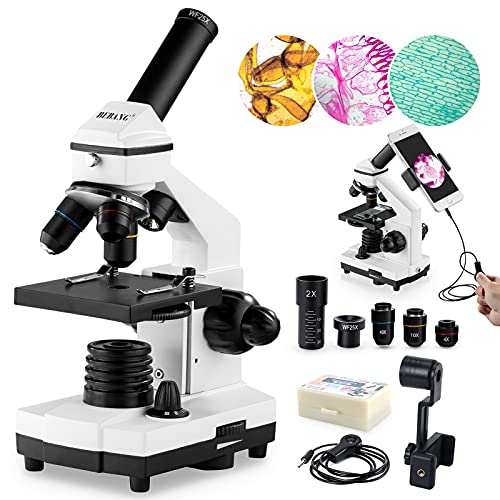
2000X Compound Microscope for Kids Adults
Its broad stated magnification range makes it a flexible option for students starting with basic biology education.
PalliPartners Compound Microscope For Students
The PalliPartners Compound Microscope for Adults & Students is a simple place to start if you want a traditional microscope for school science. Its compound design fits lessons that use prepared slides and thin samples. I like this type of setup for students who want to learn how magnification changes what they can see. It can also give a student a more hands-on feel than a basic digital viewer.
For a US student, this style can work well for home biology work, school projects, and science club use. The main goal should be learning how to focus, place a slide, adjust the view, and study small details. I would choose it for a learner who wants a standard microscope rather than a toy-like science kit. As with any microscope, careful slide setup and good lighting can make a big difference.
✅ Pros
- ✔ Traditional compound microscope design suits basic biology lessons.
- ✔ Made for both adult and student use.
- ✔ Useful for learning how to work with microscope slides.
- ✔ A good fit for home study and school science work.
- ✔ The white body gives it a clean look on a study desk.
- ✔ A compound setup can support detailed viewing of thin samples.
- ✔ It can help students build real microscope skills.
⚠️ Cons
- ✖ Students may need time to learn proper focusing.
- ✖ A traditional microscope can take more setup than a digital model.
- ✖ Beginners may need help when preparing and positioning slides.
My Recommendation
I recommend this model for students who want a classic microscope experience. It makes sense for learners who plan to study biology and use slides more than they use a camera or screen. If your main goal is to teach basic microscope skills, this is one of the more direct options in this group. I would place it high on my list when looking for the Best Microscopes for Students because its design matches common school science tasks.
| Best For | Why |
|---|---|
| Middle school students | The traditional design gives students a useful way to learn basic microscope skills. |
| Home biology study | It can support slide-based lessons without needing a complex digital setup. |
| Beginner microscope users | The classic format helps students learn the basic parts and controls of a microscope. |
100X-2000X Compound Microscope For Kids

This microscope is aimed at children and beginners while also presenting itself as a compound microscope for adults. The stated 100X to 2000X range gives students several levels of magnification to explore. The listing also mentions prepared microscope slides and covers, which can make the first lessons easier. That can be useful when a young learner wants to start viewing samples without building a full slide collection at once.
I see this as a flexible choice for parents who want a science activity that can grow with a child. A student can start with prepared slides and later try simple plant samples or other suitable specimens. The broad magnification range sounds impressive, but I would focus more on clear views and easy control than on the highest number. For the Best Microscopes for Students, useful magnification is often more important than a large number on the box.
✅ Pros
- ✔ The stated 100X to 2000X range gives students several magnification levels.
- ✔ Designed with kids and beginners in mind.
- ✔ Includes prepared microscope slides according to the product listing.
- ✔ Includes slide covers for starting basic microscope activities.
- ✔ Can work for homeschool science lessons.
- ✔ The compound format suits biology learning.
- ✔ The broad target age range can make it useful for family science time.
⚠️ Cons
- ✖ A wide magnification range does not by itself guarantee a clear image at every level.
- ✖ Young children may still need adult help with focusing and slides.
- ✖ Students may outgrow a beginner-focused setup as their science work becomes more advanced.
My Recommendation
I would consider this model for families starting home science lessons. The included slide materials can lower the barrier for a child who has never used a microscope. It also gives a student room to explore different magnification levels. If you are shopping for one of the Best Microscopes for Students for a younger learner, this is a practical option to consider.
| Best For | Why |
|---|---|
| Kids ages 8 to 12 | The product is specifically presented as a microscope for this age group. |
| Homeschool families | Prepared slides and covers can help parents start simple science lessons. |
| First microscope | The wide stated range gives beginners several magnification levels to explore. |
40X-2500X Compound Microscope With Dual LED

This compound microscope stands out because the product listing states a 40X to 2500X range and includes WF10X and WF25X eyepieces. It also lists dual LED lighting and a two-layer mechanical stage. These features point to a setup that gives students more control as they learn. The mechanical stage can be useful because it lets the user move a slide with more control than simply pushing it by hand.
I would look at this model when a student wants more room to explore microscope settings. The two eyepiece choices may also give the learner more ways to view a sample. Still, students should remember that high magnification is only useful when the optics, lighting, focus, and sample all work together. Among the Best Microscopes for Students, this option may suit learners who want more control than a very basic model offers.
✅ Pros
- ✔ The stated 40X to 2500X range offers many magnification choices.
- ✔ WF10X and WF25X eyepieces provide different viewing options.
- ✔ Dual LED lighting supports sample illumination from more than one lighting position.
- ✔ The two-layer mechanical stage can help with controlled slide movement.
- ✔ The compound format fits biology and school science work.
- ✔ It can suit students who want to learn more advanced microscope controls.
- ✔ The setup offers room for students to grow their microscope skills.
⚠️ Cons
- ✖ The larger feature set may feel less simple to a young beginner.
- ✖ Students may need practice to use the mechanical stage well.
- ✖ The highest stated magnification should not be treated as a guarantee of the clearest view.
My Recommendation
This is one of my stronger choices for students who already understand the basics and want more control. The mechanical stage is especially useful for learning careful slide movement. The extra eyepiece option also gives the student more flexibility. If you want one of the Best Microscopes for Students that offers a more feature-rich learning setup, this model deserves a close look.
| Best For | Why |
|---|---|
| High school biology students | The extra controls can support more detailed classroom and home study. |
| Science hobbyists | The broad stated magnification range gives hobby users more settings to explore. |
| Students learning slide control | The mechanical stage can help learners make small and controlled movements. |
PalliPartners Binocular Compound Microscope
The PalliPartners Compound Binocular Microscope is different from the other models here because it uses binocular viewing. That means the user can look through two eyepieces instead of one. For students who spend more time at a microscope, this style can feel more natural and comfortable. The product is also presented for adults, professionals, and kids, so it may fit a shared family learning space.
I would consider a binocular microscope when a student plans to spend longer periods studying samples. It can be a nice step up from a basic single-eyepiece design. It may also make sense for a home science setup that several people will use. For shoppers comparing the Best Microscopes for Students, this model is worth considering when viewing comfort matters as much as basic magnification.
✅ Pros
- ✔ Binocular viewing uses two eyepieces.
- ✔ Can be a comfortable choice for longer viewing sessions.
- ✔ Designed for adults, professionals, and kids.
- ✔ The compound format supports biology and slide-based study.
- ✔ It can suit a shared family microscope station.
- ✔ The binocular design can offer a more familiar lab-style viewing experience.
- ✔ It may suit students who have already learned basic microscope use.
⚠️ Cons
- ✖ Binocular microscopes can take some time to adjust for a new user.
- ✖ The design may be more than a young child needs for simple science activities.
- ✖ Students who only use a microscope for short sessions may not need binocular viewing.
My Recommendation
I like this model for families and students who expect regular microscope use. The binocular setup is the main reason I would choose it over a basic single-view design. It can be a good match for longer study sessions and shared home labs. If comfort and a more lab-like feel matter to you, this is a strong candidate among the Best Microscopes for Students.
| Best For | Why |
|---|---|
| Frequent microscope users | The binocular setup can make regular viewing more comfortable. |
| Family science labs | Its adult and child positioning makes it suitable for shared use. |
| Older students | Students with basic skills may benefit from a more lab-like design. |
2000X Compound Microscope For Biology Study
This 2000X compound microscope is presented as a microscope for kids and adults with a focus on biology education. That makes its purpose clear: help learners explore small objects and build an interest in science. The compound design fits common school biology activities that use prepared slides. I see it as a flexible choice for families that want one microscope for both younger learners and adults.
The stated 2000X figure gives the product a broad range for students who want to explore higher magnification. But I always tell new users to start low and work upward. A lower setting makes it easier to find the sample and bring it into focus. This simple habit can make a student much more successful when using the Best Microscopes for Students.
✅ Pros
- ✔ The product is designed for both kids and adults.
- ✔ The stated maximum magnification reaches 2000X.
- ✔ The compound format fits biology education.
- ✔ It can support school and homeschool science work.
- ✔ It gives beginners a practical way to explore microscopic samples.
- ✔ It can be shared by more than one learner in a family.
- ✔ It provides a starting point for learning basic slide viewing.
⚠️ Cons
- ✖ Beginners may find high magnification harder to focus.
- ✖ A broad magnification claim does not alone show how clear each setting will be.
- ✖ Young children may need adult guidance during early lessons.
My Recommendation
I would choose this model for a family that wants a microscope for basic biology education. Its kid-and-adult positioning makes it flexible for shared use. It also gives students a high stated magnification level to explore as their skills grow. If you want a simple entry into the Best Microscopes for Students category, this is a reasonable option to compare with the other models here.
| Best For | Why |
|---|---|
| Biology students | The product is positioned specifically for biology education. |
| Families with multiple learners | The design is presented for both kids and adults. |
| Beginner science study | It offers a straightforward compound microscope format for learning. |
Final Verdict: Which Should You Buy?
After comparing these five models, I would choose the PalliPartners Compound Microscope for Adults & Students as the best overall starting point for many learners. It has a traditional compound design that fits common biology study and slide work. For students who want more controls, the 40X-2500X model with dual LED lighting and a mechanical stage is a stronger choice. For longer viewing sessions, the PalliPartners binocular model is worth considering.
The Best Microscopes for Students should make science easier to explore, not harder to understand. Start with clear controls, useful magnification, and a stable setup. Choose the model that matches the student's age, study level, and how often they plan to use it.
FAQs Of Best Microscopes for Students
Q What should I look for in a student microscope?
Q What magnification is best for students?
Q Are compound microscopes good for students?
Q Is a binocular microscope better for students?
Q What is the best microscope for a beginner?


No comments