The history of Halloween is a long cultural development shaped by ancient Celtic seasonal traditions, medieval Christian observances, European folk customs, and immigration to the United States. Modern American Halloween developed gradually, especially during the 19th and 20th centuries, when Irish and Scottish traditions mixed with existing American celebrations.
For Americans, Halloween is now associated with October 31, costumes, carved pumpkins, candy, haunted houses, parties, and children going door to door for treats. However, the holiday did not begin as the distinctly American celebration seen today. Its history reaches back more than a thousand years through several overlapping traditions in Europe.
One of the most frequently discussed influences is Samhain, a Celtic seasonal festival associated with the end of the harvest and the beginning of the darker part of the year. Later Christian observances connected October 31 with All Saints' Day on November 1 and All Souls' Day on November 2. Over time, these traditions and local customs contributed to the development of Halloween.
Halloween became increasingly established in the United States during the 19th century, particularly as Irish and Scottish immigrants brought their customs to American communities. During the 20th century, Halloween became more secular and community oriented, while trick-or-treating, costumes, pumpkins, and commercially produced candy became central features of the American celebration.
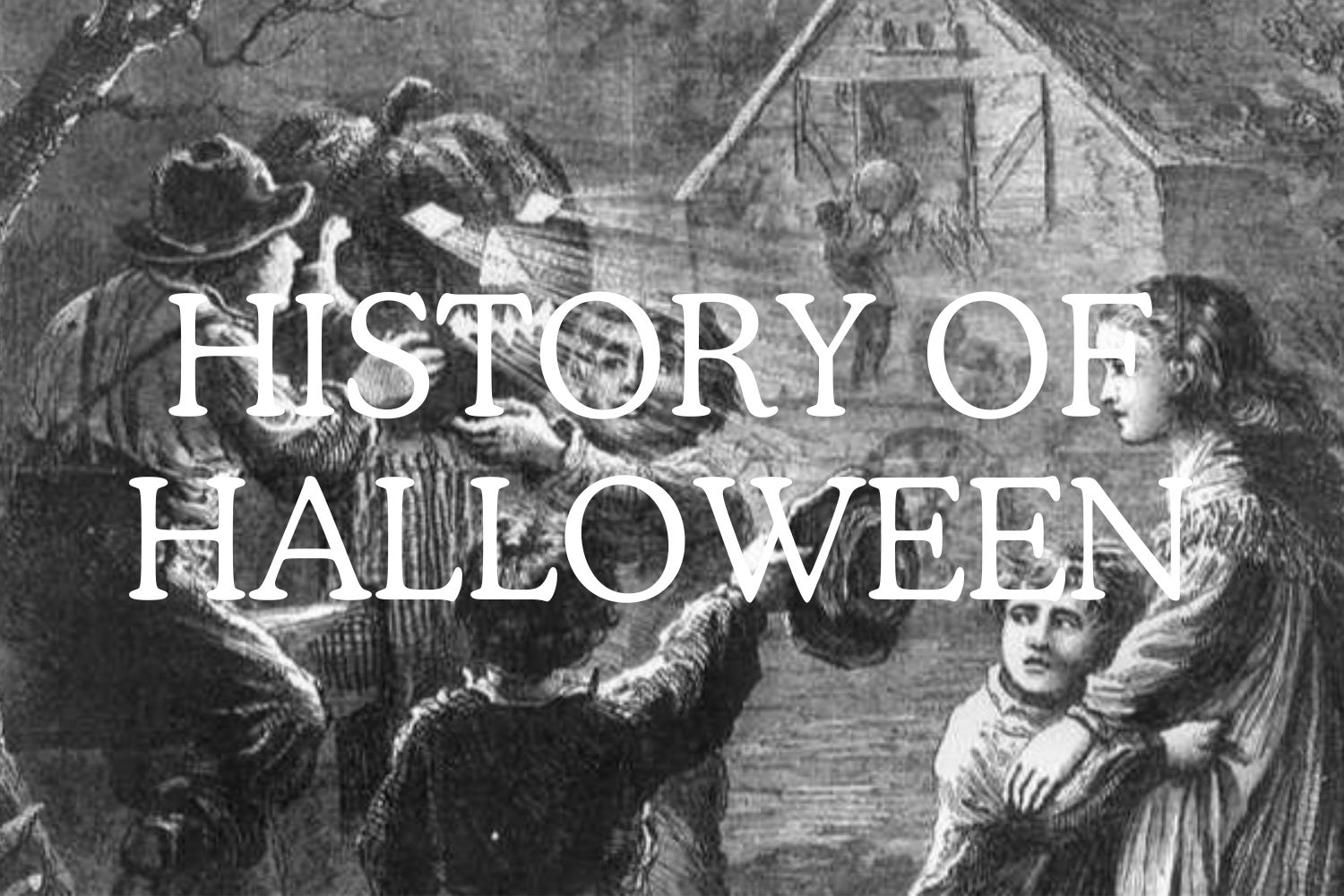
Source: phsnews.com
Where Did Halloween Begin?
Halloween has no single point of origin. The modern holiday emerged through centuries of cultural change, with important influences from Celtic seasonal customs, Christian holy days, medieval European folk practices, and later American traditions.
The ancient Celtic festival most often connected with Halloween is Samhain. Celebrated around the transition from October to November, Samhain marked the end of the harvest season and the beginning of winter. Historical evidence about early Samhain practices is limited, so modern descriptions should distinguish documented traditions from later folklore.
The relationship between Samhain and modern Halloween is therefore best understood as an influence rather than a simple one-to-one continuation. Some customs associated with Halloween have roots in older European practices, while others developed much later.
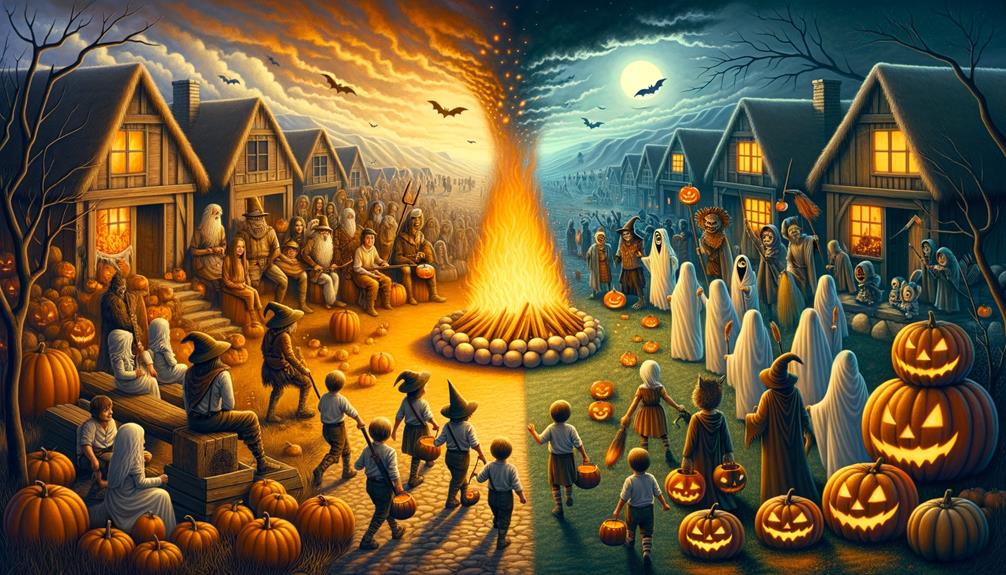
Source: grizzstudio.com
Celtic seasonal traditions
Samhain marked an important seasonal transition and became one of the major cultural influences commonly associated with Halloween.
Christian observances
All Saints' Day and All Souls' Day created a Christian calendar surrounding the end of October and beginning of November.
European folk customs
Costumes, begging for food, prayers for the dead, fortune telling, bonfires, and supernatural folklore developed in different forms across Europe.
American transformation
Immigration and changing social customs helped turn Halloween into the largely secular American holiday recognized today.
What Was Samhain?
Samhain was an important seasonal festival in Celtic-speaking regions, particularly Ireland and Scotland. It was associated with the end of the agricultural year and the beginning of winter. The transition was considered a significant time in the traditional calendar.
Later accounts describe Samhain as a period when supernatural beings and spirits were believed to be especially active. People used fires, disguises, food, and other customs in connection with these beliefs. However, surviving evidence does not provide a complete record of how every ancient community celebrated Samhain.
The idea of a boundary between the living and supernatural worlds becoming less secure became particularly influential in later explanations of Halloween. That idea helps explain why ghosts, spirits, witches, masks, and other supernatural imagery became associated with the holiday.
Seasonal meaning
Samhain marked the transition from the harvest period toward winter.
Supernatural folklore
Later traditions associated the festival with spirits and supernatural beings.
Historical limitation
Written evidence from the earliest periods is limited, so some popular descriptions come from later folklore rather than direct ancient records.
How Samhain Influenced Halloween
Samhain is often described as the ancient predecessor of Halloween, but the historical relationship is more complicated. The modern holiday contains elements that resemble older Celtic customs, yet it also incorporates Christian traditions and much later European and American practices.
Among the traditions associated with Samhain were seasonal fires and disguises. Later folklore connected costumes with attempts to avoid or confuse supernatural beings. These ideas provide an important historical context for the modern Halloween practice of dressing in costume.
Food also had a role in traditional seasonal customs. Offerings and communal feasting appear in accounts of Celtic and later European celebrations. The modern practice of receiving candy, however, is a much more recent development and should not be projected backward into ancient history.
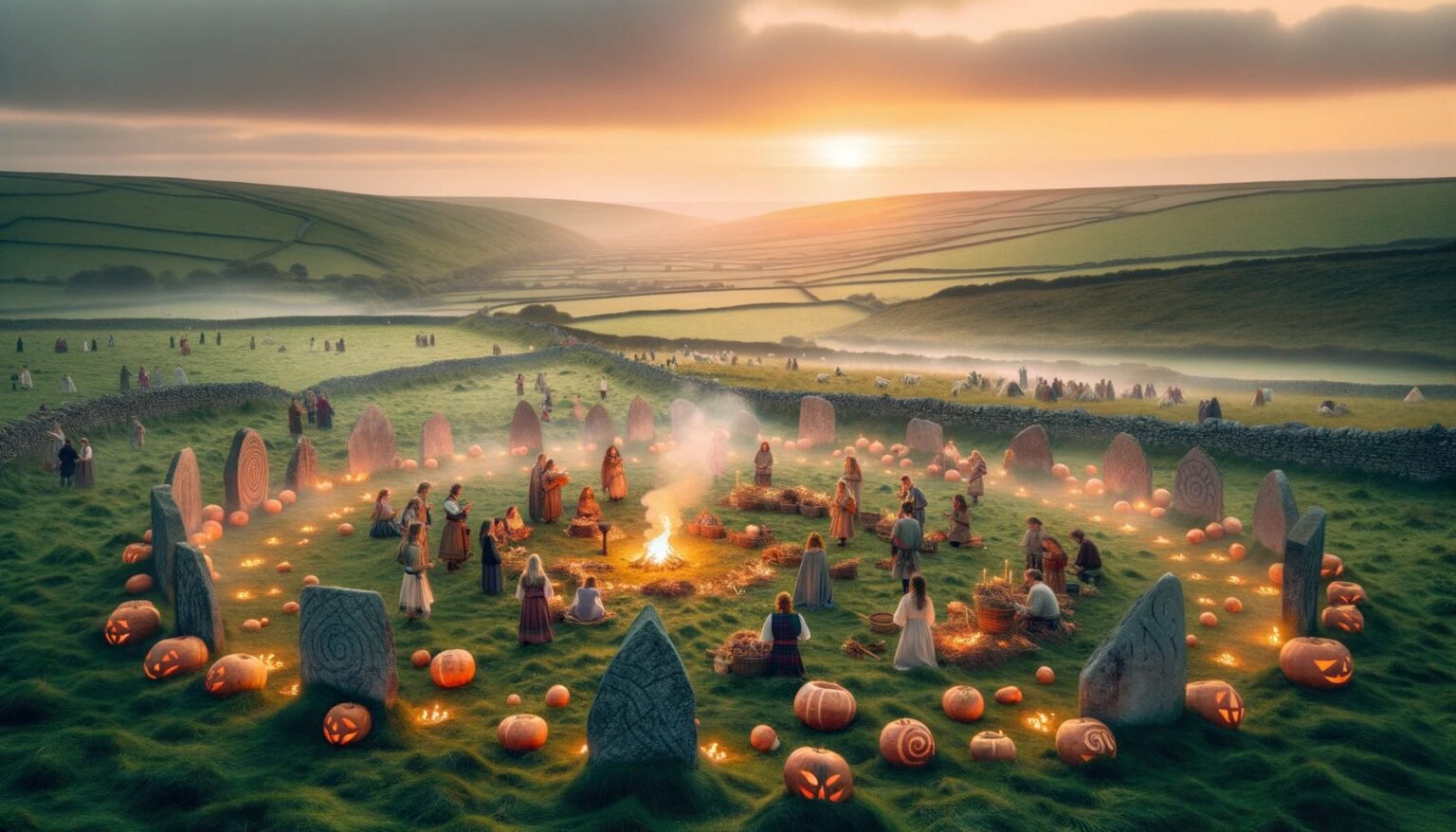
Source: mythologyvault.com
Bonfires
Seasonal fires were associated with Samhain and later became part of Halloween traditions in some regions.
Disguises
Traditional beliefs about supernatural beings contributed to customs involving disguises and costumes.
Food and offerings
Food was connected with seasonal gatherings and customs involving spirits, hospitality, and community.
Modern difference
The candy-centered Halloween familiar in the United States developed many centuries after the earliest Samhain traditions.
Did the Celts Invent Halloween?
It is more accurate to say that Celtic traditions contributed to the development of Halloween than to say that the Celts invented the modern holiday. Halloween is the result of several historical layers that accumulated over a long period.
Samhain is an important part of that story, particularly because of its timing, seasonal meaning, and associations with supernatural folklore. Yet the holiday later developed within a Christian calendar and eventually changed again through European immigration and American cultural practices.
What is documented
Samhain was an important seasonal festival in Celtic-speaking parts of Europe.
What developed later
The name Halloween, Christian observances, modern costumes, trick-or-treating, and mass-produced candy emerged through later historical developments.
The Christian Origins of All Hallows' Eve
Christian traditions became another major layer in the history of Halloween. November 1 became associated with All Saints' Day, a Christian observance honoring saints. The evening before the holy day became known as All Hallows' Eve, which eventually developed into the shorter name Halloween.
The word hallow means holy or saintly. All Hallows' Eve therefore refers to the evening before All Hallows' Day, another name historically associated with All Saints' Day. Over time, the phrase was shortened in everyday speech to Halloween.
All Souls' Day, observed on November 2, also influenced European customs involving remembrance of the dead. In some communities, people practiced souling, in which individuals went from house to house requesting food in exchange for prayers for deceased relatives. These practices help explain why door-to-door customs later became part of the wider Halloween tradition.
Source: lolaapp.com
All Saints' Day
November 1 became an important Christian day associated with honoring saints.
All Hallows' Eve
The evening before All Saints' Day was known as All Hallows' Eve, the source of the modern name Halloween.
All Souls' Day
November 2 became associated with remembrance of the dead and helped shape related European folk practices.
Souling
In some medieval and later communities, people went from house to house asking for food while offering prayers for the dead.
Why Is Halloween Called Halloween?
Halloween is a shortened form of All Hallows' Eve, meaning the evening before All Hallows' Day. All Hallows' Day was another name for All Saints' Day, observed on November 1.
The name therefore reflects the Christian calendar even though many Halloween customs also developed from older European seasonal traditions and later folk practices.
Hallow
The word hallow refers to something holy or sacred.
Eve
Eve means the evening or day before an important religious observance.
How Halloween Came to the United States
Halloween became an American cultural tradition gradually rather than arriving as a fully formed holiday. European immigrants, especially people from Ireland and Scotland, brought seasonal customs, supernatural folklore, and community practices with them.
Irish immigration increased significantly during the 19th century, particularly during and after the Great Famine that began in the 1840s. Immigrant communities preserved and adapted familiar traditions in their new surroundings.
As Halloween customs spread in the United States, they changed to fit American communities. The holiday increasingly became a social occasion involving parties, costumes, games, decorations, and neighborhood activities rather than a primarily religious observance.
The American version of Halloween also developed a strong connection with pranks. During the late 19th and early 20th centuries, Halloween mischief could become destructive. Communities eventually promoted more organized celebrations and activities for children, helping shift the holiday toward the safer, family-oriented form familiar today.
Source: youtube.com
19th-century immigration
Irish and Scottish immigrants helped bring Halloween-related customs to American communities.
Cultural adaptation
European customs changed as they became part of American community life.
Halloween parties
Organized celebrations, games, costumes, and decorations became increasingly common.
Changing attitudes toward pranks
Community efforts increasingly emphasized supervised activities instead of destructive Halloween mischief.
When Did Halloween Become Popular in America?
Halloween became increasingly established in the United States during the 19th century, but its transformation into a broadly popular national celebration accelerated during the 20th century.
The National Museum of American History notes that Halloween did not fully come into its own in the United States until the 20th century. During this period, schools, community organizations, families, businesses, and local groups helped shape the holiday into a more organized secular celebration.
1800s
Immigration helped introduce and spread European Halloween-related customs in the United States.
Early 1900s
Parties, costumes, decorations, and pranks became recognizable features of American Halloween.
Mid-1900s
Trick-or-treating became increasingly widespread and helped define the modern American celebration.
The History of Trick-or-Treating
Trick-or-treating is one of the most recognizable American Halloween traditions, but it did not appear suddenly. It developed from older European practices in which people went from house to house requesting food or other gifts.
Medieval souling is one important predecessor. People sometimes visited homes and requested soul cakes or other food while promising prayers for deceased relatives. In Scotland and Ireland, related traditions of disguising and going from house to house also developed.
The American practice changed considerably during the 20th century. The phrase trick-or-treat began appearing in the United States during the 1920s and 1930s, while the custom became much more widespread after World War II. The end of wartime sugar rationing, suburban development, and the availability of individually packaged candy all contributed to the growth of modern trick-or-treating.
Modern trick-or-treating is therefore not an unchanged ancient ritual. It is a distinctly modern practice that combines older door-to-door customs with American neighborhood culture and commercial candy production.
Source: d23sy9fe9womrt.cloudfront.net
Souling
Medieval European visitors sometimes requested food in exchange for prayers for the dead.
Guising
In parts of Scotland and Ireland, people dressed in disguise and visited homes as part of Halloween-related customs.
American trick-or-treating
The modern American practice developed during the 20th century rather than directly continuing an ancient Celtic ritual.
Postwar expansion
Trick-or-treating became widespread in the United States after World War II as community and commercial conditions supported the tradition.
Why Do Children Say Trick or Treat?
The phrase suggests a playful choice between receiving a treat and facing a trick. In modern American practice, however, the trick is usually symbolic rather than an actual threat. Children typically receive candy or another small item after saying the familiar phrase.
The expression reflects the older relationship between requesting gifts and the possibility of mischief. Over time, organized community celebrations transformed that relationship into a predictable Halloween activity for children.
Treat
Candy and other small gifts became the expected reward for visiting homes.
Trick
The word preserves the older association between Halloween and playful or mischievous behavior.
Why Do We Carve Jack-o'-Lanterns?
Jack-o'-lanterns are among the most recognizable symbols of Halloween, but pumpkins were not the original material used for these lanterns in Ireland and Scotland. People carved turnips and other root vegetables and sometimes placed candles inside them.
The tradition became closely connected with the legend of Stingy Jack, a folkloric character said to have tricked the Devil and later been condemned to wander with a lantern. The story has appeared in several forms, and its precise historical development is difficult to establish.
The pumpkin became especially important after Irish immigrants arrived in North America. Pumpkins were native to the Americas and were generally larger and easier to carve than the turnips traditionally used in Ireland. Over time, the pumpkin jack-o'-lantern became an iconic American Halloween decoration.
Source: pinterest.com
Original vegetables
Turnips and other root vegetables were traditionally carved in parts of Europe.
Stingy Jack
A popular folklore story connects the glowing lantern with a character known as Stingy Jack.
American pumpkins
Pumpkins became the preferred material in North America because they were plentiful and practical for carving.
Modern symbol
The carved pumpkin eventually became one of the defining visual symbols of American Halloween.
Why Are Pumpkins Associated With Halloween?
Pumpkins became associated with Halloween because Irish and other European immigrants adapted older lantern-carving customs to crops available in North America. Pumpkins were larger and easier to carve than the turnips commonly used in parts of Ireland and Scotland.
The American pumpkin harvest also coincides naturally with the autumn Halloween season, strengthening the cultural connection between pumpkins, fall decorations, and October 31.
Availability
Pumpkins were widely available in North America during the autumn season.
Practicality
Their size and softer flesh made them suitable for carving.
How Halloween Costumes Became a Tradition
Costumes are another Halloween tradition with deep European roots. Disguises were associated with older beliefs about supernatural beings and later became part of folk celebrations surrounding All Hallows' Eve.
In Scotland and Ireland, practices known as guising involved dressing up and visiting homes. The costumes were not always the elaborate store-bought outfits common in the United States today. People often used ordinary clothing, masks, or simple disguises.
American Halloween costumes changed substantially during the 20th century. Commercial manufacturers began producing costumes for children, while popular culture introduced characters from movies, television, comics, literature, and other forms of entertainment. Halloween costumes consequently expanded far beyond ghosts and supernatural figures.
Source: thepurplepumpkinblog.co.uk
Early disguises
European Halloween customs sometimes involved masks and disguises connected with supernatural folklore.
Guising
Scottish and Irish traditions included visiting homes while dressed in disguise.
American costume culture
Commercial costumes expanded during the 20th century and incorporated characters from popular culture.
Modern variety
Today, Halloween costumes range from traditional ghosts and witches to fictional characters, historical figures, animals, occupations, and creative designs.
Why Do People Dress Up for Halloween?
The practice of dressing up developed from older European traditions involving disguises and supernatural folklore. In those traditions, disguises could have a religious, ritual, protective, or playful meaning depending on the community and period.
In the United States, costume wearing became increasingly recreational. Modern Halloween costumes generally function as entertainment, self-expression, community participation, or children's play rather than as an attempt to perform an ancient ritual.
Historical influence
Disguises were part of older European Halloween-related customs.
Modern purpose
American costume wearing is generally recreational and social.
How Halloween Changed in the 20th Century
The 20th century was a turning point in the history of Halloween in the United States. The holiday became increasingly secular, commercial, and community oriented. Schools, local organizations, families, and businesses all contributed to the way Halloween was celebrated.
Earlier American Halloween celebrations could involve significant pranks and property damage. During the first half of the 20th century, communities increasingly promoted organized parties, parades, games, and supervised activities as alternatives to destructive behavior.
Trick-or-treating eventually became a central part of the holiday. Individually packaged candy made it practical for households to distribute treats, while suburban neighborhoods provided convenient routes for children. The combination of community organization, consumer products, and popular culture helped create the modern American Halloween.
Source: warrantynowvoid.com
Community celebrations
Organized events helped redirect Halloween activities toward parties, games, parades, and family participation.
Commercialization
Costumes, candy, decorations, greeting cards, and other products became increasingly associated with Halloween.
Popular culture
Movies, television, advertising, and other media expanded the visual and cultural vocabulary of Halloween.
Neighborhood tradition
Trick-or-treating became a widely recognized activity connecting children, families, and local communities.
When Did Halloween Become a Candy Holiday?
Candy became strongly associated with American Halloween during the 20th century rather than in ancient or medieval times. Earlier Halloween celebrations involved a much wider range of foods, gifts, games, and local customs.
By the middle of the 20th century, individually packaged candy had become particularly practical for trick-or-treating. The combination of mass production, advertising, suburban neighborhoods, and established children's traditions helped make candy one of the defining features of American Halloween.
Earlier traditions
Food associated with Halloween was not limited to candy.
20th-century change
Mass-produced and individually packaged candy increasingly became the standard Halloween treat.
Frequently Asked Questions
Q
What is the history of Halloween?
Halloween developed through several historical traditions rather than from one single event. Celtic seasonal customs associated with Samhain, Christian observances such as All Saints' Day and All Souls' Day, European folk traditions, and later American practices all contributed to the modern holiday.
Q
Is Halloween originally a Celtic holiday?
Samhain was an important Celtic seasonal festival and is one of the major historical influences associated with Halloween. However, modern Halloween is not simply an unchanged version of Samhain. Christian observances and later European and American customs also played important roles.
Q
When did Halloween come to America?
Halloween-related traditions reached the United States through European immigration, with Irish and Scottish immigrants playing an important role during the 19th century. The holiday became more widely established and organized in American communities during the 19th and 20th centuries.
Q
Why do we celebrate Halloween on October 31?
October 31 is the evening before November 1, the date associated with All Saints' Day. The name All Hallows' Eve eventually became Halloween. The date also connects with the seasonal timing of older European traditions such as Samhain.
Q
Why do we carve pumpkins on Halloween?
The tradition developed from European practices of carving turnips and other root vegetables into lanterns. After Irish immigrants came to North America, pumpkins became a practical alternative because they were larger and easier to carve. The pumpkin jack-o'-lantern eventually became a defining American Halloween symbol.
Q
Where did trick-or-treating come from?
Modern trick-or-treating developed from older European door-to-door customs such as souling and guising. The American practice became increasingly widespread during the 20th century, especially after World War II, when community traditions and commercially packaged candy supported its growth.
✦ Wrapping Up
Conclusion
The history of Halloween is best understood as a cultural evolution rather than a single origin story. Ancient Celtic seasonal traditions, Christian observances, medieval European customs, immigration, and American popular culture all contributed different elements to the holiday.
For Americans today, Halloween is primarily a secular celebration centered on costumes, candy, pumpkins, parties, decorations, and neighborhood activities. Yet many of its familiar symbols reflect much older ideas about seasonal change, community, remembrance, disguises, food, and the supernatural.
Understanding that layered history also explains why some popular claims about Halloween are too simple. Samhain is an important influence, but it is not identical to modern Halloween. Likewise, trick-or-treating and pumpkin carving are not ancient American customs; they developed through much later cultural adaptation.
💡 Key Takeaway
When researching or explaining the history of Halloween, treat it as a combination of Celtic seasonal traditions, Christian calendar observances, European folk customs, immigration, and modern American cultural development rather than attributing the entire holiday to a single source.





No comments