Types of Motion in Physics
Have you ever wondered why a car moves straight down a road, a spinning top twirls on a table, or a pendulum swings back and forth? These are all examples of motion, but did you know there are different types of motion in physics that explain how objects move in various ways?
Understanding these types can change the way you see the world around you—from the simplest walk to the most complex machinery. You’ll discover the main kinds of motion, how they work, and real-life examples that make these concepts easy to grasp.
Ready to unlock the secrets behind every movement you observe? Let’s dive into the fascinating world of motion in physics.
Credit: www.youtube.com
Translational Motion
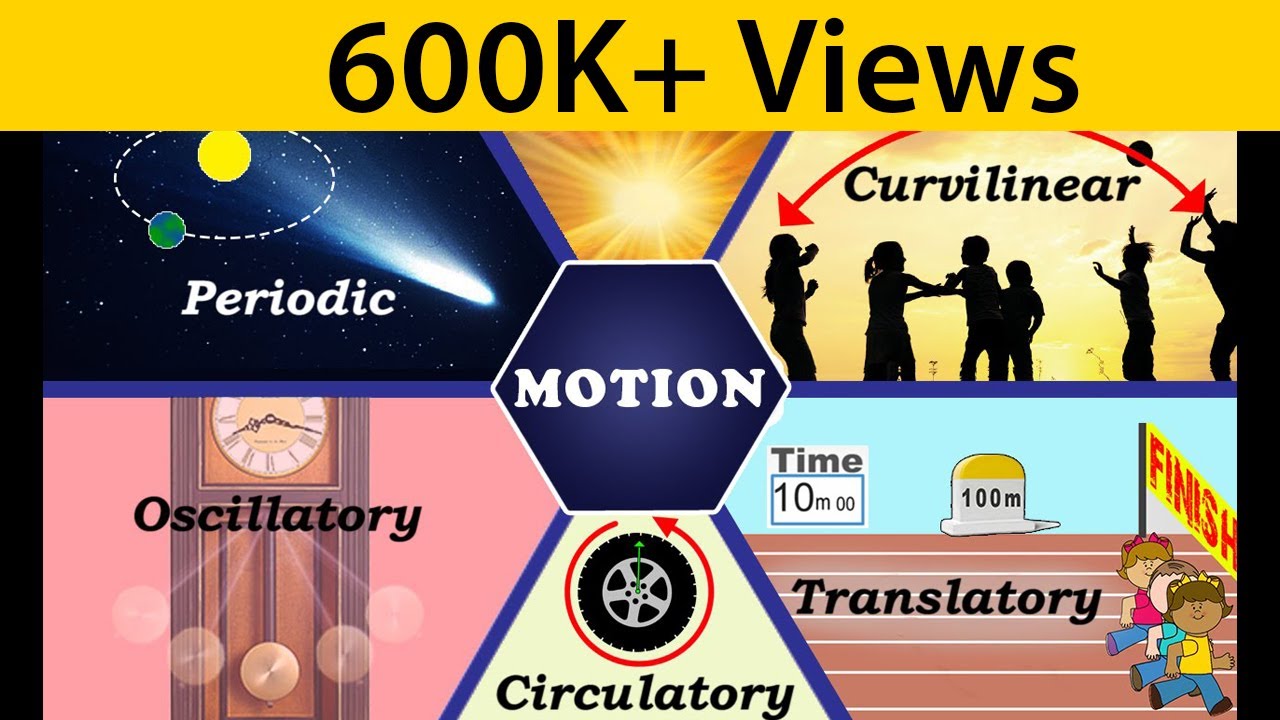
Translational motion occurs when an object moves from one place to another. It involves a change in the object's position over time. This type of motion can happen along a straight line or a curved path. Translational motion is easy to observe in daily life, like a car driving down a road or a ball rolling across the floor.
Rectilinear Motion
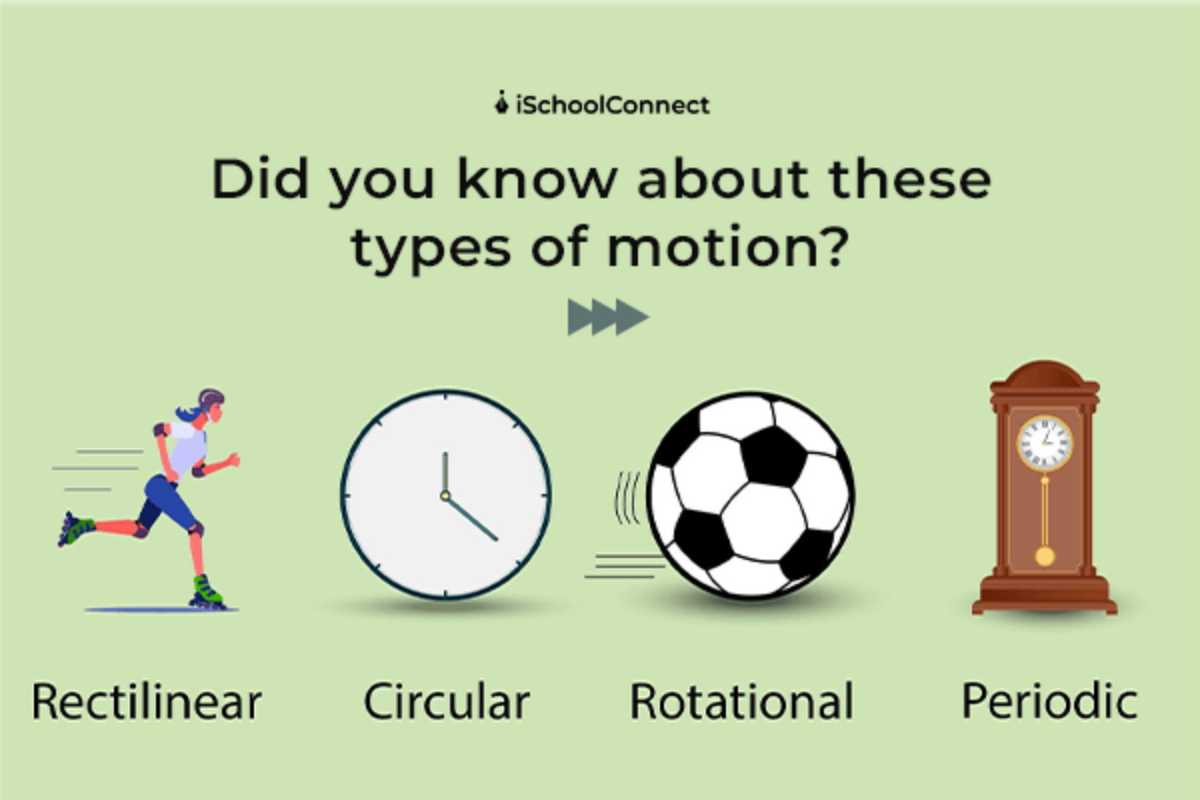
Rectilinear motion is a type of translational motion where the object moves along a straight line. The direction does not change during this motion. Examples include a train moving on straight tracks or a person walking down a hallway. The speed can be constant or variable, but the path remains straight.
Curvilinear Motion
Curvilinear motion happens when an object moves along a curved path. The direction changes continuously as the object moves. A common example is a car turning around a bend or a ball thrown in an arc. This motion combines changes in both speed and direction.
Rotational Motion
Oscillatory motion is a type of movement where an object repeatedly moves back and forth around a central point. This motion is common in many natural and mechanical systems. It plays a key role in understanding waves, vibrations, and many physical phenomena.
The motion is periodic, meaning it repeats in a regular cycle. The object moves to one side, returns through the center, then moves to the other side before coming back again. This pattern continues over time, creating a smooth, rhythmic movement.
Back-and-forth Movement
Oscillatory motion involves a continuous back-and-forth swing. The object shifts from its rest position to one extreme, then to the opposite extreme, and back again. This type of motion is seen in many familiar situations. For example, a child swinging on a swing or the vibration of a guitar string both show this back-and-forth motion. The key feature is that the object always returns to its starting point before moving again.
Pendulum And Swing Examples
A pendulum is a classic example of oscillatory motion. It swings from side to side, influenced by gravity. The motion slows down near the highest points and speeds up near the center. This creates a smooth, repeating cycle. Swings in playgrounds work the same way. They move forward and backward in a steady rhythm. These examples help us visualize oscillatory motion in everyday life.
Oscillatory Motion
Understanding motion requires knowing about the frame of reference. It is the viewpoint from which an observer measures and describes motion. The frame of reference helps us tell if an object is moving or still. Different observers may see the same motion in different ways based on their frames of reference.
Observer's Perspective
Motion depends on the observer’s position and speed. An object may appear moving to one observer but still to another. For example, a passenger in a moving train sees other passengers as still. However, a person standing outside sees everyone moving. This difference arises because each observer has a unique frame of reference.
Relative Motion
Motion is always relative to something else. It compares the position of an object to the observer’s frame of reference. If two cars move at the same speed side by side, each driver sees the other as not moving. But a pedestrian sees both cars moving. This idea is called relative motion and is crucial in physics.
Credit: ischoolconnect.com

Credit: www.tes.com
Frequently Asked Questions
What Are The 4 Types Of Motion In Physics?
The four types of motion in physics are linear, circular, rotational, and oscillatory motion. Linear motion moves in a straight line. Circular motion follows a circular path. Rotational motion spins around an axis. Oscillatory motion repeats back and forth around a mean position.
What Are The 6 Types Of Motion?
The six types of motion are linear, circular, rotational, oscillatory, periodic, and random motion. Each describes different movement patterns.
What Are The 7 Types Of Motion With Examples?
The 7 types of motion are: linear (car driving straight), circular (clock hands), rotational (spinning top), oscillatory (pendulum), periodic (heartbeat), projectile (thrown ball), and random (dust particles moving).
What Are The Different Kinds Of Motions?
The main kinds of motion are linear, circular, rotational, oscillatory, periodic, and random motion. Linear moves straight, circular follows a curve, rotational spins around an axis, oscillatory moves back and forth, periodic repeats regularly, and random moves unpredictably.
Conclusion
Understanding the types of motion helps us see how objects move. Motion can be straight, circular, or back-and-forth. Each type has unique features and examples. These motions explain many everyday actions and natural events. Knowing them makes physics easier to grasp.
Keep observing the world to spot different motions around you. Motion is everywhere, simple yet fascinating to study.


No comments