Photoelectric Effect Explanation
Have you ever wondered how light can actually knock electrons right out of a metal surface? This surprising phenomenon is called the photoelectric effect, and it’s a key piece of the puzzle that helped scientists understand the true nature of light.
If you think light is just waves, think again—light behaves like tiny packets of energy called photons. When these photons hit a metal, they transfer their energy to electrons, causing them to jump free if the energy is just right.
But how exactly does this happen? What controls whether electrons escape or stay put? And why does the color of light matter more than its brightness? You’ll discover a clear, simple explanation of the photoelectric effect that breaks down these questions step by step. By the end, you’ll see why this effect was so revolutionary and how it powers everyday technology like solar panels and digital cameras. Ready to unlock the secrets of light and electrons? Let’s dive in!
Light As Photons
Light behaves not only as a wave but also as small particles called photons.
Each photon carries a fixed amount of energy related to its frequency.
This idea helps explain many effects that wave theory alone cannot.
What Are Photons?
Photons are tiny packets of light energy.
They travel at the speed of light and have no mass.
The energy of a photon depends on its frequency; higher frequency means more energy.
How Photons Transfer Energy
When photons hit a surface, they can transfer energy to electrons.
Each photon gives all its energy to a single electron.
This transfer can cause electrons to escape from the material.
Role Of Frequency And Energy
Only photons with enough energy can free an electron.
This minimum energy is called the work function of the material.
Photons with lower energy than the work function cannot eject electrons.
Why Intensity Alone Is Not Enough
Increasing light brightness means more photons but not more energy per photon.
More photons eject more electrons, but their speed depends on photon energy.
Higher frequency light produces faster ejected electrons, regardless of brightness.
Energy Transfer To Electrons
The photoelectric effect shows how energy moves from light to electrons. Light comes as tiny packets called photons. Each photon carries energy related to its color or frequency.
When a photon hits a metal surface, it can give all its energy to one electron. This energy can free the electron from the metal if it is enough to overcome a barrier. This barrier is called the work function.
The work function is the minimum energy needed for an electron to escape the metal. If the photon has less energy than this, the electron stays inside. The light will not cause any electrons to come out.
Photon Energy And Electron Excitation
Each photon has a specific amount of energy based on its frequency. Higher frequency means more energy. When a photon strikes an electron, it can excite the electron by giving it energy.
If the photon's energy is enough to pass the work function, the electron absorbs it fully. This excites the electron enough to leave the metal.
Work Function: The Energy Barrier
The work function is like a wall electrons must climb to escape. Different metals have different work functions. Electrons inside the metal need energy at least equal to this barrier.
Photons with energy below the work function cannot free electrons. The electron remains bound to the metal.
Kinetic Energy Of Ejected Electrons
After escaping, electrons have leftover energy from the photon. This leftover is their kinetic energy. It makes electrons move fast after ejection.
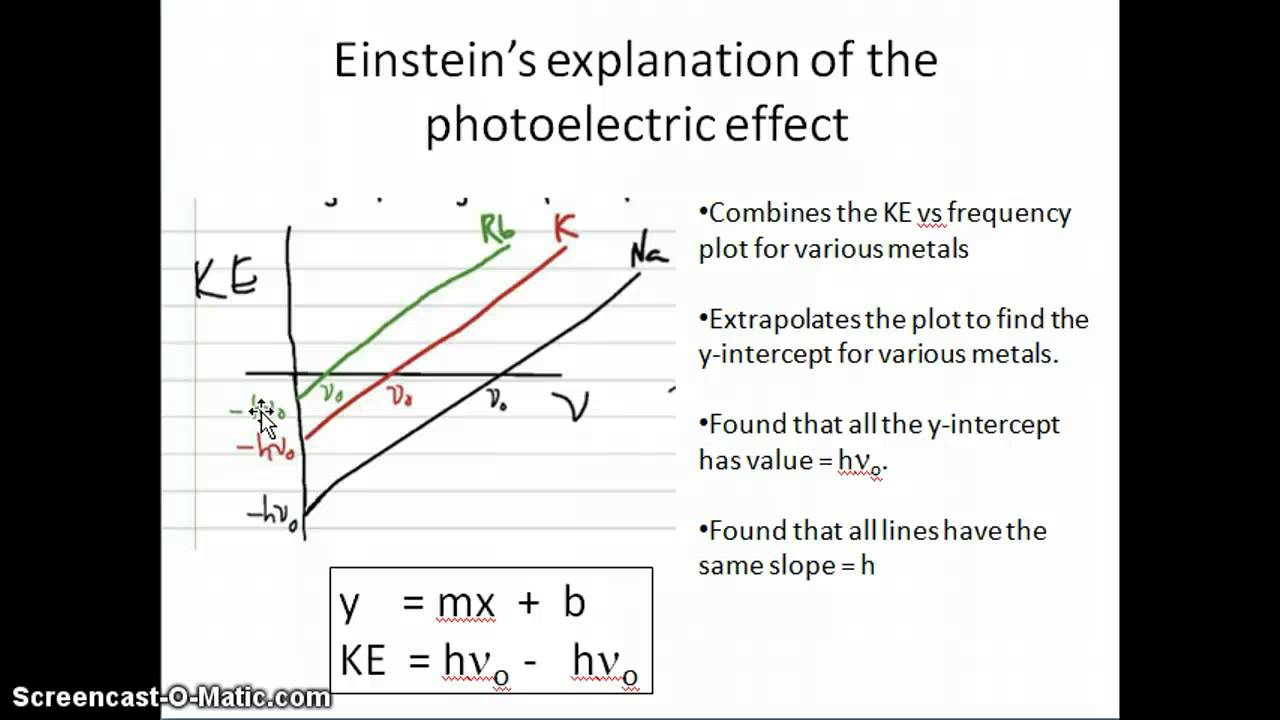
Higher photon energy results in faster electrons. The kinetic energy equals the photon energy minus the work function.
Intensity Vs. Frequency Effects
Light intensity means how many photons hit the metal each second. More photons eject more electrons. But intensity does not change the energy of each electron.
The frequency of light decides each photon's energy. Higher frequency means higher energy. This controls how fast the ejected electrons move.
Work Function And Electron Binding
The work function and electron binding are key ideas in understanding the photoelectric effect. They explain why light can remove electrons from a metal surface. Electrons are held inside the metal by forces. These forces create an energy barrier called the work function.
The work function is the minimum energy needed to free an electron from the metal. If light does not have enough energy, no electrons will escape. The energy of light depends on its frequency. High-frequency light has more energy per photon.
What Is The Work Function?
The work function is like a gate that holds electrons inside the metal. It varies between materials. Metals with low work functions release electrons more easily. To remove an electron, light must have energy equal to or higher than this work function.
How Electrons Are Bound In Metals
Electrons in metals are not free. They are attracted by the metal’s positive ions. This attraction creates a binding energy that keeps electrons inside. The work function measures this binding energy at the surface. Only electrons near the surface can escape when hit by light.
Energy Transfer From Light To Electrons
Light comes in small packets called photons. Each photon has energy based on its frequency. When a photon hits the metal, it transfers energy to one electron. If the photon’s energy is higher than the work function, the electron escapes. Extra energy becomes the electron’s kinetic energy, making it move.

Credit: sciencenotes.org
Threshold Frequency Importance
Threshold frequency is crucial in the photoelectric effect because it sets the minimum light frequency needed to eject electrons. Below this frequency, no electrons are released, regardless of light brightness. This shows light must have enough energy to free electrons from a material.
What Is Threshold Frequency?
The threshold frequency is the minimum light frequency needed to eject electrons from a metal surface. If the light’s frequency is below this value, no electrons will come out. This happens because the photon energy is too low to overcome the metal's work function.
Each metal has its own unique threshold frequency. It depends on how tightly the electrons are held in the metal. The higher the work function, the higher the threshold frequency needed.
Why Threshold Frequency Matters In Photoelectric Effect
The threshold frequency sets a clear limit for electron emission. No electrons eject if the light frequency is less than this value. This fact proves that light energy comes in packets called photons, not just waves.
This concept contradicts classical wave theory, which expected electrons to emit regardless of frequency. Instead, only photons with enough energy can free electrons. This discovery helped form the base of quantum mechanics.
Role Of Threshold Frequency In Energy Transfer
Photon energy depends on frequency, calculated as E = hf, where h is Planck’s constant. If the photon’s energy equals or exceeds the work function, electrons gain enough energy to escape. The extra energy appears as the kinetic energy of ejected electrons.
This shows why intensity alone cannot cause electron emission. Even bright light won’t eject electrons if its frequency is below the threshold. The threshold frequency defines the minimum photon energy required for the photoelectric effect.
Electron Emission Process
The electron emission process is the heart of the photoelectric effect.
It describes how electrons leave a material after light hits it.
Light comes in small packets of energy called photons.
When a photon strikes a metal surface, it transfers its energy to an electron.
The electron uses this energy to break free from the metal.
Only photons with enough energy can make this happen.
Energy Transfer From Photons To Electrons
Photons carry energy related to their frequency.
Higher frequency means higher energy photons.
When a photon hits an electron, it gives all its energy to that electron.
This transfer is quick and complete.
The electron then tries to escape the metal surface.
Work Function: The Energy Barrier
Electrons are held inside the metal by a force.
This force creates an energy barrier called the work function.
Electrons need energy equal to or greater than this to escape.
If the photon’s energy is less than the work function, the electron stays put.
The work function varies depending on the type of metal.
Electron Escape And Kinetic Energy
When photon energy is higher than the work function, electrons escape.
The extra energy becomes the electron’s kinetic energy.
This energy makes electrons move faster after they leave the surface.
The faster the electron, the higher its kinetic energy.
This speed depends directly on the photon’s frequency.
Credit: www.youtube.com
Effect Of Intensity And Frequency
The photoelectric effect depends strongly on two main factors: intensity and frequency of light. These factors influence how electrons are ejected from a metal surface. Understanding their roles clarifies why light behaves like particles, not just waves.
Impact Of Intensity
Intensity means the brightness of light. It relates to the number of photons hitting the metal surface each second. Higher intensity means more photons arrive, so more electrons get knocked out.
Increasing intensity does not change the energy each electron gains. It only increases the number of electrons ejected. If the light frequency is too low, no electrons will eject, no matter how bright the light is.
Role Of Frequency
Frequency means the color or energy level of light. Each photon has energy directly tied to its frequency. Higher frequency photons carry more energy.
If the photon energy is lower than the metal’s work function, electrons cannot escape. Increasing frequency boosts photon energy, allowing electrons to break free. Higher frequency also means ejected electrons move faster because they get extra energy.
Einstein’s Photoelectric Equation
Einstein’s Photoelectric Equation reveals how light energy ejects electrons from metal. It links photon energy, work function, and kinetic energy of electrons in a simple formula. This equation helped explain the photoelectric effect, proving light acts as particles called photons.
Einstein’s insight changed physics by showing that light energy is quantized. The equation also predicts the speed of ejected electrons based on light frequency. This discovery supports quantum theory and has real-world applications in technology.
What Is Einstein’s Photoelectric Equation?
The equation is: E = hf - φ. Here, E is the kinetic energy of the ejected electron. hf is the energy of the incoming photon, where h is Planck’s constant and f is the frequency of light. φ (phi) is the work function, or minimum energy needed to free an electron.
Understanding The Work Function (φ)
The work function is the energy barrier holding electrons inside metal. Each metal has a unique work function value. If photon energy is less than the work function, electrons stay bound. They only escape if photon energy exceeds this threshold.
How Photon Energy Affects Electron Emission
Light with higher frequency means higher photon energy. When photon energy exceeds the work function, the leftover energy becomes electron kinetic energy. Electrons fly out faster with higher frequency light. Intensity changes electron number, not energy.
Historical Significance
The photoelectric effect proved light behaves as particles, not just waves. This discovery changed physics and helped develop quantum theory. It also paved the way for modern technologies like solar cells and cameras.
The photoelectric effect changed the way scientists understood light. Before, light was seen only as a wave. This effect showed light also acts as particles called photons.
This discovery challenged classical physics. It helped start quantum mechanics, a new branch of science. Quantum mechanics explains how tiny particles behave.
The photoelectric effect earned Albert Einstein the Nobel Prize in Physics in 1921. His explanation proved light’s particle nature. This was a key moment in science history.
The effect also led to many inventions. Solar panels, digital cameras, and light sensors rely on this principle. It still influences technology today.
Applications In Technology
The photoelectric effect plays a crucial role in many modern technologies. It helps convert light into electrical signals or energy. This principle is behind devices that we use every day. Understanding these applications shows how physics impacts technology and daily life.
Digital Cameras
Digital cameras use the photoelectric effect to capture images. Inside the camera, light hits a sensor made of semiconductor material. This sensor contains many tiny cells called pixels. When light photons strike these pixels, they release electrons. The camera measures these electrons to form a digital image. This process allows cameras to record high-quality pictures quickly and accurately.
Photoelectric sensors in cameras respond to different light intensities. They help adjust exposure and focus. This makes photos clear in various lighting conditions. The technology also enables video recording and instant image preview. Digital cameras rely on the photoelectric effect for sharp and vibrant images.
Solar Cells
Solar cells, or photovoltaic cells, convert sunlight into electricity. They use the photoelectric effect to generate electric current. When sunlight hits the solar cell, photons transfer energy to electrons in the material. These energized electrons move and create an electric current. This current can power homes, devices, and even vehicles.
Solar cells provide a clean and renewable energy source. They work without fuel or moving parts. The photoelectric effect makes solar energy efficient and reliable. Advances in this technology continue to improve solar panel performance. Solar energy is a practical example of the photoelectric effect in action.

Credit: www.youtube.com
Frequently Asked Questions
What Are The Three Laws Of Photoelectric Effect?
The three laws of photoelectric effect are: Electrons emit only if light frequency exceeds threshold. Electron emission rate rises with light intensity. Electron kinetic energy depends on light frequency, not intensity.
What Best Describes The Photoelectric Effect?
The photoelectric effect occurs when light photons hit a metal surface, transferring energy to electrons. If photon energy exceeds the work function, electrons eject from the metal. Higher light frequency increases electron speed, proving light's particle nature and enabling technologies like solar cells and digital cameras.
What Is The Photoelectric Effect In Einstein's Simple Words?
The photoelectric effect occurs when light photons hit a metal surface and eject electrons. Photons must have enough energy to free electrons. Higher light frequency means more energetic photons, causing electrons to move faster. This proved light acts as particles, not just waves.
What Is The Classical Explanation Of The Photoelectric Effect?
The classical explanation views light as waves transferring energy continuously. It fails to explain electron emission without minimum frequency. This led to quantum theory, showing light behaves as particles (photons) with energy proportional to frequency.
Conclusion
The photoelectric effect shows how light acts like tiny particles called photons. These photons hit metal and knock out electrons if they have enough energy. The brightness of light affects how many electrons leave, while the color or frequency changes their speed.
This discovery helped scientists understand light better and led to new technologies like solar panels and cameras. Understanding this effect gives a clear view of how energy and matter interact at a small scale. It remains an important concept in physics and everyday devices.


No comments